One Woman
Alfred Ollivant’s Lyrical 1921 Drama of Carrier Folk, Chalk Hills, and the Collision of Agrarian Tradition with Modern Capital
In the rich tradition of English regional fiction—alongside Thomas Hardy’s Wessex and Emily Brontë’s Yorkshire moors—the sweeping, chalk downlands of Sussex found their most passionate and lyrical chronicler in Alfred Ollivant (1874–1927). While world-famous for his legendary sheepdog classic Owd Bob, Ollivant poured his deepest philosophical convictions and social observations into his mature Sussex trilogy.
Published in 1921 as the second part of this monumental romance of Sussex, One Woman is an unforgettable, earthy, and powerful work of agrarian social realism. Set along the ancient cart tracks and rolling downs stretching between Lewes, Ditchling, and the English Channel, the novel dramatizes the titanic collision between traditional rural English craftsmanship and the aggressive, impersonal forces of twentieth-century corporate capitalism.
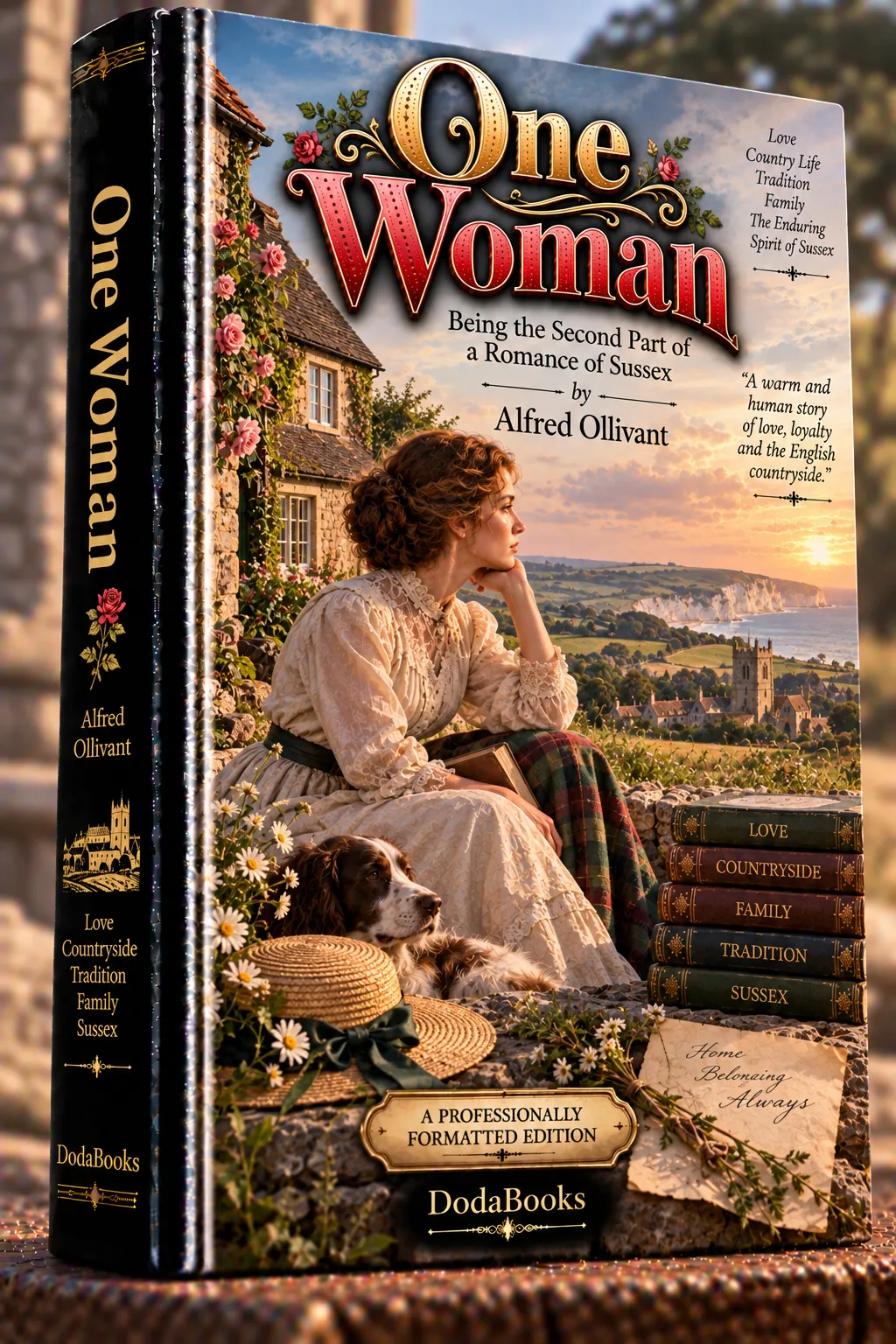
Walk the Rolling Chalk Ridges of the South Downs
Read Alfred Ollivant's lyrical 1921 novel with annotations detailing Sussex downland folklore, rural horse-drawn carrier networks, and Edwardian labor struggles.
Get One Woman by Alfred OllivantThe Carrier’s Cart on the Lewes Road
The story opens in 1908 aboard a creaking, tilt-covered carrier’s cart traveling east along the ancient road to Lewes. At the reins sits Ernie Ryder, an honest, stubborn, and deeply decent young working-class carrier who earns his living transporting parcels, timber, and country produce between isolated downland villages. Beside him sits Ruth, his spirited, magnificent young wife—the “one woman” around whose beauty, integrity, and passion the destiny of an entire community turns.
Ernie represents the ancient, organic heart of rural England:
- A man who knows every chalk ridge, sheep dip, wind-stunted thorn tree, and seasonal brook in the Cuckmere Valley.
- A laborer whose dignity is anchored in honest physical toil, the care of his heavy draft horses, and his pride as an independent tradesman.
- Yet Ernie’s traditional livelihood is under deadly threat: motorized transport vans and ruthless capitalist syndicates are moving into the valleys, seeking to monopolize the transport routes and reduce independent village carriers into subservient, underpaid wage laborers.
The Conflict of the Sussex Downs:
[Ancient Organic Downland Life] vs. [Motorized Syndicates & Urban Capital] ➔ [The Moral Testing of Ruth & Ernie] ➔ [Spiritual Resilience]
The Triangle of Loyalty: Ernie, Ruth, and the Landlord
The dramatic tension of One Woman deepens when the local squirearchy and military officers become entangled in Ruth’s life. Ruth is not a submissive peasant woman; she possesses a fierce, natural intelligence and a deep hunger for justice that sets her apart from her conservative neighbors.
When a wealthy, aristocratic landlord begins showing an interest in Ruth, offering economic favors and political advancement to Ernie, a profound moral crisis erupts within the cottage:
- Ernie, struggling against bankruptcy as the modern transport syndicates squeeze his business, is tempted to accept the patron’s money.
- Ruth sees with piercing clarity the moral compromises and hidden strings attached to aristocratic charity.
- As labor strikes, agricultural union movements, and political ferment sweep through Sussex in the years leading up to the Great War, Ruth becomes the moral conscience of the downland, fighting to preserve her husband’s self-respect and her own soul.
Exquisite Downland Landscapes
Breathtaking descriptions of the South Downs: the smell of crushed thyme, sea breezes rolling over chalk cliffs, and misty valley hollows.
Agrarian Social Realism
An honest, compassionate examination of rural English poverty, independent village carriers, and the birth of agricultural labor unions.
A Heroine of Genuine Magnitude
Ruth Ryder is one of the most magnificent, grounded, and emotionally courageous working-class heroines in early 20th-century English fiction.
Annotated Regional Context
Detailed notes explaining Sussex dialect expressions, carrier trade routes, downland agriculture, and pre-WWI English politics.
Ollivant’s Prose: The Music of the Earth
What elevates One Woman to literary brilliance is Alfred Ollivant’s prose style. Having served as an artillery officer before a devastating spinal injury confined him to a bed for years, Ollivant developed an acute, mystical appreciation for the physical earth.
His sentences are imbued with the rhythm of walking upon downland turf—muscular, rhythmic, and saturated with sensory imagery. He captures the call of the lapwing over the barrows, the creak of harness leather in the morning frost, and the enduring dignity of men and women whose ancestors have tilled the same chalk soil since the Norman Conquest.
To explore how classic literature captured regional British identity, working-class labor, and rural landscapes, explore our companions to George Eliot’s Middlemarch Guide and Thomas Hardy’s Cornish drama in A Pair of Blue Eyes Guide.
Experience the Grand Agrarian Epic of Sussex
Read the definitive digital edition of One Woman on DodaBooks, complete with Sussex topographical maps, regional dialect glossaries, and crisp digital typography.
Purchase One Woman on DodaBooksWhy Read the DodaBooks Annotated Edition of One Woman?
Because Ollivant incorporates authentic Sussex dialect words, specialized horse-handling jargon, and Edwardian agrarian legislation, modern readers greatly benefit from curated historical guidance.
The DodaBooks Annotated Edition provides:
- Topographical Maps of the Sussex Downs: Tracing the ancient carrier routes through Lewes, Ditchling, the Cuckmere Valley, and the South Downs Way.
- Glossary of Sussex Regional Dialect & Carrier Terms: Explaining twitten, bostal, chuck, tilt-cart, traces, and whippletrees.
- Historical Notes on Early 20th-Century Agricultural Labor: Explaining the impact of motorized vans on rural trade and the rise of agricultural unions.
- Flawless Formatting Across All Devices: Designed with clean chapter divisions, balanced margins, and legible typography optimized for Kindle, iPad, Kobo, and smartphones.
The Agrarian Tragedy of the Motor Age
What makes Alfred Ollivant’s One Woman an enduringly powerful novel is its acute prescience regarding the death of traditional rural craftsmanship at the hands of the internal combustion engine. Writing in 1921, looking back across the pivotal years of the early 1900s, Ollivant recognized that the arrival of motorized commercial vehicles was not merely a change in transportation technology; it was a catastrophic rupture in human relationship with the land.
The horse-drawn carrier was an integral part of the ecological and social fabric of the South Downs. The carrier moved at the pace of a horse’s walk, stopping at cottage gates, carrying news, delivering personal messages, and maintaining human contact between isolated hamlets. The motor van, driven by hired corporate hands with no roots in the soil, transformed transport into an impersonal, rushed transaction.
Ollivant's Industrial Rupture Framework:
[Organic Equine Transport / Ernie] ➔ [Communal Village Interdependence] vs. [Motorized Corporate Syndicates] ➔ [Social Alienation & Agrarian Loss]
In Ernie Ryder’s desperate struggle to keep his carrier cart on the road against predatory motorized syndicates, Ollivant captures the tragedy of millions of traditional craftsmen across the Western world who were cast aside by modern industrial efficiency. The novel mourns this lost pastoral world with heartbreaking lyrical beauty while celebrating the enduring spiritual fortitude of the men and women who fought to keep their dignity intact.
Alfred Ollivant’s One Woman stands as a monumental achievement of English regional realism. In its sweeping, sensory prose, unforgettable working-class characters, and heartbreaking portrait of traditional Downland life confronting the modern industrial age, it secures Ollivant’s place alongside Thomas Hardy as a supreme poet of the English earth.
In the broader tapestry of Sussex literature, One Woman holds a revered place alongside the agrarian essays of Hilaire Belloc and the pastoral poetry of John Drinkwater. Ollivant’s lyrical mastery turns the chalk ridges, deep sheep coombes, and ancient flint churches into active participants in the drama, reminding modern readers that the truest wealth of any civilization is rooted in its love for the land and the integrity of its common people.
Frequently Asked Questions
Who was Alfred Ollivant?
Alfred Ollivant (1874–1927) was a distinguished English novelist best known for his classic sheepdog story Owd Bob and his acclaimed regional novels capturing the landscapes, labor, and working people of Sussex.
What is a 'carrier' as depicted in the novel?
In rural Britain before modern trucking, a carrier was an independent tradesman who drove a horse-drawn cart between country villages and market towns, delivering goods, mail, produce, and passengers.
Is One Woman part of a trilogy?
Yes. One Woman is the middle volume of Ollivant's acclaimed Sussex trilogy (following Two Men and preceding One Woman's finish), though it functions completely as a self-contained, powerful dramatic novel.
How does Ollivant's writing compare to Thomas Hardy?
Like Hardy, Ollivant possesses a profound spiritual and physical connection to rural landscape, dialect, and the tragedy of traditional country life being eroded by modern industrial capitalism.
Where can I purchase and download the annotated digital edition?
The complete digital edition is available directly from DodaBooks in EPUB and PDF formats for all modern e-reading devices.