On the Cross: The Oberammergau Romance
Wilhelmine von Hillern’s Incandescent 1890 Novel of Bavarian Alpine Majesty, Sacred Theatrical Devotion, High-Society Rebellion, and Transcendent Love
Every ten years since 1634, in fulfillment of a sacred solemn vow made during the horrors of the Thirty Years’ War to thank God for sparing their community from the bubonic plague, the inhabitants of the high Bavarian mountain village of Oberammergau have performed their world-renowned Passion Play. In 1890, celebrated German novelist and former dramatic actress Wilhelmine von Hillern (1836–1916)—author of the immortal alpine classic Die Geier-Wally (The Vulture Maiden)—published On the Cross: A Romance of the Passion Play at Oberammergau (Am Kreuz).
Translated into English by Mary J. Safford, this sweeping, emotionally daring novel captivated international audiences by placing a high-society drama of romantic obsession directly against the awe-inspiring backdrop of the Bavarian Alps and the sacred rituals of Oberammergau. It is a profound, psychologically complex examination of the boundaries between religious veneration and earthly love, artistic illusion and spiritual reality.
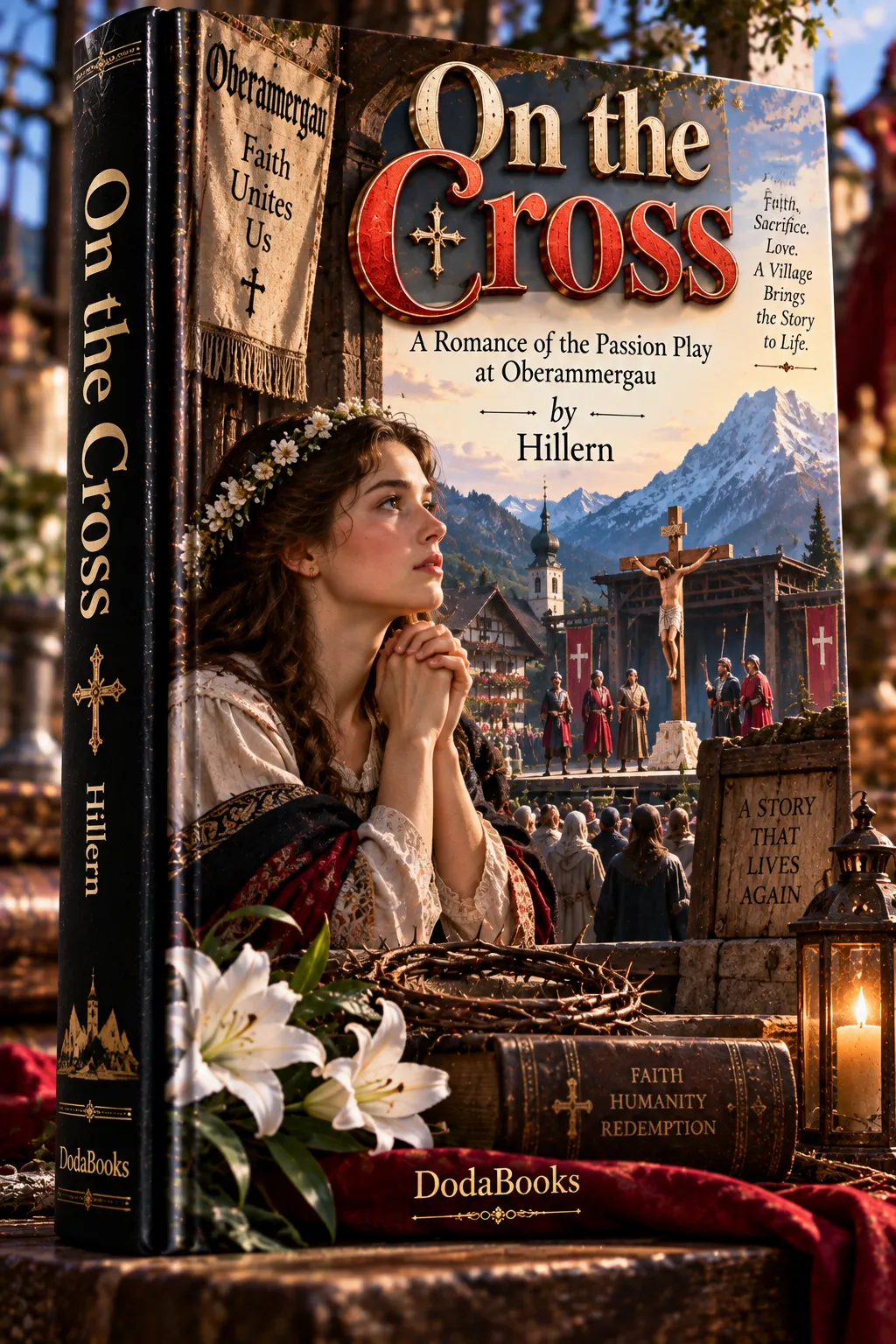
Journey into the Bavarian Alps and Sacred Theatre
Read Wilhelmine von Hillern's passionate masterpiece in an annotated edition exploring the 1634 plague vow, the Oberammergau theatrical tradition, and 19th-century German romanticism.
Get On the CrossThe Countess and the Christus: The Drama of Freya
The novel’s dramatic catalyst is the arrival of Countess Freya von Halffrein, a cynical, wealthy, and disillusioned noblewoman of the German aristocracy who travels to the remote Ammergau valley accompanied by her fashionable aristocratic circle to view the Passion Play as an exotic tourist spectacle:
- The Vision on the Stage: Sitting in the rustic wooden theatre, Freya is thunderstruck by the performance of the Christus, portrayed by Josef Freyer—a humble, deeply pious woodcarver of Oberammergau whose sublime dignity, physical beauty, and serene spiritual purity command the stage.
- The Transference of Passion: Accustomed to the shallow flattery of urban suitors, Freya falls passionately in love with Josef. In her fevered imagination, the line between the actor and the divine figure he portrays blurs completely. She sees in him the living embodiment of redemption.
- The Social Scandal: Defying the fury of her aristocratic family, her social peers, and the conservative elders of the village, Freya renounces her high-society rank to wed the humble woodcarver, moving into his modest alpine chalet to share his austere peasant life.
The Crucible of Reality: Marriage to an Alpine Peasant
What elevates On the Cross far above conventional romantic melodrama is von Hillern’s unflinching psychological realism in the novel’s second half. Where fairy tales end at the church altar, von Hillern begins her deepest inquiry:
- The Culture Shock: Freya discovers that marrying the man who plays the Christus on stage means marrying an ordinary mortal who chops firewood, cleans stables, and belongs to a close-knit, highly superstitious peasant community whose customs she does not understand.
- The Jealousy of the Sacred Role: In Oberammergau, the actor who plays the Christus is viewed by the community as a consecrated vessel of communal holiness. When Freya demands Josef’s undivided romantic devotion, the villagers view her as an evil temptress who has desecrated their sacred play and corrupted their holy representative.
- The True Cross: Both Freya and Josef must undergo a painful, agonizing spiritual crucible. They discover that true Christian love is not a selfish aesthetic swoon or romantic possession, but a willingness to bear one’s cross in mutual sacrifice, humility, and daily patience.
“It is easy to worship a god on a stage surrounded by music and applause; it is another thing to love a mortal man through poverty, misunderstanding, and the daily dust of the earth. That is the cross where pride must die so that the soul may live.”
Rare Behind-the-Scenes Setting
A richly authentic, firsthand depiction of 19th-century Oberammergau, its woodcarving guilds, stage traditions, and communal religious life.
Daring Psychological Realism
Explores the psychological phenomenon of emotional transference, dissecting the boundary between religious ecstasy and romantic eroticism.
Bavarian Alpine Grandeur
Breathtaking descriptions of the Kofel mountain peak, pine forests, winter snowdrifts, and traditional Bavarian rural customs.
Scholarly Historical Annotations
Footnotes explaining the 1634 Oberammergau vow, Catholic liturgical theatre history, Bavarian dialect terms, and von Hillern's dramatic career.
The Heritage of Wilhelmine von Hillern
Wilhelmine von Hillern was one of the most remarkable literary women of nineteenth-century Germany. The daughter of the celebrated popular dramatist Charlotte Birch-Pfeiffer, Wilhelmine trained as an actress and performed on the major stages of Berlin and Munich before retiring from the theatre to write fiction.
Her theatrical background gave her an extraordinary understanding of the actor’s craft and stage psychology. Furthermore, her deep familiarity with the Bavarian and Tyrolean Alps—where she lived for decades—allowed her to capture the dialogue, folklore, and moral temperament of mountain communities with anthropological accuracy. In 1875, her alpine novel Die Geier-Wally became an international sensation, later adapted by Alfredo Catalani into the famous Italian opera La Wally.
Step into the Heart of the Passion Village
Read Wilhelmine von Hillern's sweeping novel in an annotated edition exploring the history of sacred drama, Bavarian woodcarving, and German romantic realism.
Get On the Cross on DodaBooksThe 1890 Oberammergau Season and Global Tourism
Von Hillern wrote On the Cross in the immediate wake of the landmark 1890 performance season of the Passion Play, when modern railways and Thomas Cook travel tours first brought tens of thousands of international visitors—including royalty, American millionaires, and English intellectuals—to what had previously been an isolated alpine valley.
Von Hillern captures this historic clash between ancient peasant folk piety and modern commercial tourism. She satirizes the wealthy English and American spectators who treat the sacred drama as a fashionable society diversion, while treating the profound spiritual devotion of the Ammergau woodcarvers with deep, reverent sympathy.
Why On the Cross Remains a Compelling Read
The novel tackles themes that remain startlingly modern: celebrity worship, the clash of social classes, the tension between outward religious performance and genuine inward integrity, and the emotional courage required to build a real marriage across cultural divides.
The Annotations in the DodaBooks Edition
The DodaBooks curated edition provides an indispensable reading companion:
- Historical Guide to the Oberammergau Passion Play: Detailed history of the 1634 plague vow, musical compositions by Rochus Dedler, and performance traditions.
- Topographical Map of the Ammergau Alps: Locating the village, the Kofel peak, Ettal Abbey, and Linderhof Palace.
- Bavarian Cultural & Dialect Notes: Clarifying local idioms, woodcarving terminology, and Catholic devotional customs.
Download the Classic Alpine Romance Today
Experience the passion, drama, and spiritual power of Oberammergau in Wilhelmine von Hillern's unforgettable masterpiece.
Download the Edition NowFrequently Asked Questions
Who was Wilhelmine von Hillern?
Wilhelmine von Hillern (1836–1916) was a prominent German novelist and former dramatic actress, best remembered for her dramatic alpine novels, including Die Geier-Wally (The Vulture Maiden) and On the Cross.
What is the historical Oberammergau Passion Play?
It is a world-famous theatrical performance depicting the Passion of Jesus Christ, performed every ten years by the residents of Oberammergau, Bavaria, in fulfillment of a religious vow made in 1634 after the village was spared from the bubonic plague.
What is the central conflict of On the Cross?
The story follows Countess Freya, a disillusioned noblewoman who falls in love with Josef Freyer, the peasant woodcarver portraying Jesus Christ in the Passion Play. Defying high society, she marries him, only to face the harsh realities of rural peasant life and the village's anger over her perceived desecration of their sacred actor.
How did von Hillern's theatrical background influence the book?
Having performed on major German stages, von Hillern brought a deep, nuanced understanding of performance psychology, stage presence, and the dangerous emotional blurring between an actor's personal identity and their dramatic role.
Where can I get the complete digital book?
The complete digital edition is available for immediate download at DodaBooks at https://dodabooks.com/ebook/on-the-cross-a-romance-of-the-passion-play-at-oberammergau-by-wilhelmine-von-hillern/.