Middlemarch Characters Explained: Dorothea, Lydgate, Casaubon & Ladislaw
George Eliot’s Middlemarch: A Study of Provincial Life is universally celebrated for introducing modern psychological realism into English literature. Where earlier nineteenth-century novelists often relied on archetypal villains, virtuous maidens, and comic eccentrics, Eliot treated human character as a delicate, living organism shaped by heredity, vanity, moral aspiration, and the microscopic pressures of social environment.
In Middlemarch, nobody is purely villainous and nobody is completely stainless. As Eliot famously writes of Edward Casaubon, “For my part I am very sorry for him.” Eliot’s omniscient narrator examines each character from the inside out, exposing the rationalizations, self-delusions, and secret vulnerabilities that drive their most consequential decisions.
This comprehensive guide analyzes the primary and secondary figures in Eliot’s masterpiece, dissecting their psychological motivations, symbolic roles, and narrative trajectories.
| Character | Social Station | Core Motivation | Fatal Flaw or Moral Turning Point |
|---|---|---|---|
| Dorothea Brooke | Gentry heiress at Tipton Grange | A thirst for heroic spiritual and moral purpose | Naive blindness that projects heroic genius onto a sterile pedant |
| Edward Casaubon | Clergyman and landed scholar | Obsessive pursuit of theological prestige (The Key to All Mythologies) | Paralytic insecurity, intellectual pride, and spiteful jealousy |
| Dr. Tertius Lydgate | Ambitious gentleman physician | Reforming medicine through scientific discovery and the New Hospital | Arrogant aristocratic “spots of commonness” and financial recklessness |
| Rosamond Vincy | Spoiled provincial beauty | Attaining fashionable aristocratic elegance and romantic prestige | Inflexible, superficial narcissism that actively sabotages her husband |
| Will Ladislaw | Impoverished artist, later reform politician | Passionate devotion to art, personal freedom, and Dorothea | Impulsiveness, Bohemian defiance, and lack of initial vocation |
| Nicholas Bulstrode | Evangelical banker and philanthropist | Reconciling religious righteousness with financial empire | Justifying past criminal deceit as part of God’s “providential plan” |
| Mary Garth | Hard-working land agent’s daughter | Fierce honesty, domestic integrity, and loyalty to Fred | Refusal to compromise truth even to gain a fortune |
| Fred Vincy | Easygoing mayor’s son | Living a life of aristocratic leisure and winning Mary Garth | Entitlement, gambling, and reliance on dead men’s wills |
🌹 Dorothea Brooke: The Modern Saint Theresa
Idealism and Spiritual Myopia
At nineteen years old, Dorothea Brooke represents the embodiment of ardent, unguided female idealism. Wealthy, well-born, and strikingly handsome, she disdains the conventional expectations of her class. While other young women obsess over jewels, ribbons, and London society balls, Dorothea studies theological tracts, plans model architectural cottages for rural farm laborers, and starves herself with ascetic rigors.
Her tragedy stems from an intellectual vacuum. Victorian provincial society offers no prestigious universities, public offices, or theological platforms to women. Yearning for a noble life’s work, Dorothea mistakenly assumes that marrying an older, pedantic scholar will grant her indirect access to the intellectual arena:
“The really delightful marriage must be that where your husband was a sort of father, and could teach you Hebrew, if you wished it.”
          [ DOROTHEA'S PSYCHOLOGICAL JOURNEY ]
+-------------------------------------------------------------+
| 1. Ascetic Blindness: Projects Miltonic genius on Casaubon  |
+-------------------------------------------------------------+
                               |
                               v
+-------------------------------------------------------------+
| 2. The Rome Awakening: Realizes Casaubon's sterile reality  |
+-------------------------------------------------------------+
                               |
                               v
+-------------------------------------------------------------+
| 3. Moral Maturity: Refuses bitterness; offers selfless aid  |
+-------------------------------------------------------------+
                               |
                               v
+-------------------------------------------------------------+
| 4. Surrender of Wealth: Defies the "Dead Hand" for Will     |
+-------------------------------------------------------------+
From Subservience to Authentic Autonomy
Dorothea’s true heroic quality is not her early intellectual arrogance, but her capacity for profound emotional resilience. When her marriage to Casaubon turns into a living tomb of cold silence, she does not succumb to spite or infidelity. She endures his petulance with gentle compassion.
Following Casaubon’s death and the insulting revelation of his secret codicil, Dorothea’s character undergoes a decisive transformation. She casts off Casaubon’s mental shadow. When Dr. Lydgate is ostracized by the town, she is the only person who steps forward with courageous public faith in his honor. Finally, in Book VIII, after discovering Will and Rosamond in what appears to be an adulterous embrace, she overcomes her heartbreak in a long night of moral struggle, choosing to return to comfort Rosamond. By renouncing Casaubon’s vast estate to marry Will Ladislaw, Dorothea rejects hollow wealth in favor of authentic love and active social usefulness.
📜 Edward Casaubon: The Tragedy of Intellectual Impotence
The Pathology of Insecurity
The fifty-four-year-old Reverend Edward Casaubon is one of the most tragic and psychologically nuanced figures in Victorian fiction. He is not a cartoonish monster; he is a pathetic, deeply frightened man imprisoned within his own intellectual vanity.
For thirty years, Casaubon has labored upon his magnum opus, The Key to All Mythologies, attempting to prove that every pagan and classical myth is a corrupt derivative of Old Testament scripture. Yet Casaubon is crippled by three fatal weaknesses:
- Lack of Originality: He accumulates thousands of disjointed citations without having the synthesis or philosophical vision to construct an argument.
- Ignorance of German Scholarship: As Will Ladislaw points out, German philologists and higher critics (like Strauss and Niebuhr) have already demonstrated that Casaubon’s thesis is an obsolete, dead-end methodology.
- Morbid Fear of Criticism: Terrified that the scholarly world will mock his lifetime of labor, Casaubon refuses to publish a single chapter, endlessly rearranging pigeonholes of notes.
       [ THE TRAGIC PARADOX OF EDWARD CASAUBON ]
+-------------------------------------------------------------+
| Inward Reality: Insecure, isolated, terrified of exposure   |
+-------------------------------------------------------------+
                               ^
                               | (Clash of Perspectives)
                               v
+-------------------------------------------------------------+
| Outward Expectation: Demands uncritical worship from his    |
| young wife; interprets her eagerness as mocking scrutiny!   |
+-------------------------------------------------------------+
The Posthumous “Dead Hand”
Casaubon marries Dorothea expecting an obedient, uncritical acolyte who will admire his intellect and soothe his fragile ego. Instead, Dorothea’s youthful vitality, keen intelligence, and eager questions terrify him. He perceives her innocent inquiries as a tribunal exposing his scholarly fraud.
Consumed by jealousy of his charming second cousin Will Ladislaw—whom Casaubon has supported financially out of cold familial duty—Casaubon seeks to control Dorothea even from beyond the grave. His posthumous codicil forbidding her from marrying Will exposes the petty, vengeful spirit beneath his scholarly veneer. Ultimately, his attempt to exert a “dead hand” over the living backfires, driving Dorothea into the very arms he sought to bar.
🔬 Dr. Tertius Lydgate: The Flawed Idealist
Scientific Vision vs. Provincial Reality
Twenty-seven-year-old Tertius Lydgate is Dorothea’s thematic double. Like her, he is driven by a passionate, noble vocation: he aspires to become the English Xavier Bichat, making revolutionary discoveries in cellular pathology and reforming public sanitation in provincial England. He rejects the corrupt provincial practice of dispensing useless, marked-up medicines to pad his income, insisting on treating patients through modern scientific diagnosis and hygiene.
Yet Eliot endows Lydgate with what she famously terms “spots of commonness”:
- Aristocratic Pride: Born of good gentry stock, Lydgate unconsciously believes that luxury, fine wines, silver service, and leisure are his natural birthrights.
- Patronizing View of Women: While intellectually brilliant in biology, Lydgate views women with archaic condescension, believing they exist merely to provide an ornamental, soothing haven for tired men of science.
                  [ LYDGATE'S DOWNWARD SPIRAL ]

     Noble Scientific Vision (Cellular Pathology & Hospital)
                            |
                            v
      Marriage to Rosamond Vincy (Desire for Ornamental Wife)
                            |
                            v
     Lavish Spending on Credit (Aristocratic "Spots of Commonness")
                            |
                            v
     Mounting Creditor Threats & Hostility from Local Doctors
                            |
                            v
      Fatal £1,000 Loan from the Blackmailed Nicholas Bulstrode
                            |
                            v
            Loss of Reputation, Ambition, and Vocation
The Web of Debt and Compromise
Lydgate’s downfall begins when he compromises his moral independence by voting for Mr. Tyke to win Bulstrode’s financial backing. It accelerates exponentially when he proposes to Rosamond Vincy. Lydgate assumes his wife will share his lofty values; instead, he finds himself married to a cold, manipulative social climber who refuses to curtail expenditures or acknowledge their impending bankruptcy.
Desperate to avoid humiliation, Lydgate accepts a £1,000 loan from Nicholas Bulstrode just as Bulstrode’s blackmailer, Raffles, dies under suspicious circumstances. Though innocent of murder, Lydgate’s reputation is irrevocably destroyed by the scandal. Rescued financially by Dorothea, he leaves Middlemarch broken in spirit. Instead of curing epidemics, he spends the rest of his life treating gouty aristocrats in London and bathing resorts, regarding himself to his dying day as an utter failure.
🪞 Rosamond Vincy: The Monster of Refinement
The Product of Finishing-School Vanity
If Lydgate represents scientific intellect undone by worldly vanity, Rosamond Vincy represents the terrifying triumph of shallow provincial polish. As the star pupil of Mrs. Lemon’s academy, Rosamond has been meticulously trained in useless, decorative accomplishments: playing the piano with exquisite touch, speaking conversational French, executing delicate watercolors, and wearing her clothes with flawless elegance.
Underneath this hyper-refined exterior, however, lies an absolute, impervious narcissism. Rosamond is incapable of imaginative empathy. She cannot conceptualize that any human being on earth possesses inner thoughts, needs, or feelings that do not directly revolve around her own social elevation.
+-------------------------------------------------------------+
|              ROSAMOND VINCY'S WORLDVIEW                     |
|                                                             |
| "She had a well-ventilated imagination, but it did not      |
| admit things which were strange to the Middlemarch habit."   |
|                                                             |
| -> Views Lydgate not as a human being, but as a prestigious |
|    carriage to transport her into aristocratic society!      |
+-------------------------------------------------------------+
The Inflexible Will of Softness
Rosamond’s true power lies in her passive-aggressive obstinacy. Whenever Lydgate attempts to reason with her regarding their crushing debts, she meets his pleas with graceful, silent resistance:
- She refuses to help pack their silver plate.
- She secretly contacts his aristocratic uncle, Sir Godwin, undermining his dignity.
- She deliberately countermands his instructions to cancel the lease on their house.
- She flirts recklessly with Will Ladislaw simply to flatter her vanity.
Only once in the novel does Rosamond rise above her innate selfishness: when Dorothea visits her with pure, self-effacing compassion in Book VIII, Rosamond is momentarily shamed into confessing the truth about Will Ladislaw’s devotion to Dorothea. Yet in the Finale, after Lydgate’s early death, Rosamond effortlessly returns to form, marrying an elderly, wealthy physician and inheriting an enormous fortune.
🎨 Will Ladislaw: The Outsider and Catalyst
Bohemian Rebelliousness
The grandson of a disowned Polish musician and a pawnbroker’s estranged daughter, Will Ladislaw is an outsider in the conservative, xenophobic world of Middlemarch. Mercurial, impulsive, and artistically gifted, Will defies the narrow Victorian categories of respectable employment. While Casaubon treats him as an insolent dependent, Will possesses the emotional vitality, intuitive aesthetic appreciation, and intellectual flexibility that Casaubon entirely lacks.
Will serves as the novel’s great catalyst:
- He is the first person to honestly explain to Dorothea that Casaubon’s life work is obsolete.
- His sunny vitality provides a profound psychological contrast to the gloom of Lowick Manor.
- His presence triggers Casaubon’s fatal paroxysms of jealousy.
       [ WILL LADISLAW: DUAL SOCIAL INHERITANCE ]

         Grandson of Pawnbroker / Concealed Heir
                            |
           (Deprived of Fortune by Bulstrode)
                            |
                            v
               Rebellious Bohemian Youth
                            |
                            v
          Refuses Bulstrode's Guilt-Money (£500/yr)
                            |
                            v
         Finds True Vocation in London Parliament:
              Champion of Great Reform Act!
Rejection of Tainted Wealth
Will’s moral high point occurs in Book VII. When Nicholas Bulstrode, consumed by religious dread, attempts to bribe Will with a £500 annual income and the restoration of his mother’s stolen fortune, Will vehemently rejects the offer:
“My father wasn’t a thief, and my mother was not a thief. I will never touch a penny of your stolen money!”
Will’s passionate integrity proves to Dorothea that he is worthy of her love. By trading his unfocused Bohemian dabbling for a rigorous career in parliamentary politics, Will finds an active, honorable public sphere in which to channel his progressive ideals.
⚖️ Nicholas Bulstrode: The Hypocrisy of Providence
Sanctimonious Rationalization
The Middlemarch banker Nicholas Bulstrode is one of the most chillingly accurate studies of religious hypocrisy in world literature. Bulstrode is not a conscious, cynical charlatan like Tartuffe; he genuinely believes in his own evangelical piety. His psychological delusion is far more subtle: he has trained his mind to believe that whatever advances his personal wealth and power automatically advances the Kingdom of God!
When he built his fortune thirty years earlier by marrying a pawnbroker’s widow and concealing the whereabouts of her rightful daughter and grandson (Will Ladislaw), Bulstrode persuaded himself that God had removed those heirs because they were worldly sinners, whereas he would use the gold for holy missionary enterprises.
               [ BULSTRODE'S MORAL COLLAPSE ]
+-------------------------------------------------------------+
| Early Sin: Conceals heirs to inherit London fencing wealth  |
+-------------------------------------------------------------+
                               |
                               v
+-------------------------------------------------------------+
| Rationalization: Convinces himself God gave him the wealth  |
| to build hospitals, fund curates, and do evangelical good   |
+-------------------------------------------------------------+
                               |
                               v
+-------------------------------------------------------------+
| The Nemesis: John Raffles arrives with proof of past crime  |
+-------------------------------------------------------------+
                               |
                               v
+-------------------------------------------------------------+
| Passive Murder: Withholds medicine; gives alcohol to Raffles|
+-------------------------------------------------------------+
                               |
                               v
+-------------------------------------------------------------+
| Public Disgrace: Banished from Middlemarch by town council  |
+-------------------------------------------------------------+
Passive Complicity and Public Exposure
When John Raffles reappears, Bulstrode’s carefully constructed spiritual fortress collapses. In his desperate attempt to silence Raffles, Bulstrode commits what amounts to passive murder: he deliberately omits Lydgate’s strict orders regarding alcohol, handing the brandy to his housekeeper.
When the town discovers his sordid past, Bulstrode is broken, stripped of all standing and forced into humiliating exile. The only redeeming light in his story is his wife, Harriet Bulstrode, who, despite learning of his past wickedness, bravely stays by his side in his disgrace.
🌾 The Garth Family: Honest Labor and Moral Grounding
Mary Garth: Wit and Unyielding Principle
In a novel filled with self-deluded idealists and vain social climbers, Mary Garth represents the bedrock of clear-sighted moral integrity. Neither wealthy nor conventionally beautiful, Mary possesses sharp humor, profound common sense, and an unwavering moral compass:
- She refuses to burn Old Featherstone’s will in the dead of night, choosing legal duty over a £200 bribe.
- She loves Fred Vincy deeply, but flatly refuses to marry him if he remains an idle gambler or enters the church as a fraudulent hypocrite.
Caleb Garth: The Sanctity of Work
Mary’s father, Caleb Garth, is George Eliot’s loving tribute to her own father, Robert Evans. A land agent and surveyor, Caleb possesses a religious devotion to “business”—by which he means honest manual labor, estate drainage, building sturdy cottages, and leaving the earth more fertile than he found it.
When Caleb offers the troubled Fred Vincy an apprenticeship, he provides the reckless young man with the discipline, skill, and purpose required to build an honorable, fulfilling life.
❓ Frequently Asked Questions
Why does Dorothea marry Casaubon instead of Sir James Chettam?
Dorothea is driven by a passionate desire for intellectual, moral, and spiritual purpose. She perceives Sir James Chettam as merely a conventional, easygoing country gentleman who would treat her as a decorative pet. In contrast, she misinterprets Casaubon's austere pedantry and grave theological research as profound genius, foolishly believing that serving as his assistant will allow her to lead an epic, heroic life.
What does Eliot mean by Lydgate's "spots of commonness"?
Eliot uses the phrase "spots of commonness" to describe Lydgate's unconscious aristocratic prejudices and personal vanity. Despite his brilliant, progressive scientific intellect, Lydgate takes expensive material luxury for granted and views women through a patronizing, ornamental lens. These flaws lead him to marry the vain Rosamond Vincy and spend money on credit, ultimately causing his financial ruin.
Is Rosamond Vincy an intentional villain?
No. George Eliot does not write melodrama. Rosamond does not set out to destroy Lydgate; she is simply the finished product of Victorian finishing-school education, which trained middle-class women to cultivate superficial elegance and social ambition without developing empathy, intellectual depth, or practical economic understanding. Her cruelty is the natural byproduct of complete self-absorption.
What is the symbolic significance of Will Ladislaw's mixed heritage?
Will Ladislaw’s Polish and Bohemian ancestry marks him as an outsider who does not conform to the rigid, insular conventions of provincial Middlemarch. His mixed background symbolizes artistic vitality, romantic freedom, and political progressiveness, serving as a breath of fresh air that disrupts the fossilized, conservative traditions of provincial English society.
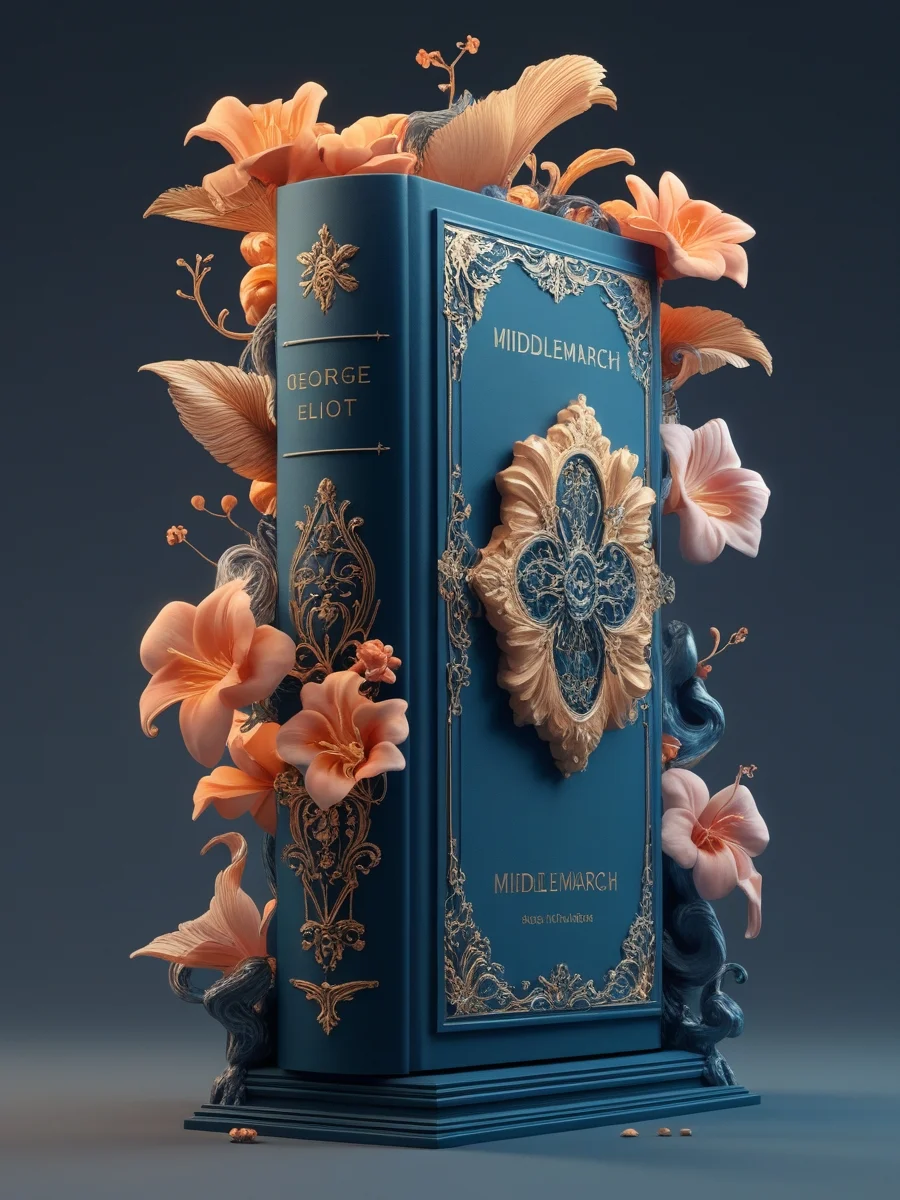
📖 Discover Victorian Literature’s Most Complex Characters
Step into George Eliot’s masterfully drawn provincial world with the complete, unabridged digital edition of Middlemarch from DodaBooks:
- 🎭 Unabridged 86 Chapters — Experience every subtle nuance of Eliot’s legendary psychological portraits
- 💡 Comprehensive Literary & Historical Notes — Deepening your appreciation of Victorian society, politics, and marriage
- 📱 Flawless Formatting — Engineered for comfortable reading on Kindle, Kobo, iPad, or Android
- 🔓 100% DRM-Free — Keep your books forever on all your favorite devices