Kate Mulhall: A Romance of the Oregon Trail
Ezra Meeker’s 1926 Frontier Classic of Covered Wagons, River Crossings, Prairie Stampedes, and Indomitable Courage
Among all the authors who wrote about the great American westward migration, Ezra Meeker (1830–1928) occupies an entirely unique position in history: he did not research the Oregon Trail in libraries; he lived it. In 1852, as a young man of twenty-two, Meeker hitched an ox-team to a covered wagon and walked the brutal two-thousand-mile trail from Iowa across the plains and Rocky Mountains to the Oregon territory alongside his young wife and newborn child.
Decades later, horrified that the physical ruts and historical memory of the Oregon Trail were being erased by modern development, Meeker became a national legend. In his late seventies and eighties, he re-traced the trail by ox-team, then by automobile, and finally in 1924 by airplane, meeting President Calvin Coolidge to campaign for national trail preservation.
Published in 1926 when Meeker was ninety-five years old, Kate Mulhall: A Romance of the Oregon Trail is his culminating literary gift: an authentic, firsthand recreation of the pioneer journey, told with the granular physical accuracy and deep emotional reverence that only a surviving 1852 pioneer could possess.
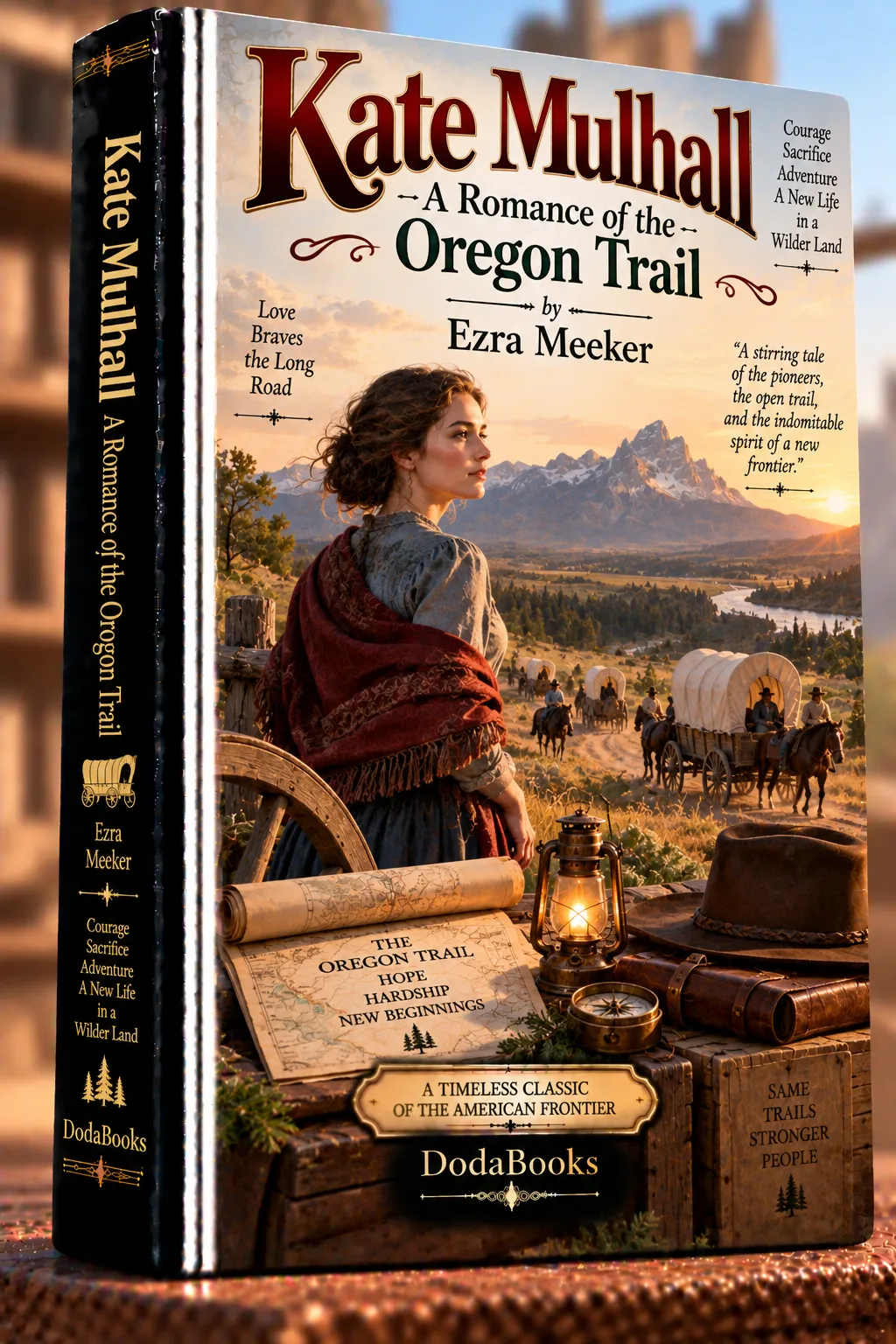
Journey Across the Plains with a Real 1852 Pioneer
Read Ezra Meeker's authentic frontier novel with historical annotations detailing covered wagon mechanics, cholera epidemics, buffalo stampedes, and landmark river crossings.
Get Kate Mulhall by Ezra MeekerThis fierce female resilience on the frontier finds a spirited Western counterpart in Cynthia Westover Alden’s Rocky Mountain memoir.
The early frontier conflicts that opened the Midwest were exhaustively documented in Frank Everett Stevens’s history of the Black Hawk War.
The Reality of the Trail: Mud, Dust, and Cholera
Hollywood westerns and popular romantic fiction often reduce the Oregon Trail to melodramatic gunfights and sensational raids. Meeker’s narrative strips away these cheap myths, presenting the true, grueling physical reality of migration across two thousand miles of untamed wilderness:
- The daily labor of greasing wagon axles with pine tar, yoking stubborn oxen in pre-dawn frost, and baking sourdough bread over buffalo-chip fires.
- The terrifying nightmare of Asiatic cholera, which struck wagon trains along the Platte River in 1852, killing healthy men and women within hours and leaving thousands of unmarked graves along the trail.
- The treacherous fording of swollen rivers like the South Platte and the Snake, where wagons were caulked like boats and floated across raging currents while livestock swam for their lives.
Through it all, Meeker introduces Kate Mulhall, a spirited, courageous young frontier woman whose resilience, optimism, and practical resourcefulness embody the true spirit of the pioneer women who helped build the American West.
The 2,000-Mile Oregon Trail Odyssey:
[Independence / Council Bluffs] ➔ [The Platte River & Cholera Sands] ➔ [Chimney Rock & Independence Rock] ➔ [The South Pass Continental Divide] ➔ [The Columbia River & Willamette Valley]
The Pioneer Heroine: Kate Mulhall’s Courage
Kate Mulhall is not a fainting damsel; she drives ox teams when drivers fall sick, nurses stricken emigrants through typhoid and cholera, and confronts wilderness hardships with quiet cheerfulness.
Around Kate swirl the competing courtships of young men in the wagon train:
- Earnest, hardworking young pioneers striving to establish homesteads in the fertile valleys of Oregon.
- Cynical adventurers and gamblers who view the frontier merely as a place for rapid exploitation.
Meeker weaves these romantic tensions into the daily logistics of survival. Every landmark along the historical trail—Courthouse Rock, Chimney Rock, Scott’s Bluff, and Independence Rock—becomes a stage for dramatic trials: sudden buffalo stampedes that threaten to crush the wagon train, blinding alkaline dust storms, and dangerous mountain passes through the Blue Mountains where wagons had to be lowered down sheer granite cliffs using heavy hemp ropes snubbed around pine trees.
Written by an Actual 1852 Pioneer
Ezra Meeker actually walked the trail by ox-team, giving every description of wagon repairs, river crossings, and campfire routines unassailable authenticity.
Tribute to Pioneer Women
A moving, historically accurate celebration of the fortitude, nursing skills, and leadership of women on the westward trail.
Historical Landmarks Mapped
Detailed accounts of famous pioneer milestones: Fort Laramie, Independence Rock, South Pass, Soda Springs, and the Whitman Mission.
Annotated Trail Companion
Footnotes explaining covered wagon construction, draft animal care, pioneer trade with indigenous nations, and territorial history.
Ezra Meeker’s Sacred Mission: Preserving the Ruts
What imparts deep emotional resonance to Kate Mulhall is Meeker’s profound sense of historical urgency. Written in 1926 when Meeker was one of the last living human beings who remembered the great 1852 migration, the novel was an intentional act of memorialization.
Meeker dedicated the final three decades of his life to erecting granite monuments along the trail and lobbying Congress to establish the Oregon Trail as a protected national highway. In Kate Mulhall, he preserved the sensory and emotional truth of the trail—the creak of ox bows, the smell of sagebrush under summer heat, and the quiet dignity of ordinary American families who walked across a continent to build homes in the wilderness.
To contrast this Western frontier pioneer classic with other great narratives of American migration, enterprise, and identity, explore our companions to The Black Pearl Guide and Oliver Optic’s Three Millions Guide.
Walk the Oregon Trail with an Eyewitness Legend
Read the definitive digital edition of Kate Mulhall on DodaBooks, featuring historical pioneer maps, wagon trail glossaries, and crisp digital typography.
Purchase Kate Mulhall on DodaBooksWhy Read the DodaBooks Annotated Edition of Kate Mulhall?
Because Meeker incorporates specialized 19th-century wagon-train terminology, trail geography, and pioneer idioms, modern readers benefit enormously from curated historical notes.
The DodaBooks Annotated Edition delivers:
- Historical Map of the Oregon Trail: Tracking the exact route from Council Bluffs through South Pass to the Willamette Valley.
- Glossary of Covered Wagon & Pioneer Equipment: Explaining yokes, ox bows, linchpins, prairie schooners, buffalo chips, and alkali water.
- Biographical Retrospective of Ezra Meeker: Chronicling his 1852 journey, hop farming in Washington, and 20th-century preservation crusades.
- Flawless Formatting Across All Devices: Designed with clean chapter divisions, balanced margins, and legible typography optimized for Kindle, iPad, Kobo, and smartphones.
The Preservation Crusade: Ezra Meeker’s Sacred Mission
To fully grasp the historical magnitude of Kate Mulhall, one must understand Ezra Meeker’s legendary life after the pioneer era. By 1906, at the age of seventy-six, Meeker looked out at a modernizing America of transcontinental railroads, telegraph wires, and paved roads and realized with horror that the physical ruts of the Oregon Trail—and the heroic memory of the thousands who died along it—were being plowed under and erased.
Refusing to let this heritage vanish, the seventy-six-year-old Meeker outfitted an authentic covered wagon, bought two oxen named Twist and Dave, and spent two grueling years retracing the two-thousand-mile trail in reverse from Washington State back to Washington, D.C. He camped in city parks, gave speeches to schoolchildren, met President Theodore Roosevelt at the White House, and erected dozens of stone markers along the trail.
Meeker's Lifelong Frontier Cycle:
[1852 Ox-Team Pioneer Crossing] ➔ [1906 Preservation Covered Wagon Trek] ➔ [1924 Biplane Aerial Survey] ➔ [1926 Kate Mulhall Memorial Novel]
In Kate Mulhall, Meeker poured the distilled essence of this lifelong crusade. The novel is not merely a frontier romance; it is a sacred living monument erected by the last pioneer to ensure that future generations would never forget the cost of walking across a continent.
Ezra Meeker’s Kate Mulhall stands as a unique, irreplaceable monument of American frontier history. By combining the emotional warmth of a classic pioneer romance with the granular authenticity of a man who actually cracked the ox-whip across two thousand miles of prairie dust, it honors the endurance, faith, and courage of the great westward migration.
Frequently Asked Questions
Who was Ezra Meeker and why was he famous?
Ezra Meeker (1830–1928) was an authentic 1852 Oregon Trail pioneer who became a national folk hero in the early 20th century by retracing the trail by covered wagon, automobile, and airplane to ensure its historical preservation.
Is Kate Mulhall based on real historical events?
While the romantic plot is fictionalized, every detail of trail life, cholera epidemics, buffalo stampedes, river crossings, and geography is drawn directly from Ezra Meeker's own firsthand experiences crossing the plains in 1852.
What was the biggest killer on the Oregon Trail in 1852?
As depicted in the novel, Asiatic cholera was the deadliest menace on the trail, claiming an estimated five thousand pioneer lives in the summer of 1852 alone along the Platte River valley.
Why did Meeker write this novel so late in his life?
Meeker published Kate Mulhall in 1926 at age 95 to create a vivid, enduring tribute to the pioneer women of the Oregon Trail and to inspire younger generations to honor their ancestral heritage.
Where can I purchase and download the annotated digital edition?
The complete digital edition is available directly from DodaBooks in EPUB and PDF formats for all modern e-reading devices.