Jane Seton; or, The King's Advocate
James Grant’s Sweeping 1853 Romance of Royal Court Intrigue, Deadly Clan Feuds, and the Tragic Dawn of Mary, Queen of Scots
In the glorious lineage of Scottish historical fiction initiated by Sir Walter Scott, no author captured the clashing broadswords, feudal pageantry, and dark castle conspiracies of Scotland with greater military authority and romantic passion than James Grant (1822–1887). The son of a British Army officer and an accomplished military historian himself, Grant published fifty acclaimed historical novels that held nineteenth-century readers spellbound across the globe.
Published in 1853, Jane Seton; or, The King’s Advocate is celebrated as one of Grant’s crowning achievements. Set in the fateful year 1561, when the young, beautiful, and ill-fated Mary, Queen of Scots returned from France to assume the crown of Scotland, the novel plunges the reader into the volcanic political and religious cauldron of Edinburgh.
Through the story of Jane Seton—the courageous, beautiful daughter of the King’s Advocate—Grant weaves an unforgettable drama of royal court rivalry, feudal vendettas, and forbidden passion beneath the ominous shadows of Edinburgh Castle and Holyrood Palace.
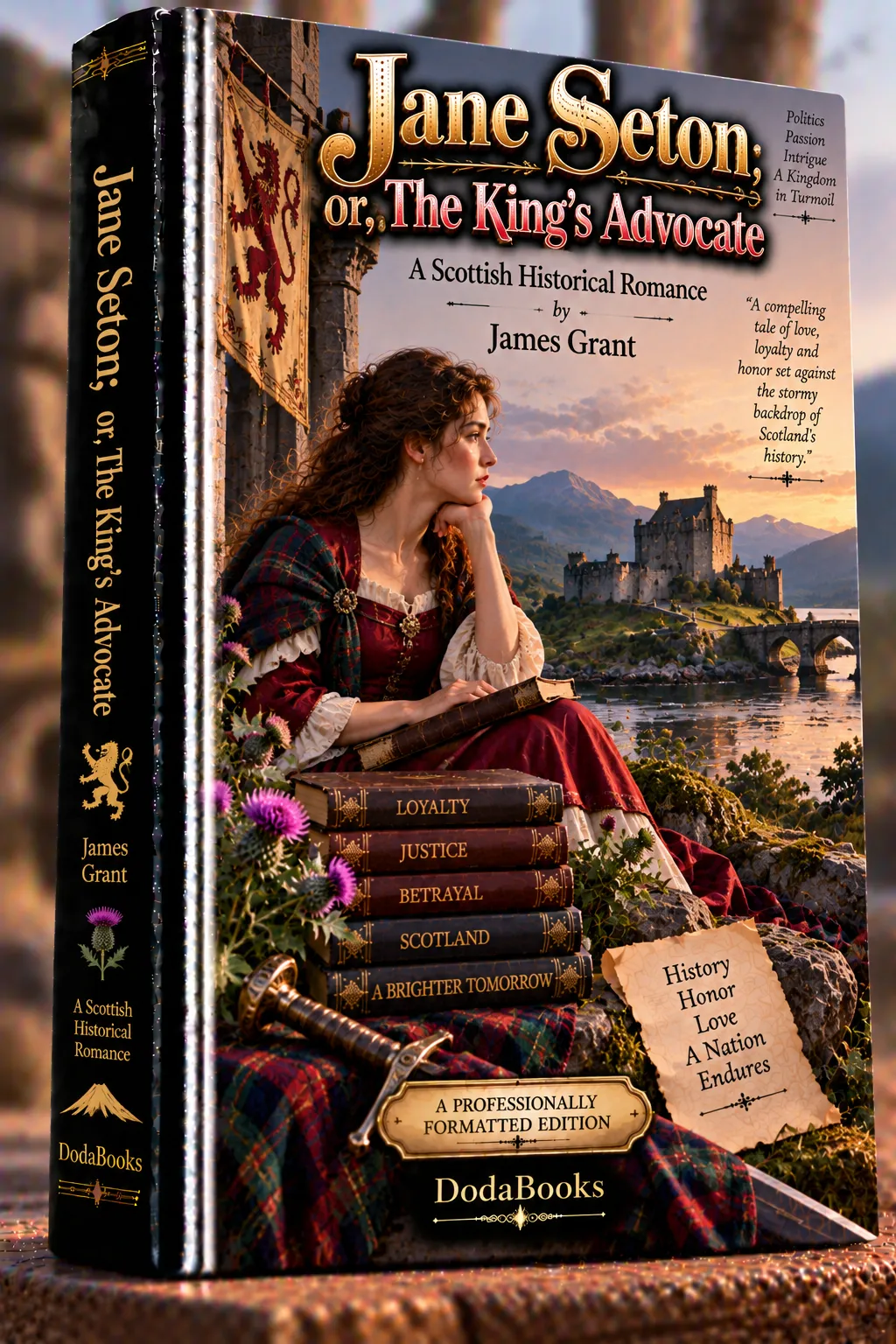
Step into the Court of Mary, Queen of Scots
Read James Grant's sweeping 1853 Scottish masterpiece with historical annotations detailing 16th-century Edinburgh topography, clan feuds, and the Protestant Reformation.
Get Jane Seton by James GrantGrant’s celebration of Celtic passion and heroic romance shares profound artistic resonance with Donn Byrne’s Irish storytelling.
The heroic chivalry and Highland loyalties of Grant’s romance echo powerfully across the Atlantic in Philippe Aubert de Gaspé’s Canadian epic.
The Volcanic World of 16th-Century Edinburgh
When eighteen-year-old Queen Mary landed at the port of Leith in August 1561, she arrived in a kingdom fractured by religious and dynastic civil war. The Catholic French court where she had been raised was sophisticated and cultured; Scotland, in stark contrast, was an armed camp torn between rival feudal baronies and the fiery Calvinist reformation championed by John Knox.
Grant brings the medieval wynds and cobblestones of Edinburgh to life with stunning sensory fidelity:
- The crowded, towering tenement “lands” of the Royal Mile, where nobles walked accompanied by armed retinues of claymore-wielding clansmen.
- The grim, fortress-like grandeur of Edinburgh Castle frowning down from its volcanic crag.
- The mysterious courtyards of Holyrood Palace, filled with French courtiers, Catholic priests, and grim Presbyterian lords eyeing each other with murderous suspicion.
At the center of royal judicial power stands the King’s Advocate—the supreme prosecutor of Scotland—whose beautiful daughter Jane Seton becomes the object of fatal rivalry between two powerful Scottish noblemen.
The Dramatic Vortex of Jane Seton:
[Mary Stuart Lands at Leith] ➔ [Feudal Feuds in Edinburgh Wynds] ➔ [Jane Seton & Roland Tudor] ➔ [The Trap of the Witchcraft Trial] ➔ [Trial by Combat & Honor]
The Rivals: Roland Tudor vs. the Villainous Earl
Jane Seton’s heart belongs to Roland Tudor, a valiant, honorable young soldier of fortune who has fought with distinction in the continental wars. Roland represents the chivalric ideal: brave, loyal, and unswerving in his devotion to Jane and the young Queen.
Opposing him is the sinister, powerful Earl of Ashkirk, a ruthless courtier who desires Jane’s hand to seize her father’s political influence and vast estates. When Jane firmly rejects his advances, Ashkirk unleashes the full, terrifying machinery of feudal oppression:
- Manufacturing false charges of treason against Roland Tudor, forcing him to flee as an outlaw into the Pentland Hills.
- Manipulating the superstitious fanaticism of the era by threatening Jane and her allies with the dreaded charge of sorcery and witchcraft.
- Orchestrating midnight ambushes in the shadowy closes of old Edinburgh and sieges of ancestral border keeps.
Grant’s narrative moves at a blistering pace, filled with desperate sword duels in torchlit cellars, daring midnight prison escapes, and high-stakes courtroom confrontations before the King’s Council.
Meticulous Scottish Topography
Historically exact reconstructions of 16th-century Edinburgh: the Royal Mile, the Netherbow Port, Holyrood Palace, and the Castle rock.
The Court of Mary, Queen of Scots
Vivid, historically grounded portraits of Mary Stuart, the Earl of Moray, the Four Marys, and the fiery reformer John Knox.
Masterful Military Realism
Written by a military historian, featuring authentic weapon mechanics: broadswords, targes, wheel-lock petronels, and Highland claymores.
Annotated Historical Apparatus
Explanatory notes clarifying ancient Scots law terms, the King's Advocate office, and the Scottish Reformation statutes.
James Grant and the Legacy of Scottish Chivalry
James Grant was one of the greatest antiquarian scholars of Scotland. A founder of the National Association for the Vindication of Scottish Rights, Grant dedicated his career to ensuring that the rich history, legal independence, and martial valor of Scotland were remembered.
In Jane Seton, Grant achieves what Sir Walter Scott accomplished in The Heart of Midlothian and The Abbot: he transforms dry historical chronicles into an electrifying human drama. Jane Seton emerges as an unforgettable heroine—intelligent, steadfast, and morally incorruptible—proving that love, honor, and courage can withstand the darkest storms of political tyranny.
To explore how classic Scottish literature and history developed across poetry, drama, and romance, explore our companions to Robert Burns Guide and Sir Walter Scott’s classic historical romance in The Lady of the Lake Guide.
Immerse Yourself in the Splendor of Renaissance Scotland
Read the definitive digital edition of Jane Seton on DodaBooks, complete with historical maps of 1561 Edinburgh, Scots legal glossaries, and crisp digital typography.
Purchase Jane Seton on DodaBooksWhy Read the DodaBooks Annotated Edition of Jane Seton?
Because Grant’s prose is enriched with authentic 16th-century Scots legal terminology, ancient Edinburgh dialect, and complex genealogical ties, modern readers greatly benefit from historical commentary.
The DodaBooks Annotated Edition provides:
- Maps of Old Edinburgh (circa 1561): Tracing Holyrood Palace, the Cowgate, the Grassmarket, the Castlehill, and Leith harbor.
- Glossary of Archaic Scots Legal & Military Terms: Explaining the King’s Advocate, horning, warlock, petronel, targe, culverin, and close.
- Historical Directory of Mary Stuart’s Court: Profiling Queen Mary, Lord James Stewart, the Duke of Châtellerault, and Secretary Maitland of Lethington.
- Flawless Formatting Across All Devices: Designed with clean chapter divisions, balanced margins, and legible typography optimized for Kindle, iPad, Kobo, and smartphones.
The Jurisprudence of Feudal Scotland: The King’s Advocate
What elevates Jane Seton above ordinary costume swashbucklers is James Grant’s extraordinary command of historical Scottish jurisprudence. As an antiquarian scholar, Grant reconstructs the complex, terrifying legal machinery of 16th-century Scots law under the reign of Mary Stuart.
The King’s Advocate occupied a terrifyingly absolute office: he was not merely a modern state prosecutor; he held the power of “putting to the horn” (declaring an individual an outlaw who could be slain on sight with total impunity), issuing warrants for torture, and presiding over the dreaded Court of Justiciary.
Grant illustrates how this legal power was constantly weaponized by corrupt feudal barons to crush political rivals and seize family estates. The plot against Jane Seton and Roland Tudor is executed not in the shadows, but in the open courtroom, through fabricated treason indictments and chilling accusations of sorcery.
Feudal Scots Judicial Apparatus:
[The King's Advocate Warrant] ➔ [Letters of Horning / Outlawry] ➔ [The Scourge of Witchcraft Accusation] ➔ [The Ultimate Ordeal of Honor]
By showing how Jane and Roland navigate this legal nightmare with unwavering integrity, Grant delivers a stirring historical testament to the evolution of Scottish liberty and the rule of law.
James Grant’s Jane Seton endures as a tour de force of Scottish romantic fiction. With its fiery court conspiracies, dark castle dungeons, and authentic 16th-century legal drama, it brings the tragic, turbulent reign of Mary, Queen of Scots roaring to life with unmatched martial energy and chivalric majesty.
Furthermore, Grant’s deep Scottish antiquarian knowledge enriches every scene with historical weight. From the heraldic crests on noble shields to the ancient Gaelic war cries echoing through Holyrood’s courtyards, Jane Seton stands as an unyielding monument to the turbulent history and enduring spirit of the Scottish nation.
Frequently Asked Questions
Who was the King's Advocate in Scottish history?
The King's Advocate (now known as the Lord Advocate) was the chief legal officer and supreme public prosecutor of the Scottish Crown, holding immense judicial and political power during the Renaissance.
What historical era forms the background of Jane Seton?
The novel is set in 1561, beginning with the dramatic return of Mary, Queen of Scots from France to Edinburgh, amidst fierce religious tensions between Catholics and the Protestant Reformation led by John Knox.
Who was author James Grant?
James Grant (1822–1887) was a prominent Scottish novelist and military historian who wrote fifty popular historical romances, widely regarded as the successor to Sir Walter Scott in Scottish romantic fiction.
Is the novel suitable for fans of historical swashbucklers?
Yes. Fans of Sir Walter Scott (Ivanhoe, Waverley), Alexandre Dumas, and Robert Louis Stevenson will love Grant's dramatic sword fights, royal court intrigues, and authentic medieval Scottish atmosphere.
Where can I purchase and download the annotated digital edition?
The complete digital edition is available directly from DodaBooks in EPUB and PDF formats for all modern e-reading devices.