Jane Eyre Characters Explained: Rochester, Bertha, St. John & Jane
When Charlotte Brontë published Jane Eyre in October 1847 under the androgynous pseudonym Currer Bell, the Victorian reading public was electrified—and deeply unsettled. For centuries, English heroines in popular romance had been beautiful, aristocratic, submissive, or quietly decorative. Brontë shattered that convention with a protagonist who declared herself to be plain, poor, unconnected, and yet fiercely, passionately equal to any man of title or fortune:
“Do you think, because I am poor, obscure, plain, and little, I am soulless and heartless? You think wrong!—I have as much soul as you,—and full as much heart!… I am no bird; and no net ensnares me; I am a free human being with an independent will, which I now exert to leave you.”
Around Jane Eyre, Brontë constructed one of the most psychologically complex and enduring casts of characters in the English literary canon. From the brooding, guilt-ridden Byronic hero Edward Rochester to the terrifying and tragic “madwoman in the attic” Bertha Mason, and from the icy religious zealot St. John Rivers to the gentle Christian stoic Helen Burns, every character in Jane Eyre acts as a crucial moral test, spiritual foil, or psychological mirror for Jane’s self-actualization.
Whether you are studying Jane Eyre for high school or university literature courses, preparing an essay on Victorian gender politics, or seeking a deeper appreciation of Brontë’s masterpiece, this exhaustive guide breaks down every major character, their internal motives, and their symbolic functions.
⚡ Jane Eyre Character Guide: At a Glance
- The Uncompromising Protagonist: Jane Eyre — A plain, passionate, morally unshakeable orphan who rises from domestic abuse to independent adulthood without compromising her conscience.
- The Byronic Antihero: Edward Fairfax Rochester — The cynical, wounded master of Thornfield Hall whose pursuit of redemption leads to moral deceit, catastrophe, and spiritual rebirth.
- The Gothic Double: Bertha Antoinette Mason — Rochester’s hidden Jamaican Creole wife locked on the third floor; both a Gothic monster and a potent symbol of female rage and colonial oppression.
- The Religious Ascetic: St. John Rivers — A stern, handsome clergyman whose cold spiritual ambition and intellectual tyranny represent the opposite extreme of Rochester’s sensual passion.
- The Angel of Resignation: Helen Burns — Jane’s saintly Lowood schoolmate who embodies transcendent Christian endurance and forgiving love before dying of consumption.
- The Evangelical Hypocrite: Mr. Brocklehurst — Lowood’s sadistic patron whose puritanical zeal mortifies young girls' flesh while his own family flaunts luxury.
🧭 The Core Foils & Character Matrix
Charlotte Brontë structures Jane Eyre around a series of brilliant psychological dualisms. Every major figure operates as a philosophical counterweight to another, forcing Jane to navigate between two perilous extremes:
+---------------------------------------------------------------------------------------+
|                         THE CENTRAL CHARACTER FOILS IN JANE EYRE                      |
+---------------------------+---------------------------+-------------------------------+
| THEMATIC SPECTRUM         | EXTREME A                 | EXTREME B                     |
+---------------------------+---------------------------+-------------------------------+
| Love vs. Autonomy         | Edward Rochester          | St. John Rivers               |
|                           | (Uncontrolled Passion,    | (Cold Duty, Spiritual Pride,  |
|                           |  Sensual Temptation)      |  Emotional Repression)        |
+---------------------------+---------------------------+-------------------------------+
| Female Identity           | Bertha Antoinette Mason   | Blanche Ingram                |
|                           | (Unbridled Fury, Animal   | (Performative Vanity, Mercenary|
|                           |  Madness, Outcast)        |  Social Ambition)             |
+---------------------------+---------------------------+-------------------------------+
| Faith & Suffering         | Helen Burns               | Mr. Brocklehurst              |
|                           | (Selfless Resignation,    | (Pharisaical Cruelty, Sadistic|
|                           |  Christian Transcendence) |  Authoritarian Hypocrisy)     |
+---------------------------+---------------------------+-------------------------------+
| Female Authority          | Mrs. Sarah Reed           | Miss Maria Temple             |
|                           | (Resentful Cruelty,       | (Maternal Dignity, Intellectual|
|                           |  Class Petty Tyranny)     |  Gentleness, Moral Justice)   |
+---------------------------+---------------------------+-------------------------------+
Jane’s moral triumph throughout her five-stage journey—from Gateshead to Lowood, Thornfield, Moor House, and Ferndean—is her refusal to succumb to either extreme. She rejects Rochester’s idolatrous passion without hardening into St. John’s loveless dogmatism.
🕊️ 1. Jane Eyre: The Free Human Being
Jane Eyre is arguably the first modern psychological heroine in English fiction. Narrating her own autobiography from a vantage point ten years after the novel’s climactic events, Jane speaks directly to the reader with searing honesty, unvarnished self-scrutiny, and revolutionary clarity.
+-------------------------------------------------------------------------------+
|                        JANE EYRE'S FIVE-STAGE EVOLUTION                       |
+-------------------+-----------------------------------------------------------+
| SETTING           | PSYCHOLOGICAL DEVELOPMENT & CONFLICT                      |
+-------------------+-----------------------------------------------------------+
| Gateshead Hall    | The Rebel: Rebels against physical tyranny and red-room   |
|                   | terror; learns her internal rage can overwhelm reason.     |
+-------------------+-----------------------------------------------------------+
| Lowood School     | The Scholar: Learns spiritual endurance from Helen Burns  |
|                   | and self-command and scholarship from Miss Temple.        |
+-------------------+-----------------------------------------------------------+
| Thornfield Hall   | The Passionate Equal: Experiences deep romantic and      |
|                   | intellectual intimacy; refuses the temptation to become a |
|                   | degraded mistress.                                        |
+-------------------+-----------------------------------------------------------+
| Moor House        | The Autonomous Heiress: Finds familial love and economic  |
|                   | independence; resists St. John's cold spiritual coercion. |
+-------------------+-----------------------------------------------------------+
| Ferndean Manor    | The Equal Partner: Chooses to reunite with a humbled      |
|                   | Rochester as his moral, spiritual, and financial equal.   |
+-------------------+-----------------------------------------------------------+
The Subversion of Victorian Femininity
Victorian conduct manuals of the 1840s preached that a woman should be the quiet “Angel in the House”—obedient, docile, decorative, and devoid of assertive sexual or intellectual desires. Jane Eyre explodes this ideal:
- Plainness as Truth: Jane is small, thin, and distinctly plain. Rather than masking this under fairy-tale beauty, Brontë uses Jane’s physical plainness to emphasize that intellectual affinity and moral integrity transcend superficial societal aesthetics.
- Economic Vulnerability: As an orphan without an inheritance, Jane belongs to the precarious class of Victorian governesses—educated enough to be ladies, yet wage-earners treated as domestic dependents. Jane embraces work as a dignity rather than a humiliation.
- Conscience over Idolatry: When Rochester proposes that she flee with him to southern France as his mistress after their sham wedding collapses, Jane faces her most agonizing trial. She loves him with every fiber of her being. Yet she chooses cold, penniless exile because yielding would destroy her sacred self-respect: “Laws and principles are not for the times when there is no temptation: they are for such moments as this, when body and soul rise in mutiny against their rigor.”
🏛️ 2. Edward Fairfax Rochester: The Tortured Byronic Master
Edward Rochester stands beside Emily Brontë’s Heathcliff as the pinnacle of the Victorian Byronic hero—a brooding, moody, sardonic, and sexually magnetic aristocrat burdened by a dark past and bitter disillusionment.
The Anatomy of the Byronic Hero
Rochester is not conventionally handsome. He has a dark, harsh face with heavy black brows, a grim mouth, and an abrasive, commanding demeanor. Yet his razor-sharp wit, intellectual curiosity, and vulnerability immediately captivate Jane:
- The Cynical World-Traveler: Tricked into a mercenary marriage in Spanish Town, Jamaica, at age twenty-two to a woman who soon succumbed to hereditary madness, Rochester spent ten years wandering the capitals of Europe, attempting to drown his agony in superficial affairs with mistresses (Céline Varens, Giacinta, Clara). He returns to England disillusioned with society and disgusted with himself.
- The Craving for Spiritual Rebirth: When Rochester meets Jane upon the icy mist-shrouded lane of Hay, he recognizes in her a clean, uncorrupted spirit. He treats her not as an employee but as an intellectual sparring partner and his sole hope of earthly salvation.
- The Fatal Flaw of Moral Deceit: Rochester’s fatal error is his arrogance. Believing that human misery gives him the right to suspend God’s moral laws, he attempts to marry Jane bigamously, concealing Bertha’s existence behind the locked third-floor tapestry door. He seeks redemption through a lie.
The Transformation at Ferndean
To become worthy of Jane, Rochester must undergo a profound symbolic purging. When Bertha sets Thornfield ablaze, Rochester heroically attempts to rescue her and every servant in the house. In the fire, he loses an eye, his left hand is crushed and amputated, and his remaining eye is blinded. Stripped of his aristocratic wealth, physical dominion, and haughty pride, Rochester retreats to the secluded, overgrown manor of Ferndean. When Jane returns to him, he is humbled before God, recognizing that he cannot dictate terms to providence. Only in his physical brokenness can he achieve spiritual wholeness and true equality with Jane.
🕯️ 3. Bertha Antoinette Mason: The Madwoman in the Attic
No character in nineteenth-century literature has generated more scholarly debate, feminist reinterpretation, and postcolonial analysis than Bertha Mason. Rochester introduces her as a raving lunatic, a violent, animalistic creature crawling on all fours who tore Jane’s wedding veil and stabbed her brother Richard Mason in the night.
+-------------------------------------------------------------------------------+
|                   BERTHA MASON: DUAL CRITICAL PERSPECTIVES                    |
+-----------------------------------+-------------------------------------------+
| GOTHIC / PSYCHOLOGICAL SYMBOL     | POSTCOLONIAL / HISTORICAL REALITY         |
+-----------------------------------+-------------------------------------------+
| - Jane's repressed "double"       | - Wealthy Creole heiress purchased by the |
| - Externalizes Jane's hidden rage |   Rochester family for £30,000            |
|   against patriarchal confinement | - Stripped of legal identity and homeland |
| - Tears the aristocratic veil     | - Imprisoned in an icy English attic by a |
| - Burns the feudal prison house   |   husband who pathologized her nature     |
+-----------------------------------+-------------------------------------------+
The Gothic Double & Sandra Gilbert & Susan Gubar’s Thesis
In their seminal 1979 feminist work The Madwoman in the Attic, critics Sandra Gilbert and Susan Gubar argued that Bertha is not merely Rochester’s mad wife—she is Jane Eyre’s repressed double (doppelgänger).
- Bertha acts out the violent, explosive rage that Jane is forced to suppress by Victorian social decorum.
- When Jane feels stifled by Rochester’s domineering possessiveness and the commercialized wedding veil, it is Bertha who slips into Jane’s room at midnight, tramples the veil, and shreds it in two.
- Bertha burns down Thornfield Hall—the feudal mansion that imprisoned both women under Rochester’s authority—clearing the path for an egalitarian union.
Postcolonial Context & Jean Rhys’s Wide Sargasso Sea
Bertha is a white Jamaican Creole woman from a wealthy planter family. In Charlotte Brontë’s 1847 text, Bertha’s madness is coded through Victorian colonial anxieties regarding racial degeneration, Caribbean sensuality, and hereditary insanity. In 1966, Dominican author Jean Rhys wrote Wide Sargasso Sea, retelling the story from Bertha’s (Antoinette Cosway’s) perspective. Rhys illuminated how Rochester’s cultural alienation, financial greed, and sexual insecurity drove a vibrant young Caribbean heiress into isolation, depression, and madness, transforming Brontë’s Gothic monster into a tragic victim of imperial patriarchy.
❄️ 4. St. John Rivers: The Icy Christian Zealot
If Rochester represents the temptation of uncontrolled fleshly passion, St. John (pronounced “Sin-jin”) Rivers represents the opposite and equally dangerous temptation: the total eradication of the heart in pursuit of cold, ascetic spiritual ambition.
The Marble Priest
St. John is the parson of Morton—brilliantly handsome, with a Greek profile, pale blue eyes, and fair hair. Yet despite his physical beauty and religious devotion, his personality is composed of unyielding granite and ice:
- Repression of Natural Emotion: St. John is deeply in love with the beautiful heiress Rosamond Oliver. Yet he ruthlessly crushes his feelings because he believes a local socialite would make a frivolous missionary’s wife. He views human affection as a dangerous weakness.
- Spiritual Tyranny: When St. John discovers Jane’s remarkable intellect, fortitude, and linguistic stamina, he decides she would make the ideal instrument for his missionary campaign in Calcutta, India. He demands that she marry him—not out of love, but out of religious duty.
- The Chilling Proposal: St. John tells Jane: “A missionary’s wife you must—shall be. You shall be mine: I claim you—not for my pleasure, but for my Sovereign’s service.” Jane recognizes that while she would gladly travel to India as his sister and fellow worker, marrying him would mean the slow, suffocating execution of her soul.
Jane’s refusal of St. John represents her final assertion of intellectual and emotional integrity. She will not worship Rochester as an idol, but neither will she allow St. John to turn her into an emotional martyr for his spiritual ego.
🕊️ 5. Helen Burns: The Saint of Christian Resignation
Introduced during Jane’s harrowing childhood at Lowood School, fourteen-year-old Helen Burns serves as Jane’s spiritual mentor and the novel’s purest embodiment of Christian virtue.
The Contrast of Burns and Eyre
Charlotte Brontë based Helen Burns directly on her beloved older sister, Maria Brontë, who died of tuberculosis at age eleven after enduring the horrific, damp conditions of the Clergy Daughters’ School at Cowan Bridge (the real-life inspiration for Lowood).
- The Philosophy of Resignation: When Jane seethes with fury after being unjustly beaten with birch twigs by Miss Scatcherd, Helen preaches the doctrine of the New Testament: “Love your enemies; bless them that curse you; do good to them that hate you and despitefully use you.”
- Transcendent Vision: Helen is absent-minded and indifferent to earthly punishment because her mind is fixed on eternity. She teaches Jane that human cruelty is temporary, whereas God’s love is boundless and unconditional.
- The Deathbed Scene: In Chapter 9, Helen dies peacefully in Jane’s arms of consumption (tuberculosis), whispering of her joyful return to her heavenly Father. Helen’s grave remains unmarked for fifteen years until Jane places a grey marble tablet over it inscribed with a single Latin word: “Resurgam” (“I shall rise again”). Helen leaves an indelible imprint on Jane, teaching her to tame her destructive wrath without losing her inner moral compass.
🐍 6. Mr. Brocklehurst: The Evangelical Hypocrite
The treasurer and manager of Lowood School, Mr. Brocklehurst, is one of the most blistering satires of religious hypocrisy in Victorian literature.
“The Black Marble Clergyman”
When Jane first encounters Brocklehurst in the breakfast room at Gateshead, he looms over her like a dark stone pillar:
- Sadistic Asceticism: Brocklehurst claims his holy mission is to “mortify in these girls the lusts of the flesh; to teach them to clothe themselves with shamefacedness and sobriety.” He starves the orphan students on burnt porridge, forces them to sleep in freezing dormitories, and orders a girl’s naturally curling hair to be sheared off because curls encourage vanity.
- Pharisaical Double Standard: Moments after commanding that the Lowood pupils’ hair be clipped to the scalp, Brocklehurst’s own wife and daughters sweep into the schoolroom clad in rustling silk dresses, expensive velvet pelisses, and elaborate false French curls.
- Historical Basis: Brontë modeled Brocklehurst on the Reverend William Carus Wilson, the founder of Cowan Bridge School. Her devastating portrait exposed the cruelty of upper-class philanthropists who used Calvinist theology to justify the neglect, abuse, and malnutrition of defenseless children.
👥 7. The Secondary Ensemble: Motives & Symbolic Roles
+---------------------------------------------------------------------------------------+
|                         SECONDARY CHARACTERS IN JANE EYRE                             |
+----------------------+--------------------------+-------------------------------------+
| CHARACTER            | SOCIAL ROLE              | KEY NARRATIVE SIGNIFICANCE          |
+----------------------+--------------------------+-------------------------------------+
| Mrs. Sarah Reed      | Tyrannical Aunt          | Embodies class bigotry and lack of   |
|                      | (Gateshead Hall)         | maternal affection; dies unrepentant|
+----------------------+--------------------------+-------------------------------------+
| John Reed            | Bullying Cousin          | Spoiled patriarch in miniature; dies |
|                      | (Gateshead Hall)         | in drunken ruin and debt in London  |
+----------------------+--------------------------+-------------------------------------+
| Miss Maria Temple    | Lowood Superintendent    | Jane's first true model of dignified|
|                      | (Lowood School)          | female scholarship and compassion   |
+----------------------+--------------------------+-------------------------------------+
| Mrs. Alice Fairfax   | Thornfield Housekeeper   | Warm, respectable Victorian domestic|
|                      | (Thornfield Hall)        | authority; warns Jane about class   |
+----------------------+--------------------------+-------------------------------------+
| Adèle Varens         | French Ward              | Céline's frivolous daughter; Jane   |
|                      | (Thornfield Hall)        | educates her into a sensible woman  |
+----------------------+--------------------------+-------------------------------------+
| Blanche Ingram       | High-Society Rival       | Beautiful, snobbish aristocrat who  |
|                      | (The Aristocracy)        | views marriage strictly as business |
+----------------------+--------------------------+-------------------------------------+
| Diana & Mary Rivers  | Kindred Cousins          | Provide Jane with the intellectual  |
|                      | (Moor House)             | sisterhood she was denied in youth  |
+----------------------+--------------------------+-------------------------------------+
| Richard Mason        | Bertha's Brother         | Weak, terrified merchant who halts  |
|                      | (Jamaica / Madeira)      | the fraudulent wedding at the altar |
+----------------------+--------------------------+-------------------------------------+
Mrs. Sarah Reed & John Reed
Jane’s aunt by marriage, Mrs. Reed, despises Jane because her late husband loved the orphan girl more than his own offspring. She banishes Jane to the terrifying Red-Room—the death chamber of Uncle Reed—inflicting a childhood trauma that haunts Jane for life. Mrs. Reed’s son, John Reed, physically beats Jane as a child, boasting that the house, servants, and money belong to him. John grows into a dissolute gambler who commits suicide in London after bankrupting his family, while Mrs. Reed suffers a stroke and dies refusing Jane’s unconditional forgiveness.
Miss Maria Temple
In the bleak, frozen halls of Lowood, Miss Temple is an oasis of grace and intellectual beauty. When Brocklehurst serves inedible burnt porridge, Miss Temple quietly orders bread and cheese for the starving girls at her own expense. She listens to Jane’s defense against Brocklehurst’s slanderous lies and publicly exonerates her before the whole school. For eight years, Miss Temple serves as Jane’s surrogate mother and mentor.
Blanche Ingram
Blanche represents everything Victorian high society prized in a bride: tall, raven-haired, accomplished at the piano, fluent in French, and aristocratic. Yet beneath her haughty exterior, she is hollow, cruel, and mercantile. When Rochester disguises himself as an old gypsy fortune-teller and hints that his fortune is far smaller than rumored, Blanche’s romantic interest instantly evaporates, exposing the mercenary nature of Victorian upper-class courtship.
Diana and Mary Rivers
When Jane collapses half-starved on the doorstep of Moor House, it is Diana and Mary who nurse her back to health. Well-educated, gentle, and forced to work as governesses themselves due to their father’s financial ruin, they become the loving sisters Jane never had. When Jane inherits her uncle John Eyre’s £20,000 fortune, her first act of joyful autonomy is dividing the money equally into four £5,000 shares among herself, St. John, Diana, and Mary, securing their permanent independence.
❓ Frequently Asked Questions (FAQ)
Why does Jane Eyre refuse to marry Edward Rochester the first time?
Jane refuses because Rochester is already legally married to Bertha Mason. Although Rochester argues that his marriage to Bertha is a horrific sham and that God would sanction their union, Jane knows that becoming his mistress would violate both divine moral law and her own hard-won self-respect. She refuses to trade her moral autonomy for romantic security or luxury.
Why is Bertha Mason locked in the attic instead of an asylum?
In the early nineteenth century, private and public lunatic asylums were notorious for barbaric brutality, physical chains, and torture (such as the infamous Bedlam). Rochester claims that despite his hatred for Bertha, he could not bear to subject her to the public cruelty of a Victorian asylum. Instead, he concealed her in a secret room on Thornfield’s third floor under the round-the-clock care of a private nurse, Grace Poole.
How does St. John Rivers differ from Edward Rochester?
Rochester and St. John represent opposite extremes of character. Rochester is passionate, sensual, emotional, and willing to break societal and religious rules to satisfy his desires. St. John is cold, intellectual, stoic, and completely submissive to religious duty, willing to sacrifice all personal happiness and emotional warmth for spiritual conquest. Jane rejects Rochester’s passion without principles, and rejects St. John’s principles without passion.
Why does Jane Eyre marry Rochester only after he is blinded and maimed?
Rochester’s physical injuries at Ferndean serve crucial symbolic and narrative functions. Stripped of his intimidating physical strength, vision, and aristocratic pride, Rochester is no longer an all-powerful patriarchal master who could dominate Jane. Concurrently, Jane has inherited her own wealth and family. They reunite as absolute equals—financially, morally, and emotionally.
What is the symbolic meaning of Helen Burns's death?
Helen Burns’s death from tuberculosis represents the tragic price of Victorian institutional neglect while providing Jane with an enduring spiritual model. Helen teaches Jane the power of Christian forgiveness, intellectual resilience, and endurance, counterbalancing Jane’s destructive childhood rage with mature spiritual strength.
📚 Related Articles & Study Guides
Looking for an overarching analysis of themes, Gothic elements, and Victorian social context? Explore our master Jane Eyre Novel Guide.
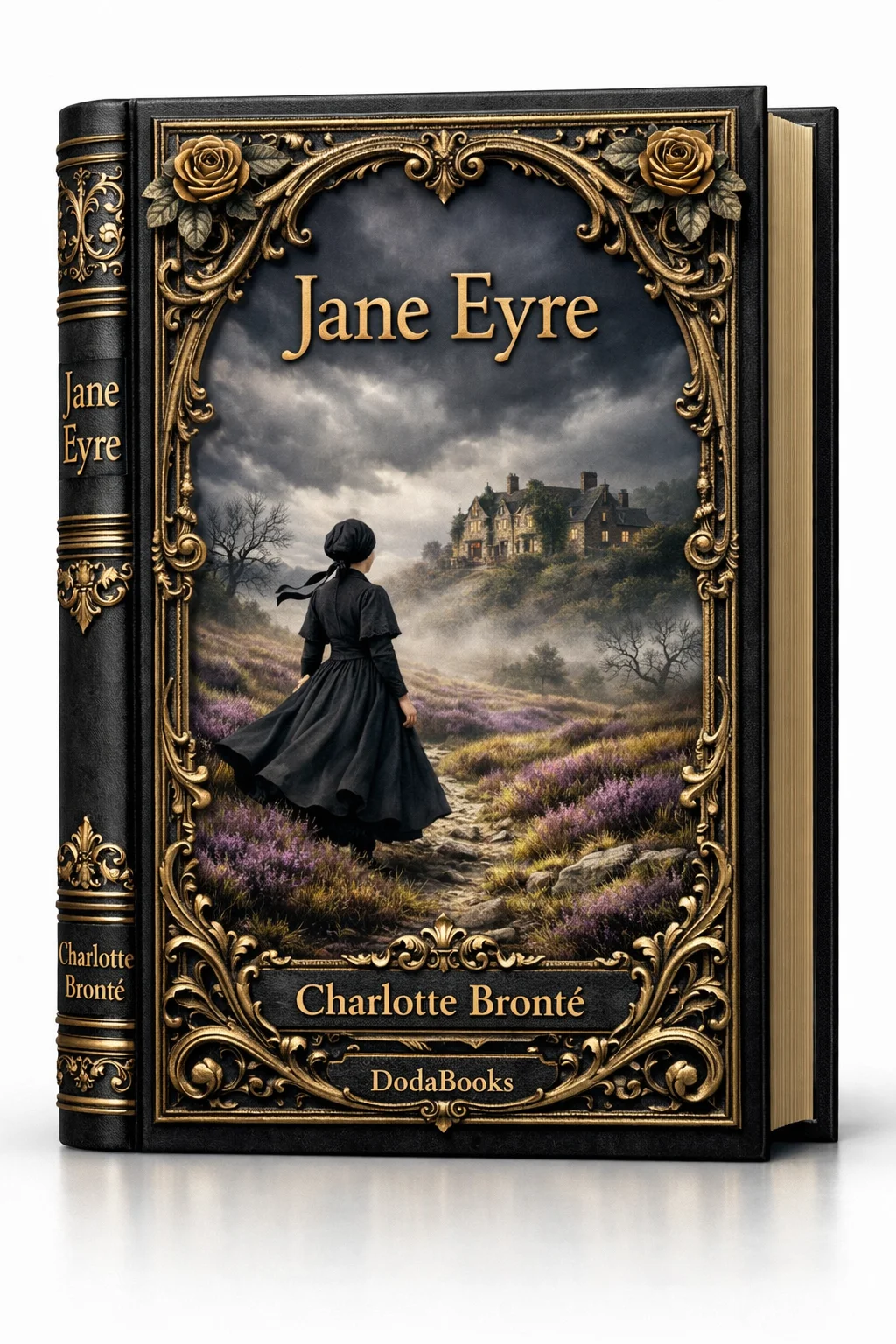
📖 Read the Definitive Annotated Edition of Jane Eyre
Experience Charlotte Brontë’s revolutionary masterpiece with complete historical context, French dialogue translations, and Victorian commentary:
- ✅ Complete 38-Chapter Authoritative Text — Unabridged 1847 edition with authentic punctuation and typography
- 🇫🇷 Inline French Translations — Instantly decode Adèle’s and Rochester’s fluent French conversations
- 🏛️ Victorian Social & Governess Notes — Understand Lowood’s historical basis (Cowan Bridge) and 19th-century class hierarchies
- 📜 Biblical & Literary Allusion Cards — Discover every reference to Milton, Bewick’s Birds, and the scriptures
- 🔒 Universal DRM-Free Formats — Delivered instantly in EPUB, PDF, and AZW3/Mobi for Kindle, Kobo, iPad, and Android