Is The Marvellous Land of Snergs Hard to Read? Reading Difficulty & Study Guide
First published in 1927, Edward Augustine Wyke-Smith’s The Marvellous Land of Snergs is widely recognized as one of the most charming, accessible, and delightful entry points into classic British fantasy. Designed as an imaginative adventure for young readers, the book avoids the dense, archaic syntactic tangles of Victorian multi-decker novels in favor of a brisk, conversational narrative voice rich with dry English humor.
However, modern parents, educators, and young readers reading a text from the 1920s will encounter specific linguistic and cultural differences. Wyke-Smith employs traditional British storybook vocabulary, period colloquialisms, and dry narrative ironies that may puzzle younger twenty-first-century children reading independently.
This comprehensive reading difficulty guide evaluates the Lexile grade level, vocabulary demands, and sentence structures of The Marvellous Land of Snergs, offering an actionable 4-week reading schedule and family discussion prompts to ensure an engaging, rewarding reading experience.
| Difficulty Metric | Level / Measurement | Comparative Context |
|---|---|---|
| Lexile Measure | 860L – 940L | Ideal for middle-grade readers (ages 8–12); accessible as an independent read for 4th–6th graders; perfect read-aloud for ages 6+. |
| Total Word Count | ~45,000 words (~160–180 pages) | Concise and brisk; comparable in length to The Lion, the Witch and the Wardrobe (~38,000 words). |
| Sentence Complexity | Moderate / Fluid | Traditional British syntax; balanced compound sentences with clear dialogue and active verbs. |
| Primary Challenge | 1920s British Vocabulary | Words like jerkin, causeway, defile, quagmire, flagon, provender, and dray. |
| Pacing & Action | Fast & Episodic | Each chapter functions as a distinct, self-contained adventure or comic encounter. |
| Recommended Pacing | 5 chapters per week (4-week plan) | Ideal for 15-to-20-minute nightly bedtime reading sessions. |
📊 Comparative Difficulty Analysis
To understand where The Marvellous Land of Snergs fits in the pantheon of classic children’s and fantasy literature, consider these standard educational reading benchmarks:
CHILDREN'S & FANTASY CLASSICS READING DIFFICULTY (LEXILE SCALE)
┌────────────────────────────────────────────────────────┐
│ George MacDonald: The Princess and the Goblin (1030L)  │
├────────────────────────────────────────────────────────┤
│ Kenneth Grahame: The Wind in the Willows (990L)        │
├────────────────────────────────────────────────────────┤
│ E. A. Wyke-Smith: The Marvellous Land of Snergs (900L) ◄── BALANCED
├────────────────────────────────────────────────────────┤
│ C. S. Lewis: The Lion, the Witch and the Wardrobe (940L)│
├────────────────────────────────────────────────────────┤
│ Roald Dahl: James and the Giant Peach (870L)           │
├────────────────────────────────────────────────────────┤
│ E. B. White: Charlotte's Web (680L)                    │
└────────────────────────────────────────────────────────┘
At approximately 45,000 words across 20 chapters, The Marvellous Land of Snergs hits the sweet spot for family reading. It is long enough to build an immersive, detailed secondary world with its own geography and lore, yet short enough to maintain high narrative momentum without bogging down in lengthy descriptive digressions.
Wyke-Smith’s prose style is characterized by:
- Clean Narrative Progression: Action moves rapidly from the initial escape to Snerg Town, the encounter with Golithos, the swamp witch’s lair, and the climactic rescue.
- Dry British Understatement: Wyke-Smith treats absurd, magical situations with matter-of-fact seriousness, creating gentle humor that entertains adult readers while keeping children engaged.
🔍 The 3 Greatest Reading Hurdles for Modern Children
1. 1920s British Idioms & Terminology
Children accustomed to modern American terminology will encounter traditional British phrasing:
- Recovery Home: A convalescent retreat or sanatorium for children recovering from urban illnesses.
- Tea: Used not just for a beverage, but for the substantial late-afternoon meal featuring bread, butter, jam, and cakes.
- Pantry / Larder: Separate domestic storage rooms for food provisions.
2. Geographical & Martial Nomenclature
Because the middle chapters take the travelers through dangerous wilderness, the narrative features specific terrain and medieval combat terms:
- Terrain: defile (a narrow mountain pass), quagmire (a soft bog that gives way underfoot), causeway (a raised stone path across water), copse (a small dense thicket of trees).
- Armament: jerkin (a close-fitting leather jacket), dirk (a short dagger), hauberk (a coat of chainmail armor), culverin (an early light cannon or firearm).
EXPEDITION LANDSCAPE VOCABULARY
Copse ────────► Defile ────────► Quagmire ────────► Causeway
(Small Thicket) (Narrow Crag)    (Sinking Marsh)    (Raised Stone Path)
3. Subversion of Fairy Tale Expectations
Younger readers conditioned on Disney-style fairy tales may initially expect the giant Golithos to be a terrifying villain who must be killed. Recognizing that Golithos is actually a comedic, friendly figure who weeps over unseasoned turnip stew requires children to understand literary subversion and empathy.
📚 Essential Vocabulary & Concept Glossary
Reviewing these twenty period terms with young readers will ensure a completely frictionless reading journey:
| Term | Meaning & Context in the Story |
|---|---|
| Acorn | The nut of the oak tree; used as the sacred symbol on Snerg royal banners and coins. |
| Barrow | An ancient burial mound of earth and stones; Snerg dwellings resemble snug hillside barrows. |
| Birk | A birch tree; Golithos carries a club fashioned from an uprooted birk tree. |
| Bogle | A northern British and Scottish folklore term for a ghost, goblin, or frightening specter. |
| Bunting | Light cloth used for holiday flags and festive banners in Snerg Town. |
| Butter-Churn | A wooden vessel in which cream is stirred or agitated to make butter; used to trap Mother Meldrum. |
| Cauldron | A large metal pot with a lid and handle, used for cooking over an open fire. |
| Causeway | A raised road or track built across low, wet, or flooded ground. |
| Defile | A steep-sided, narrow gorge or pass through mountains where travelers must march in single file. |
| Flagon | A large metal or ceramic vessel with a handle and spout, used for serving drink at feasts. |
| Gnome | A legendary diminutive subterranean creature who guards underground treasures. |
| Jerkin | A sleeveless or short-sleeved jacket, typically made of durable leather, worn by Snergs. |
| Ogre | A cruel, hideous giant of folklore who devours human beings; Golithos’s ancestral heritage. |
| Peat | Brown, soil-like material formed by decayed vegetable matter in acidic bogs, used as fuel. |
| Provender | Food, provisions, or animal fodder gathered for an extended journey. |
| Quagmire | Soft, boggy, or marshy ground that yields under the feet and threatens to swallow travelers. |
| Skiff | A small, light boat propelled by oars or a small sail, used by Mother Meldrum on the swamp. |
| Snerg | A race of stout, round-faced, three-foot-tall humanoids known for generosity and banquets. |
| Tallow | Hard animal fat melted down to make candles; used to light underground Snerg kitchens. |
| Verge | The grassy edge or border of a road, garden, or forest. |
🗓️ 4-Week Family Reading Plan
This schedule divides the 20 chapters into four weekly sections, making it ideal for a month of nightly chapter readings:
4-WEEK FAMILY READING SCHEDULE
Week 1 (Ch. 1–5):   The Great Escape & Discovering the Land of the Snergs
Week 2 (Ch. 6–10):  Snerg Town Banquets, The Lost Trail & Meeting Golithos
Week 3 (Ch. 11–15): Tea with the Giant & Ambush in the Great Dismal Swamp
Week 4 (Ch. 16–20): The Siege of the Sunken Lair, Butter-Churn Justice & Home
Week 1: The Escape and the Little Men (Chapters 1–5)
- Reading Goal: Chapters 1 through 5 (~11,000 words).
- Core Action: Sylvia and Joe hoard buns at Miss Watkyns’s recovery home; climbing the boundary wall; getting lost in the deep woods; waking to meet Gorbo the Snerg; learning about the hidden Snerg valley.
- Bedtime Reflection: Why did Sylvia and Joe feel the need to run away? What makes Gorbo different from human grown-ups?
- Reading Time: ~15 minutes per night over 5 days.
Week 2: Feasts and the Wrong Direction (Chapters 6–10)
- Reading Goal: Chapters 6 through 10 (~12,000 words).
- Core Action: Arriving at the village with round doors; the welcoming feast; King K’s audience; Gorbo appointed guide; Gorbo taking the wrong mountain path; the terrifying approach of the giant Golithos.
- Bedtime Reflection: Why is Gorbo so confident even when he doesn’t know where he is going?
- Reading Time: ~15 minutes per night over 5 days.
Week 3: Giants and Swamp Witches (Chapters 11–15)
- Reading Goal: Chapters 11 through 15 (~11,000 words).
- Core Action: Golithos explains his vegetarian diet; Sylvia seasons the turnip stew; entering the foggy marsh; Mother Meldrum attacks with bat swarms and eel-grass nets; Sylvia and Joe locked in the cauldron room; Gorbo escapes.
- Bedtime Reflection: How did Sylvia change Golithos’s mind about eating people?
- Reading Time: ~15 minutes per night over 5 days.
Week 4: The Great Rescue and Return (Chapters 16–20)
- Reading Goal: Chapters 16 through 20 (~11,000 words).
- Core Action: Gorbo enlists Golithos and the Snerg army; the assault on Meldrum Castle; Golithos traps the witch in a butter-churn; the triumphant half-mile banquet; returning to Miss Watkyns’s garden with copper acorn coins.
- Bedtime Reflection: What did Joe and Sylvia learn from their journey? Would you keep the copper acorn coin?
- Reading Time: ~15 minutes per night over 5 days.
💬 Discussion & Book Club Questions
- The Nature of the Snergs: What traits make the Snergs so appealing to readers of all ages? Why do small, domestic creatures who love eating and comfort make such memorable heroes?
- Redemption of the Monster: In most fairy tales, giants are killed with swords or tricks. Why does Wyke-Smith choose to reform Golithos rather than slay him? What lesson does this teach young readers about prejudice?
- The Power of Sympathy: How does Sylvia’s willingness to listen to Golithos save her and Joe’s lives? How does her empathy contrast with the witch’s cruelty?
- Childhood vs. Adult Authority: Compare the well-meaning, restrictive authority of Miss Watkyns with the supportive, collaborative leadership of King K. Which environment encourages greater personal growth?
- The Spirit of Adventure: At the end of the story, only one day has passed in the human world. Did the children dream the adventure, or was it real? What evidence does the author provide?
❓ Frequently Asked Questions
At what age can a child read this book independently?
Most children with a 4th-to-5th-grade reading level (ages 9–11) can comfortably read The Marvellous Land of Snergs independently. For younger children (ages 6–8), it serves as a wonderful chapter-by-chapter bedtime read-aloud book.
Is there any scary or traumatic content in the story?
The peril is typical of classic British fairy tales: the witch Mother Meldrum intends to boil the children in a cauldron, and Golithos initially talks about eating travelers. However, the tone remains lighthearted, humorous, and reassuring throughout, with zero graphic violence and a completely happy, comic resolution.
How long does it take to read the entire novel aloud?
At approximately 45,000 words, reading the entire novel aloud at a comfortable storytelling pace (about 130 words per minute) takes roughly 5.5 to 6 hours of total reading time, or about 20 nights of 15-minute readings.
Does the book have illustrations?
The original 1927 first edition was illustrated with over 40 charming line drawings by George Morrow, the famous British cartoonist for Punch magazine, which beautifully capture the round, cheerful faces of the Snergs and the towering form of Golithos.
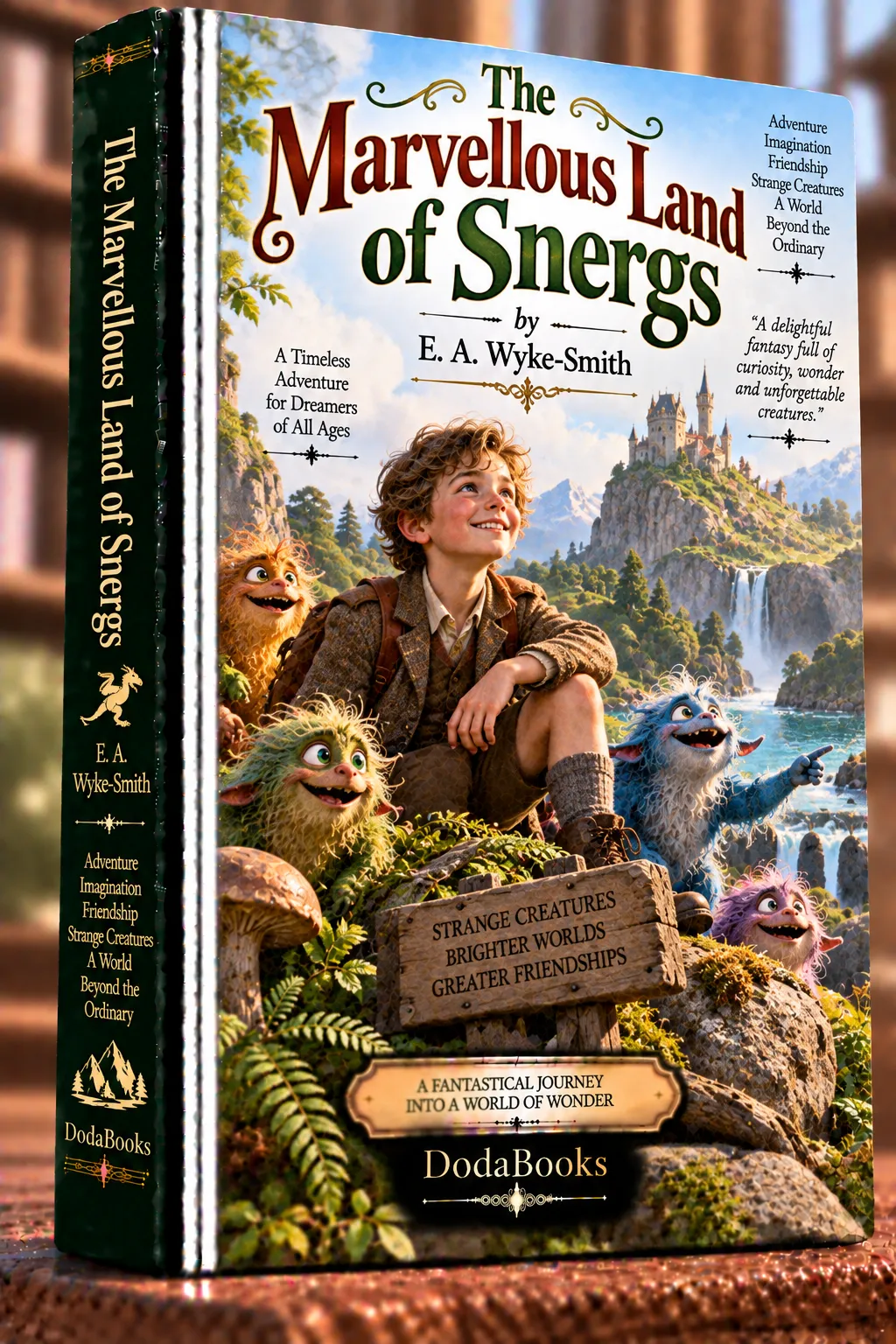
📖 The Perfect Family Read-Aloud Classic
Introduce your children to the magic, warmth, and wit of The Marvellous Land of Snergs in the definitive digital edition from DodaBooks:
- 🍄 Complete 20-Chapter Text — Restored from the original 1927 first edition with chapter guides
- 💡 Helpful Family Reading Footnotes — Quick explanations for 1920s British terms, vocabulary, and folklore
- 📱 Designed for Shared Screens — Clean typography and pleasant layout for tablets, e-readers, and phones
- 🔓 100% DRM-Free — Read anywhere without proprietary store locks or device limits
👉 Get the Annotated Edition of The Marvellous Land of Snergs at DodaBooks →