Is The Hound of the Baskervilles Hard to Read? Reading Difficulty Guide
If you are planning to read Arthur Conan Doyle’s The Hound of the Baskervilles (1902) for high school, university, a book club, or simply your own personal entertainment, you are likely wondering what kind of challenge lies ahead. Is the 1902 prose stuffy, dry, and archaic? Will you get bogged down in dense Victorian descriptions of English countryside bogs?
The short answer: The Hound of the Baskervilles is one of the most accessible, entertaining, and fast-moving classics you will ever read.
Conan Doyle was a master of high-suspense storytelling. Unlike many Victorian novelists who filled hundreds of pages with polite domestic gossip or philosophical tangents, Doyle wrote a lean, atmospheric, 60,000-word thriller designed to keep magazine readers on the edge of their seats from month to month. However, it does present a few specific hurdles for modern readers: unique Dartmoor geological terminology, a shifting narrative structure (letters and diary entries), and the intentionally archaic 18th-century prose of the Hugo Baskerville curse manuscript.
This comprehensive guide breaks down the true reading difficulty of The Hound of the Baskervilles, maps out the four hurdles to watch for, provides a proven 8-day reading schedule, and shares practical tips to ensure your read is effortless and deeply rewarding.
⚡ The Hound of the Baskervilles Reading Difficulty: At a Glance
- Difficulty Rating: 5.0 / 10 (Moderate to Accessible) — Considerably easier than Frankenstein (6.5/10), much faster than Dracula (5.5/10), and far simpler than Moby-Dick (9.5/10).
- Length: Approximately 59,000 words across 15 chapters (around 190–220 pages in standard print editions).
- Estimated Reading Time: 4 to 5 hours for an average adult reader (250 words per minute).
- Recommended Reading Age: Grades 8–10 (ages 13+) through adult readers.
- Biggest Stumbling Block: Dartmoor's specialized landscape terminology (tors, mires, clitters, Neolithic huts) and the archaic English in the 1742 curse manuscript.
🧗 The 4 Specific Hurdles for Modern Readers
While The Hound of the Baskervilles reads like a modern gothic thriller, first-time readers should be aware of four specific literary challenges:
1. Dartmoor’s Specialized Geography & Geological Terms
The novel is famously set on Dartmoor in Devon, England—a wild, high plateau of exposed granite, peat bogs, and heather. Conan Doyle uses regional British terms that can disorient readers unfamiliar with English moorland:
- “Tor” — A prominent, free-standing rocky granite outcrop perched atop a hill (e.g., Black Tor, Bellever Tor).
- “Mire” — A treacherous, deep peat bog or quagmire that looks like innocent green turf but sucks animals and men down to their deaths (e.g., the Great Grimpen Mire).
- “Clitter” — A chaotic slope of shattered granite boulders strewn across a hillside.
- “Hut Circle” — The circular stone foundations of prehistoric Bronze Age dwellings scattered across the moor, used as hideouts in the novel.
- “Cairn” — A prehistoric man-made mound of rough stones used as a landmark or ancient burial site.
How to conquer it: Picture Dartmoor not as a lush green countryside, but as a brooding, desolate, prehistoric wilderness of grey stone, purple heather, cold wind, and dangerous quicksand. Once you visualize the terrain, the suspense becomes electrifying.
2. The 1742 Hugo Baskerville Manuscript Language
In Chapter 2, Dr. Mortimer reads the ancient manuscript detailing the origins of the family curse. To make the document feel authentic, Conan Doyle wrote it in the formal, archaic English of the early 18th century:
“Of the origin of the Hound of the Baskervilles there have been many statements, yet as I come in a direct line from Hugo Baskerville, and as I had the story from my father, who also had it from his, I have set it down with all faith that it occurred even as is here set forth…”
First-time readers sometimes panic, fearing the entire novel will be written in this dense, archaic style.
How to conquer it: Relax! The archaic prose lasts for only about four pages in Chapter 2. As soon as Mortimer finishes reading the document, the novel immediately returns to crisp, modern 1902 detective dialogue.
3. The Shifting Narrative Structure
While Chapters 1–7 and 11–15 follow standard first-person past-tense storytelling by Dr. Watson, the middle third of the novel shifts format:
- Chapter 8 is framed as Watson’s First Report to Sherlock Holmes.
- Chapter 9 is framed as Watson’s Second Report.
- Chapter 10 is framed as Extracts from the Diary of Dr. Watson.
How to conquer it: Recognize that this format shift allows you to experience the investigation in real time alongside Watson. You see every clue as Watson discovers it, without Holmes immediately stepping in to reveal the answer.
4. Victorian Forensic Science and Pseudoscience
Written at the dawn of the 20th century, the novel features both cutting-edge forensic science and popular Victorian scientific fads:
- Craniology / Phrenology: Dr. Mortimer is obsessed with examining human skulls, believing that skull shape determines intelligence and criminal inclination. Holmes humors him, but relies instead on genuine observation.
- Entomology: Stapleton’s hobby of hunting rare moths and butterflies (Lepidoptera) reflects the massive Victorian craze for natural history collection.
- Phosphorus Chemistry: The chemical preparation used on the hound reflects early forensic chemistry.
📖 Mini-Glossary: Key Dartmoor & Victorian Terms
- Hansom Cab: A fast, two-wheeled, two-passenger horse-drawn cab with the driver seated high on a rear perch.
- Wicket-Gate: A small secondary gate or turnstile next to a larger carriage gate (where Sir Charles died).
- Dolichocephalic: Having a relatively long skull (a term Dr. Mortimer uses to flatter Holmes’s intellect).
- Yew Alley: A formal garden walkway bordered on both sides by dense, high yew hedges.
- Fuller’s Earth: A clay-like mineral substance used for absorbing grease and filtering oils.
- Farrier: A craftsman who shoes horses and treats horse hoof ailments.
- Bittern: A secretive, marsh-dwelling wading bird famous for making a deep, eerie booming cry across wetlands.
⏱️ Recommended 8-Day Reading Schedule
At approximately 59,000 words, The Hound of the Baskervilles is the ideal length for an eight-day reading journey. By reading about 25 pages (around 35–45 minutes) per day, you will finish comfortably in just over a week:
+------------------------------------------------------------------------------------+
|                  8-DAY HOUND OF THE BASKERVILLES READING PLAN                      |
+------------------------------------------------------------------------------------+
| DAY 1: Chapters 1–2 (The Walking Stick & The Curse of Hugo Baskerville)            |
| DAY 2: Chapters 3–4 (The Giant Footprints & Meeting Sir Henry in London)           |
| DAY 3: Chapters 5–6 (Three Broken Threads & Journey to Baskerville Hall)          |
| DAY 4: Chapters 7–8 (The Stapletons of Merripit House & Watson's First Report)     |
| DAY 5: Chapters 9–10 (The Midnight Stakeout & The L.L. Letter Clue)                |
| DAY 6: Chapters 11–12 (The Man on the Tor & The Convict's Tragic Fall)             |
| DAY 7: Chapters 13–14 (The Ancestral Portrait & The Hound Attacks in the Fog)     |
| DAY 8: Chapter 15 (Holmes's Final Retrospection by the Baker Street Fire)         |
+------------------------------------------------------------------------------------+
📊 Classic Victorian Gothic Difficulty Compared
| Book Title | Author | Word Count | Difficulty (1–10) | Pacing & Key Hurdle |
|---|---|---|---|---|
| Dr. Jekyll and Mr. Hyde | R.L. Stevenson | ~25,500 | 4.5 / 10 | Very short; fast pacing; minor Victorian medical vocabulary. |
| The Hound of the Baskervilles | Arthur Conan Doyle | ~59,000 | 5.0 / 10 | High suspense; Dartmoor bog terms; archaic manuscript intro. |
| The Picture of Dorian Gray | Oscar Wilde | ~78,000 | 5.5 / 10 | Theatrical epigrams; Chapter 11 aesthetic catalog slump. |
| Dracula | Bram Stoker | ~160,000 | 5.5 / 10 | Epistolary letters and diaries; fast modern horror pacing. |
| Frankenstein | Mary Shelley | ~75,000 | 6.5 / 10 | Formal Romantic prose; nested concentric narrative frames. |
💡 Top 5 Tips for First-Time Readers
- Push Past the Manuscript in Chapter 2: Don’t let the archaic 18th-century language in the Hugo Baskerville legend slow you down. The moment the manuscript ends, the language returns to modern detective storytelling.
- Follow Watson’s Clues Like a Detective: Because Holmes is off-stage for the middle chapters, you have the exact same evidence Watson has. Pay attention to who owns boots, who walks where at night, and who knows the paths through the mire.
- Keep the Map of Dartmoor in Mind: Remember the triangle of locations: Baskerville Hall (the ancestral home), Merripit House (the Stapletons’ home), and the Great Grimpen Mire (the deadly bog).
- Notice the Subtlety of Jack Stapleton: Watch how Stapleton constantly steers conversations, asks leading questions about Sir Henry’s habits, and warns people away from the moor under the guise of friendly concern.
- Use an Annotated Digital Edition: Having margin notes explaining English railway routes, Devonshire folk customs, and Victorian scientific terms eliminates all confusion so you can savor the suspense.
Conquer Dartmoor with confidence. The DodaBooks Annotated Edition includes inline notes for all moorland terms, clear regional maps, and forensic science guides.
Get the Annotated Edition at DodaBooks❓ Frequently Asked Questions
Is The Hound of the Baskervilles suitable for middle schoolers?
Yes! It is one of the most popular classics taught in middle school and early high school (grades 7–10). While it features gothic horror, an escaped convict, and animal attacks, there is no graphic gore, profanity, or inappropriate content. It is a thrilling, wholesome mystery for readers of all ages.
Why does Dr. Watson carry a gun in this book?
Dr. Watson is an army veteran who served in the Second Anglo-Afghan War. Because Baskerville Hall is located in an isolated wilderness with an escaped murderer (Selden) roaming the bogs and an unknown killer targeting Sir Henry, Holmes specifically orders Watson never to go anywhere without his service revolver.
Is the book scary compared to modern horror?
The novel is atmospheric and suspenseful rather than graphically terrifying. The dread comes from the eerie isolation of the fog-covered moor, the mysterious midnight howls, and the psychological fear of an ancient curse hunting an innocent man.
Do I need to read the previous Sherlock Holmes books first?
No. The Hound of the Baskervilles is a 100% standalone novel. Conan Doyle wrote it so that anyone could pick it up without having read a single prior Holmes story and understand the characters and plot immediately.
Why is this novel considered the best Sherlock Holmes story?
It combines the best elements of multiple genres: a razor-sharp detective mystery, an atmospheric gothic horror story, an eerie regional setting (Dartmoor), and a showcase for both Dr. Watson's bravery and Sherlock Holmes's supreme deductive logic.
📚 Related Reading Guides
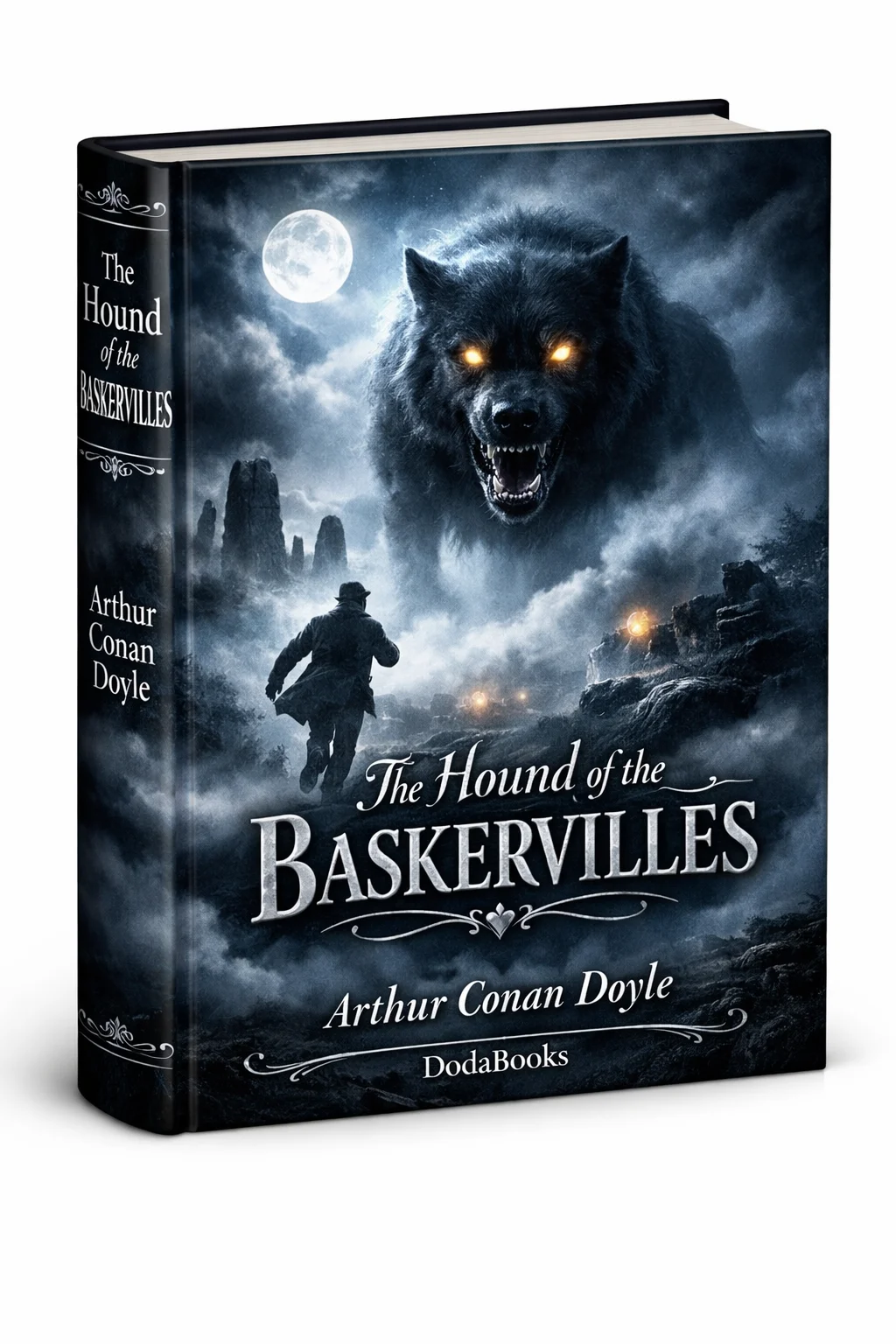
Read The Hound Without the Struggle
Enjoy Arthur Conan Doyle's greatest masterpiece with total clarity and confidence:
- Complete 15-chapter authorial text of the 1902 novel
- Instant margin explanations for all Dartmoor terms and Victorian forensic methods
- Detailed maps of the Great Grimpen Mire, Baskerville Hall, and Merripit House
- Pristine digital typography formatted for Kindle, iPad, Kobo, and phone