Is The Count of Monte Cristo Hard to Read? Reading Difficulty & Level Guide
When prospective readers consider reading Alexandre Dumas’s 1844 masterpiece The Count of Monte Cristo, their primary intimidation is almost always its colossal physical scale: running over 1,200 pages and approximately 460,000 words across 117 chapters, it is one of the longest novels in Western literature. Readers assume that a book of this magnitude must be dense, ponderous, and philosophically exhausting like Leo Tolstoy’s War and Peace or Victor Hugo’s Les Misérables.
Is The Count of Monte Cristo hard to read? The short answer is an emphatic NO: it earns an accessible difficulty rating of 6.0 / 10 (Moderate).
In fact, almost everyone who starts the novel discovers within fifty pages that The Count of Monte Cristo is quite possibly the single most addictive, fast-paced, and effortlessly entertaining page-turner ever written. Dumas was primarily a theatrical playwright and popular feuilletonist (serial writer); he did not write slow, introspective descriptions or heavy metaphysical sermons. The novel moves with the breakneck momentum of an action movie: sword duels, prison breaks, poison conspiracies, catacomb kidnappings, and dramatic confrontations.
However, while Dumas’s sentence structures are remarkably fluid, readers commonly encounter four specific reading challenges:
- The Sheer Scale & Character Web: Tracking over fifty characters across twenty-four years of fictional time (1815–1839).
- 19th-Century French Politics: Navigating the turbulent shifts between Napoleon’s Hundred Days, the Bourbon Restoration under King Louis XVIII, and the July Monarchy of King Louis-Philippe.
- Multiple Aristocratic Aliases: Remembering that the Count of Monte Cristo, Abbé Busoni, Lord Wilmore, and Sinbad the Sailor are all Edmond Dantès, while Benedetto operates as Prince Cavalcanti and Fernand Mondego becomes Count de Morcerf.
- Historical Monetary & Legal Systems: Decoding French francs, Italian scudi, Roman crowns, and the financial schemes that bring down Baron Danglars.
This comprehensive guide breaks down the true reading level of The Count of Monte Cristo, maps out the specific hurdles to watch for, compares it against other classic epics, and provides an easy 30-day reading schedule.
⚡ The Count of Monte Cristo Reading Difficulty: At a Glance
- Difficulty Rating: 6.0 / 10 (Moderate / High Endurance) — Considerably faster and more entertaining than Les Misérables (7.5/10), War and Peace (8.0/10), or Middlemarch (8.5/10); roughly comparable in accessibility to Charles Dickens's A Tale of Two Cities (6.0/10).
- Length: Approximately 460,000 words across 117 chapters (about 1,200–1,280 pages in standard unabridged print).
- Estimated Reading Time: 30 to 35 hours for an average adult reader (about 60 minutes per day on a 30-day schedule).
- Lexile Measure & Grade Level: Lexile measure roughly 1000L–1150L (Grades 9–12 / High School to College level).
- Primary Stumbling Blocks: Volume fatigue, keeping track of multi-character subplots in Paris (Chapters 40–70), and French post-Napoleonic political factions.
📊 Classic Doorstoppers Reading Difficulty Comparison
To understand how The Count of Monte Cristo compares to other massive 19th-century epic doorstoppers, examine this comparative benchmark:
+---------------------------------------------------------------------------------------------------------------+
|                               19TH-CENTURY EPIC DOORSTOPPERS READING DIFFICULTY COMPARISON                    |
+--------------------------+------------+--------------+------------------+-------------------------------------+
| TITLE & AUTHOR           | DIFFICULTY | PAGE COUNT   | PROSE COMPLEXITY | PRIMARY CHALLENGE                   |
+--------------------------+------------+--------------+------------------+-------------------------------------+
| The Count of Monte Cristo| 6.0 / 10   | ~1,200 pages | High momentum,   | Endurance, 117 chapters, French     |
| (Alexandre Dumas)        |            |              | theatrical dialog| politics, large cast of characters  |
+--------------------------+------------+--------------+------------------+-------------------------------------+
| Jane Eyre                | 5.5 / 10   | ~500 pages   | Introspective,   | Moral monologues, 19th-century      |
| (Charlotte Brontë)       |            |              | poetic romantic  | religious debates, slow childhood   |
+--------------------------+------------+--------------+------------------+-------------------------------------+
| Frankenstein             | 6.5 / 10   | ~220 pages   | Dense, formal    | Philosophical debate, formal        |
| (Mary Shelley)           |            |              | Romantic rhetoric| Latinate syntax, nested frames      |
+--------------------------+------------+--------------+------------------+-------------------------------------+
| A Tale of Two Cities     | 6.0 / 10   | ~400 pages   | Atmospheric,     | French revolutionary politics,      |
| (Charles Dickens)        |            |              | rhetorical prose | complex Dickensian double identity  |
+--------------------------+------------+--------------+------------------+-------------------------------------+
| Les Misérables           | 7.5 / 10   | ~1,400 pages | Narrative plus   | 100-page essayistic digressions on  |
| (Victor Hugo)            |            |              | long philosophical| Waterloo, convents, & Paris sewers  |
+--------------------------+------------+--------------+------------------+-------------------------------------+
| War and Peace            | 8.0 / 10   | ~1,300 pages | Dense, Russian   | 500+ characters, military history,  |
| (Leo Tolstoy)            |            |              | psychological    | extended philosophical treatises    |
+--------------------------+------------+--------------+------------------+-------------------------------------+
| Middlemarch              | 8.5 / 10   | ~880 pages   | Dense, deeply    | Heavy sociological analysis,        |
| (George Eliot)           |            |              | analytical prose | complex intellectual moral dilemmas |
+--------------------------+------------+--------------+------------------+-------------------------------------+
The Dumas Advantage: Zero 100-Page Digressions
Notice the critical difference between Dumas and his French contemporary Victor Hugo. In Les Misérables, Hugo stops the plot dead for fifty pages to describe the religious history of Parisian religious convents, or eighty pages to debate the battle tactics of Waterloo.
Alexandre Dumas never does this. Dumas was a playwright: every single chapter contains action, dialogue, confrontation, or strategic moves. The 1,200 pages of The Count of Monte Cristo feel like 400 pages because the story never stops moving forward.
🧗 The 4 Primary Reading Hurdles Explained
1. French Post-Napoleonic Politics (1815–1838)
The entire motivation for Dantès’s wrongful arrest in 1815 is rooted in the political turmoil following the fall of Napoleon Bonaparte:
- The First Restoration (1814–1815): King Louis XVIII has returned to the French throne. Royalists despise anyone loyal to Napoleon.
- The Hundred Days (March–July 1815): Napoleon escapes from exile on Elba and marches back to Paris to seize power.
- Bonapartists vs. Royalists: Gérard de Villefort is a zealous royalist prosecutor seeking the favor of the King. His father, Monsieur Noirtier, is an ardent Bonapartist conspirator.
- The Treason Letter: When Dantès unknowingly carries a letter from Elba addressed to Noirtier, Villefort realizes his own father is implicated. To protect his family name and royalist career, Villefort buries Dantès in the Château d’If.
+-----------------------------------------------------------------------------------------------+
|                            KEY HISTORICAL FACTIONS IN THE NOVEL DECODED                       |
+--------------------------+--------------------------------------------------------------------+
| FACTION / TERM           | WHO BELONGS TO IT & WHY IT MATTERS                                 |
+--------------------------+--------------------------------------------------------------------+
| Bonapartists             | Loyal to Napoleon Bonaparte; Monsieur Noirtier (Villefort's       |
|                          | father) is a leader; viewed as traitors by the crown.              |
+--------------------------+--------------------------------------------------------------------+
| Royalists (Bourbons)     | Loyal to King Louis XVIII; Gérard de Villefort is an ambitious     |
|                          | royalist prosecutor desperate to prove his anti-Bonapartist zeal.  |
+--------------------------+--------------------------------------------------------------------+
| The Hundred Days         | Napoleon's brief return to power (March 1815); Pierre Morrel      |
|                          | attempts to free Dantès during this period, but fails.             |
+--------------------------+--------------------------------------------------------------------+
| The July Monarchy (1830) | King Louis-Philippe takes power; the era when Danglars and Fernand |
|                          | become ultra-wealthy peers through commercial corruption.          |
+--------------------------+--------------------------------------------------------------------+
How to conquer it: You do not need a history degree. Just remember: in 1815, supporting Napoleon was high treason, and Villefort committed Dantès to a dungeon because Villefort’s own father was working with Napoleon.
2. Navigating the Disorienting Middle Section (Chapters 31–45)
Readers who blaze through the first thirty chapters (Marseille, the Château d’If, the daring sea escape, and finding the emerald cave) often hit a mental roadblock around Chapter 31.
Suddenly, Dumas drops the Marseille characters entirely and transports the reader to Rome in 1838, introducing two new young men—Franz d’Épinay and Albert de Morcerf—attending an Italian carnival. The Count appears under a bizarre new guise, living in an underground grotto, smoking hashish, and discussing executions.
Why this section exists: Do not panic or lose patience! Dumas is introducing the second generation of French society. Albert de Morcerf is Fernand and Mercédès’s son! The Count is orchestrating a theatrical kidnapping by Roman bandits to ingratiate himself with Albert, using him as a Trojan horse to gain entry into the elite drawing rooms of Paris. Once the Count arrives in Paris in Chapter 40, all the narrative threads snap together with breathtaking power.
3. Untangling Edmond’s Web of Aliases
Throughout the second half of the book, Edmond Dantès constantly shifts identities depending on his audience:
- The Count of Monte Cristo: For Parisian high society, banking circles, and public confrontation.
- Abbé Busoni: For religious confessions, legal investigations, and questioning Gaspard Caderousse.
- Lord Wilmore: For distributing anonymous charity, interacting with English banks, and confusing police investigators.
- Sinbad the Sailor: For Mediterranean maritime adventures, smugglers, and saving the house of Morrel.
4. 19th-Century Currency and Financial Calculations
In the second half of the novel, financial transactions form the weapon with which the Count destroys Baron Danglars:
- Franc: The standard French silver/gold currency.
- Louis d’Or: Gold coin worth approximately 20 francs.
- The Unlimited Credit: The Count deposits millions in Danglars’s bank and demands an “unlimited credit” voucher for six million francs—a financial commitment that ultimately breaks Danglars’s bank when the Count cashes the vouchers simultaneously.
📅 The 30-Day Reading Schedule
To conquer The Count of Monte Cristo smoothly across one month (reading about 3 to 4 chapters per day, averaging 40 pages daily), follow this balanced 30-day plan:
+--------------------------------------------------------------------------------------------------------------------+
|                                  THE 30-DAY THE COUNT OF MONTE CRISTO READING PLAN                                 |
+------+-------------+------------------------------------+----------------------------------------------------------+
| DAYS | SECTION     | CHAPTERS COVERED                   | KEY PLOT MILESTONES                                      |
+------+-------------+------------------------------------+----------------------------------------------------------+
| 01–03| Part 1      | Chapters 1–13                      | Marseille; the Pharaon; Fernand & Danglars plot; arrest  |
| 04–06| Part 2      | Chapters 14–21                     | The Château d'If; meeting Abbé Faria; the education;     |
|      |             |                                    | the Spada parchment; Faria's death & the burial sack    |
| 07–09| Part 3      | Chapters 22–30                     | The island of Monte Cristo; the treasure grotto;         |
|      |             |                                    | Abbé Busoni at Caderousse's inn; saving Pierre Morrel   |
| 10–12| Part 4      | Chapters 31–41                     | Rome Carnival; Franz & Albert; Luigi Vampa bandit rescue |
| 13–15| Part 5      | Chapters 42–52                     | Arrival in Paris; meeting Mercédès; purchasing Auteuil   |
| 16–18| Part 5      | Chapters 53–64                     | The telegraph fraud; dinner party at Auteuil; the infant |
| 19–21| Part 6      | Chapters 65–75                     | The poisoning begins in Villefort's home; Andrea/Benedetto|
| 22–24| Part 6      | Chapters 76–88                     | Haydée exposes Morcerf in the Chamber of Peers; the duel |
| 25–27| Part 6      | Chapters 89–104                    | Mercédès begs for Albert; Morcerf's suicide; Valentine   |
|      |             |                                    | seemingly poisoned; Benedetto's trial in Paris court   |
| 28–30| Part 7      | Chapters 105–117                   | Villefort's madness; Danglars starved in Rome; the     |
|      |             |                                    | reunion of Valentine & Maximilian; "Wait and Hope"       |
+------+-------------+------------------------------------+----------------------------------------------------------+
💡 Top 3 Tips for First-Time Readers
- Read Unabridged (Never Settle for Abridgments): If your copy has fewer than 117 chapters, throw it out! Cutting 400 pages guts the character motivations, the Roman carnival, and the moral redemption of the climax.
- Push Through the Rome Transition (Chapters 31–38): When the story abruptly shifts from the Mediterranean treasure to Albert de Morcerf in Rome, keep going! It is the launchpad for the entire Parisian revenge.
- Use a Purpose-Built Edition with Contextual Notes: Having clear historical explanations for French politics and monetary conversions allows you to stay immersed in the drama. Reading with the DodaBooks Edition guarantees the full unabridged text formatted cleanly for modern devices.
❓ Frequently Asked Questions
Is The Count of Monte Cristo suitable for high school students?
Yes, highly suitable. Because it is an adventure novel packed with suspense, sword duels, prison breaks, and moral dilemmas, it is frequently assigned in high school AP English courses and honors seminars. Its vocabulary is clear and engaging, and it lacks the dry academic digressions found in some Victorian literature.
How does the reading difficulty compare to Alexandre Dumas's The Three Musketeers?
The Three Musketeers is slightly shorter and more lighthearted, focusing on swashbuckling camaraderie (difficulty 4.5 / 10). The Count of Monte Cristo is a much darker, deeper, and more psychologically complex epic (difficulty 6.0 / 10) centered on wrongful imprisonment, identity, and the moral corruption of revenge.
Why is the novel divided into 117 chapters?
Because Dumas published the novel serially in a daily newspaper (Journal des Débats), each chapter was written to keep readers in suspense until the next issue. The short chapter format makes reading the 1,200-page book surprisingly easy, as you can read two or three chapters in a 20-minute session.
Can I read a chapter-by-chapter plot summary before diving in?
If you want an overview of the seven narrative movements and key plot twists before beginning your reading journey, explore our complete The Count of Monte Cristo Summary by Part & Chapter.
What is the best edition and translation to buy?
For physical paperback reading, Robin Buss’s translation for Penguin Classics is the gold standard. For e-readers, Kindle, and mobile devices, we recommend the unabridged DodaBooks Edition. Compare all editions in Where to Buy The Count of Monte Cristo: Best Editions.
📚 Related Articles
Curious about other sweeping 19th-century masterworks and mystery classics? Discover our The Moonstone Reading Difficulty Guide or our The Woman in White Reading Difficulty Guide.
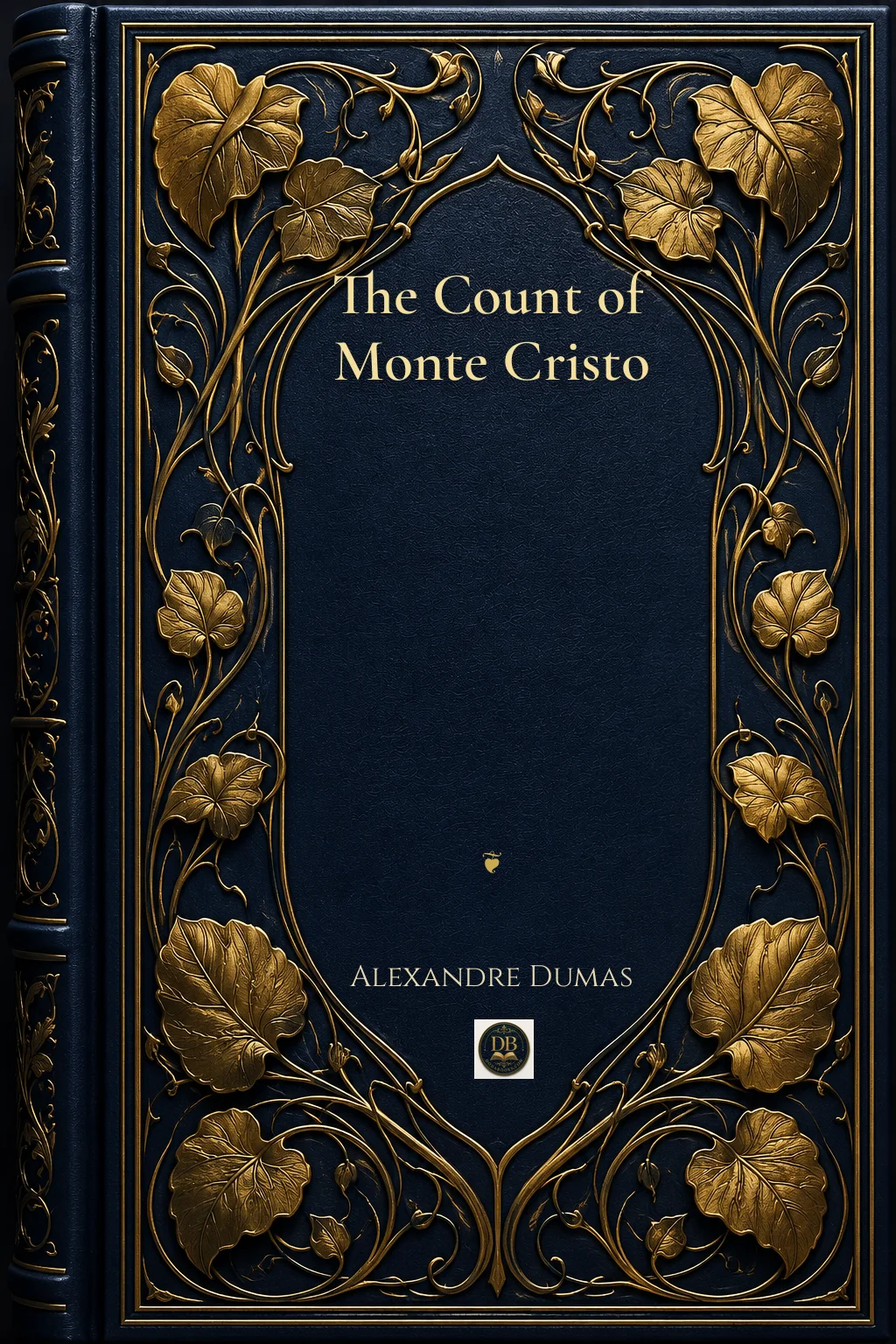
⚓ Experience Dumas’s Unabridged Masterpiece in Full Splendor
Read the story that defined revenge, betrayal, and redemption in an authoritative, distraction-free edition:
- ✅ Complete, unabridged 117-chapter text across all seven dramatic movements
- 🏛️ French political & historical context illuminated — understand the Hundred Days and Restoration
- 🗂️ Passage-specific annotation cards decoding the aliases, finances, and classical references
- 🔒 DRM-free EPUB format — readable on any Kindle, Kobo, iPad, or mobile device
- 📥 Instant digital download delivered directly after checkout