Is The Brothers Karamazov Hard to Read? Reading Difficulty, Russian Names & Study Guide
Few literary monuments carry a more formidable reputation than Fyodor Dostoevsky’s The Brothers Karamazov. Running over 800 pages (approximately 365,000 words) across twelve dense books, it is frequently cited alongside James Joyce’s Ulysses and Leo Tolstoy’s War and Peace as one of the ultimate tests of readerly endurance. Between its labyrinthine theological debates, courtroom speeches, feverish psychological monologues, and confusing Russian naming conventions, many aspiring readers stall within the first hundred pages.
Yet the widespread myth that The Brothers Karamazov is a dry, impenetrable academic slog is fundamentally false. Stripped of its intimidating reputation, the novel is an exhilarating, pulse-pounding page-turner: a sordid family murder mystery filled with romantic rivalries, drunken midnight brawls, stolen money, courtroom duels, and sudden plot twists. Dostoevsky wrote for a mass serial audience, intentionally structuring each book with dramatic cliffhangers.
This comprehensive reading difficulty guide evaluates the quantitative readability metrics of The Brothers Karamazov, breaks down the three primary intellectual and linguistic hurdles, provides an essential decoder for Russian patronymics and diminutives, and outlines a structured 30-day reading plan to guide you through Dostoevsky’s greatest triumph.
| Assessment Category | Measurement / Benchmark | Practical Reading Implication |
|---|---|---|
| Lexile Measure | 1120L–1200L | Comparable to Crime and Punishment, War and Peace, and Les Misérables; accessible to advanced high schoolers and adults |
| Reading Age / Grade Level | Grades 11–College (Age 16+) | Emotional and philosophical complexity requires mature concentration; vocabulary is rich in theological and psychological terms |
| ATOS Book Level | 8.8 | Elevated sentence length and multi-layered ideological dialogues balanced by intense narrative suspense |
| Total Word Count | ~365,000 words (12 books + epilogue) | Massive epic novel; roughly 800 to 950 pages depending on typeface and translation |
| Estimated Reading Time | 25 to 35 hours | Best read in steady daily sessions of 25 to 30 pages over approximately four weeks (30-day plan) |
| Primary Difficulties | Russian naming conventions, theological digressions (“Grand Inquisitor”), polyphonic voices | Overcoming initial confusion with patronymics and pacing through Book VI (“The Russian Monk”) |
📊 Readability Metrics: Deciphering the Challenge
When evaluated by standard readability formulas, The Brothers Karamazov scores in the upper-intermediate tier for vocabulary and syntax, but in the highest tier for conceptual and psychological density.
                      [READABILITY PROFILE: THE BROTHERS KARAMAZOV]
                                         │
        ┌────────────────────────────────┼────────────────────────────────┐
        ▼                                ▼                                ▼
[LEXILE: ~1160L]                 [SENTENCE STRUCTURE: VOLCANIC]   [PHILOSOPHICAL DENSITY: EXTREME]
- Theological & psychological    - Long, breathless clauses       - Explores free will, evil,
  vocabulary (polyphony, starets)- Rapid-fire dialogue             redemption, and parricide
1. Narrative Velocity vs. Philosophical Depth
Unlike Henry James, whose prose is slow and meticulously detached, Dostoevsky writes at white heat. His characters do not make polite conversation; they confess their deepest sins, scream in taverns, collapse into hysterical fits (“lacerations”), and weep with spiritual ecstasy.
- The plot moves rapidly, particularly in Part III (Dmitri’s frantic search for cash and the orgy at Mokroye) and Part IV (the murder trial).
- The primary reading challenge is not following the action, but pausing to absorb the ideas. Chapters like “The Grand Inquisitor” and “The Russian Monk” require philosophical contemplation rather than speed-reading.
🚧 The Three Major Hurdles for Modern Readers
                  ┌─────────────────────────────────────────┐
                  │    THE THREE HURDLES OF DOSTOEVSKY      │
                  └────────────────────┬────────────────────┘
                                       │
         ┌─────────────────────────────┼─────────────────────────────┐
         ▼                             ▼                             ▼
┌───────────────────┐        ┌───────────────────┐         ┌───────────────────┐
│ The Russian Name  │        │ Philosophical     │         │ Polyphony &       │
│ Labyrinth         │        │ Digressions       │         │ Unreliable Voices │
│ Multiple aliases, │        │ Theological essays│         │ Characters speak  │
│ patronymics, and  │        │ embedded within   │         │ with full autonomy;│
│ diminutives       │        │ the murder plot   │         │ no simple moral   │
└───────────────────┘        └───────────────────┘         └───────────────────┘
1. The Russian Naming System: The Patronymic Maze
By far the most common obstacle for Western readers is the Russian naming convention. In nineteenth-century Russia, characters do not simply have first and last names; they possess three distinct forms of address:
- Full Formal Name: Used in polite or official society, combining the given name and the patronymic (derived from the father’s first name). For example, Dmitri Fyodorovich means “Dmitri, son of Fyodor.”
- Affectionate Diminutives (Nicknames): Used by family and intimate friends. Russian diminutives often sound completely different from the given name. Dmitri becomes Mitya, Mitenka, or Mitka; Alexey becomes Alyosha, Alyoshka, or Lyosha; Ivan becomes Vanya or Vanyusha.
- Formal Titles and Surnames: Used by servants, police, and distant acquaintances (Mr. Karamazov).
When an author refers to the same individual as Dmitri, Mitya, Mitenka, and Dmitri Fyodorovich across three consecutive pages, unprepared readers assume four different people have entered the room!
📖 The Karamazov Name Decoder Table
Keep this essential decoder reference handy while reading to eliminate all name confusion:
| Character | Patronymic (Formal Name) | Common Diminutives / Nicknames | Family / Social Role |
|---|---|---|---|
| Dmitri | Dmitri Fyodorovich Karamazov | Mitya, Mitenka, Mitka | Eldest son; passionate ex-soldier accused of murder |
| Ivan | Ivan Fyodorovich Karamazov | Vanya, Vanyusha, Vanka | Middle son; brilliant rationalist and author of The Grand Inquisitor |
| Alexey | Alexey Fyodorovich Karamazov | Alyosha, Alyoshka, Lyosha, Alyoshenka | Youngest son; gentle novice monk and spiritual hero |
| Pavel | Pavel Fyodorovich Smerdyakov | Smerdyakov | Illegitimate son; epileptic cook and lackey to the family |
| Fyodor | Fyodor Pavlovich Karamazov | Fyodor Pavlovich | The patriarch; corrupt, lecherous, buffoonish landowner |
| Agrafena | Agrafena Alexandrovna Svetlova | Grushenka, Grusha, Grushenka-soul | The alluring provincial beauty pursued by Fyodor and Dmitri |
| Katerina | Katerina Ivanovna Verkhovtsev | Katya, Katenka | Proud aristocratic noblewoman betrothed to Dmitri; loved by Ivan |
| Father Zosima | The Elder / Starets Zosima | Father Zosima | Revered monastic spiritual mentor to Alyosha |
| Grigory | Grigory Vasilievich Kutuzov | Grigory | Elderly, loyal servant of Fyodor Pavlovich |
| Nikolai | Nikolai Ivanov Krasotkin | Kolya | Precocious fourteen-year-old schoolboy leader in Book X |
| Iliya | Iliya Nikolayevich Snegiryov | Ilusha, Ilushechka | Sickly schoolboy whose father was insulted by Dmitri |
🕊️ 2. Mastering the Philosophical Peaks: Book V and Book VI
The intellectual soul of The Brothers Karamazov is centered in two contrasting companion books: Book V (“Pro and Contra”) and Book VI (“The Russian Monk”). Many first-time readers make the mistake of trying to power through these books as if they were fast-moving detective fiction, which causes mental fatigue.
       [THE ARCHITECTURE OF THE GREAT DEBATE]
                         │
        ┌────────────────┴────────────────┐
        ▼                                 ▼
[BOOK V: REBELLION & INQUISITOR]  [BOOK VI: THE RUSSIAN MONK]
- Ivan's razor-sharp atheism      - Father Zosima's holy testament
- Euclidean logic & indignation   - Mystical Christian active love
- The suffering of children       - Universal responsibility ("All for all")
- Spiritual doubt expressed       - Spiritual faith demonstrated
How to Approach Ivan’s Rebellion
In Book V, Chapter 4 (“Rebellion”) and Chapter 5 (“The Grand Inquisitor”), Ivan mounts what many theologians consider the most devastating critique of God ever written.
- Do not rush. Read these two chapters slowly, ideally in a single quiet evening.
- Notice that Ivan does not deny God’s existence; he rejects the moral cost of God’s universe. He refuses to accept an eternal heavenly paradise purchased at the price of the tears of an innocent child.
How to Approach Father Zosima’s Life
Book VI presents Dostoevsky’s answer to Ivan. It does not offer a counter-argument of logic; rather, it presents a way of living.
- Zosima argues that abstract arguments over theology are sterile. The only proof of God’s presence is active, self-sacrificing love in everyday life.
- Understand Zosima’s foundational thesis: “Each of us is responsible for all, and to all, and for everything.” Once you grasp this concept of universal complicity, the entire murder trial in Part IV makes spiritual sense.
🎭 3. Mikhail Bakhtin and the Art of “Polyphony”
Literary theorist Mikhail Bakhtin coined the term polyphony (multi-voicedness) specifically to describe Dostoevsky’s novels. In a traditional novel (such as Tolstoy or Dickens), the author functions as an all-knowing judge who guides the reader toward a specific moral conclusion.
In The Brothers Karamazov, Dostoevsky does something revolutionary:
- He grants his characters absolute ideological independence.
- When Ivan speaks, Dostoevsky does not undermine his arguments; he gives Ivan the strongest possible intellectual ammunition.
- Dostoevsky allows Dmitri, Ivan, Alyosha, and Smerdyakov to exist as fully autonomous consciousnesses warring for truth. The reader is invited not to passively absorb an authorial sermon, but to step into the courtroom of the soul and judge for themselves.
📅 The 30-Day Reading Plan: Conquer the Novel in One Month
Breaking this 800-page epic into thirty daily segments of approximately 25 to 30 pages (about 45 to 60 minutes of daily reading) transforms an overwhelming mountain into a deeply rewarding daily ritual.
| Day | Narrative Section | Books & Chapters | Key Events & Discussion Points |
|---|---|---|---|
| Day 1 | The Karamazov Family | Book I (All chapters) | History of Fyodor Pavlovich; portraits of the three sons |
| Day 2 | The Scandal at the Monastery | Book II, Chapters 1–4 | Gathering at Zosima’s cell; Fyodor plays the clown |
| Day 3 | The Bow to Dmitri | Book II, Chapters 5–8 | Debate on Church-State; Zosima bows to Dmitri’s suffering |
| Day 4 | The Heart of a Sensualist | Book III, Chapters 1–5 | Dmitri recites Schiller; confesses the 3,000-ruble theft |
| Day 5 | Smerdyakov & The Violence | Book III, Chapters 6–11 | Smerdyakov introduced; Dmitri assaults his father |
| Day 6 | Family Strains | Book IV, Chapters 1–4 | Katerina’s pride; Alyosha’s finger bitten by Ilusha |
| Day 7 | The Snegiryov Tragedy | Book IV, Chapters 5–7 | The hovel of Captain Snegiryov; the trampled banknotes |
| Day 8 | Ivan’s Intellectual Challenge | Book V, Chapters 1–3 | Ivan and Alyosha meet at the tavern; love for life |
| Day 9 | Rebellion | Book V, Chapter 4 | The suffering of children; returning the ticket to God |
| Day 10 | The Grand Inquisitor | Book V, Chapters 5–7 | The poem of Seville; Christ’s kiss; Alyosha’s reaction |
| Day 11 | The Russian Monk (Part 1) | Book VI, Chapters 1–2 | Zosima’s youth, military duel, and spiritual conversion |
| Day 12 | The Russian Monk (Part 2) | Book VI, Chapter 3 | Zosima’s spiritual testament; active love; death |
| Day 13 | The Breath of Corruption | Book VII, Chapters 1–2 | Zosima’s corpse decomposes; Alyosha’s grief; Rakitin |
| Day 14 | Cana of Galilee | Book VII, Chapters 3–4 | Grushenka’s redemption; Alyosha kisses the earth |
| Day 15 | The Hunt for Money | Book VIII, Chapters 1–4 | Dmitri seeks 3,000 rubles; Samsonov & Madame Hohlakov |
| Day 16 | The Garden Bloodshed | Book VIII, Chapters 5–6 | Dmitri stalks his father; strikes Grigory with pestle |
| Day 17 | The Orgy at Mokroye | Book VIII, Chapters 7–8 | The feast with Grushenka; the Polish cheat unmasked |
| Day 18 | The Midnight Arrest | Book VIII, Chapter 9 | Dmitri and Grushenka embrace; police raid the inn |
| Day 19 | The Preliminary Interrogation | Book IX, Chapters 1–5 | Dmitri questioned; the brass pestle examined |
| Day 20 | The Torment of the Amulet | Book IX, Chapters 6–9 | The secret 1,500-ruble cloth; Dmitri charged with parricide |
| Day 21 | The Boys | Book X, Chapters 1–4 | Kolya Krasotkin introduced; the dog Perezvon |
| Day 22 | Ilusha’s Bedside | Book X, Chapters 5–7 | The boys reconcile; Alyosha visits the dying Ilusha |
| Day 23 | The Visits to Smerdyakov | Book XI, Chapters 1–5 | Ivan’s first two visits to the hospital; growing dread |
| Day 24 | The Murder Confession | Book XI, Chapters 6–8 | Smerdyakov confesses the murder; hands money to Ivan |
| Day 25 | The Nightmare of the Devil | Book XI, Chapters 9–10 | Ivan’s hallucination of the Devil; Smerdyakov’s suicide |
| Day 26 | The Trial Begins | Book XII, Chapters 1–5 | The crowded courtroom; testimony of witnesses |
| Day 27 | Ivan’s Collapse & Katya’s Betrayal | Book XII, Chapters 6–8 | Ivan raves in court; Katya produces Dmitri’s fatal letter |
| Day 28 | The Fatal Troika | Book XII, Chapters 9–10 | Prosecutor Ippolit Kirillovich dissects Russian character |
| Day 29 | The Defense & The Verdict | Book XII, Chapters 11–14 | Fetyukovich’s speech; the peasant jury’s shocking verdict |
| Day 30 | The Speech at the Stone | Epilogue (All chapters) | Dmitri’s escape plan; Ilusha’s funeral; the resurrection |
❓ Frequently Asked Questions
Is The Brothers Karamazov harder to read than Crime and Punishment?
Yes, slightly. While Crime and Punishment follows a single protagonist through a fast-paced psychological murder arc, The Brothers Karamazov contains a larger ensemble cast, complex Russian family relationships, and deep theological and philosophical digressions that require more intellectual patience.
Do I need a background in Russian Orthodoxy to understand the book?
No. While Dostoevsky was deeply rooted in Russian Orthodox Christianity, the novel's themes—the problem of suffering, the burden of free will, and the conflict between faith and rationalism—are universal human questions that resonate with readers of all faiths and philosophical backgrounds.
Why does the novel include the subplot about Kolya Krasotkin and the schoolboys?
Book X ("The Boys") is essential to Dostoevsky's moral vision. By showing Alyosha befriending Kolya and healing the dying Ilusha, Dostoevsky demonstrates how Elder Zosima's spiritual teachings work in the real world: transforming pride and cruelty into active, enduring love across the next generation.
How should I read the long philosophical chapters like The Grand Inquisitor?
Do not treat them as obstacles delaying the murder plot. Treat them as the intellectual summits of the book. Slow down, re-read passages that strike you, and reflect on the questions raised: Can humanity survive without belief in God? Is freedom a blessing or a curse?
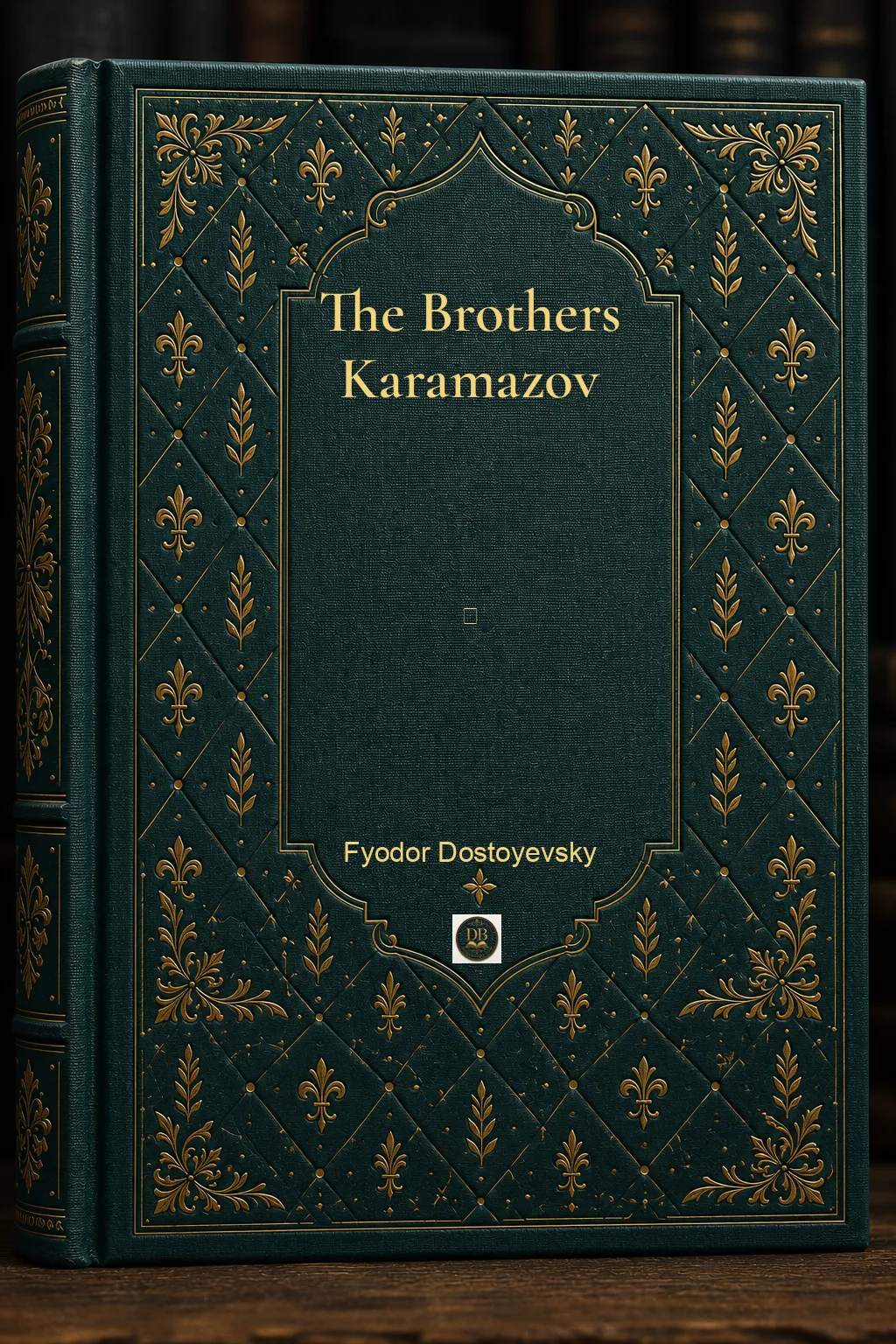
📖 Master The Brothers Karamazov with Complete Confidence
Embark on the greatest literary journey of your life with a pristine, distraction-free edition. The DodaBooks Edition delivers:
- ✅ Complete Unabridged 12-Book Masterpiece — All 96 chapters preserved in elegant layout
- ✒️ Smart Typography — Engineered for comfortable long-form reading on digital screens
- 📜 Full Book & Chapter Navigation — Seamlessly jump across all 12 books and the epilogue
- 🔒 100% DRM-Free Ownership — Yours forever across Kindle, Kobo, iPad, and Android
- 📥 Instant EPUB Delivery — Download your digital copy immediately