Is Sherlock Holmes Hard to Read? Reading Difficulty & Reading Order Guide
If you have enjoyed BBC’s Sherlock, the Robert Downey Jr. movies, or video games and are considering diving into Arthur Conan Doyle’s original Victorian stories, you might wonder what to expect. Is the 1890s prose stuffy, dry, and archaic? Will you need a dictionary of obsolete Victorian legal terms just to solve a case?
The short answer: Sherlock Holmes is one of the most accessible, thrilling, and addictive reading experiences in classic English literature.
Arthur Conan Doyle was not an ivory-tower literary academic writing dense prose for the elite; he was a popular storyteller writing episodic page-turners for the everyday readers of The Strand Magazine. The dialogue is snappy, the narrative moves at a brisk pace, and Watson’s storytelling style feels surprisingly modern. However, first-time readers often struggle with Victorian currency, horse-drawn carriage classifications, and deciding where to begin in the 60-story canon.
This comprehensive guide breaks down the true reading difficulty of The Adventures of Sherlock Holmes, establishes the ideal reading order for beginners, explains the Victorian vocabulary that trips people up, and provides a relaxed 12-day reading schedule.
⚡ Sherlock Holmes Reading Guide: At a Glance
- Difficulty Rating: 4.5 / 10 (Very Accessible) — Far easier than Frankenstein (6.5/10), much faster than Dracula (5.5/10), and vastly simpler than Moby-Dick (9.5/10).
- Structure: Twelve self-contained short stories, each averaging 8,000 to 10,000 words (about 25–35 pages per mystery).
- Estimated Reading Time: Approximately 30 to 45 minutes per story (around 7 hours for the entire collection).
- Recommended Reading Age: Middle school (grades 7–9 / ages 12+) through adult readers.
- Best Starting Point: Start directly with The Adventures of Sherlock Holmes (1892) rather than the novels.
🧭 The Ideal Sherlock Holmes Reading Order for Beginners
The Sherlock Holmes canon consists of four novels and five short story collections (a total of 56 short stories and 4 novels). Beginners are often told to read in strict publication order, starting with Doyle’s first novel, A Study in Scarlet (1887).
Why that is a mistake: While A Study in Scarlet introduces Holmes and Watson, the middle of the novel abruptly abandons London for a 50-page historical flashback set in 1840s pioneer Utah involving the Mormon church. Many first-time readers find this jarring and give up.
Instead, the undisputed best entry point into the Sherlockian universe is The Adventures of Sherlock Holmes (1892):
+-------------------------------------------------------------------------------+
|                 RECOMMENDED SHERLOCK HOLMES READING ROADMAP                   |
+-------------------------------------------------------------------------------+
| PHASE 1: THE ESSENTIAL FOUNDATION                                             |
| 1. The Adventures of Sherlock Holmes (1892) - 12 short stories [START HERE]   |
| 2. The Hound of the Baskervilles (1902) - The greatest gothic mystery novel   |
|                                                                               |
| PHASE 2: THE ORIGIN & THE CLIMAX                                              |
| 3. A Study in Scarlet (1887) - The first meeting at St. Bartholomew's         |
| 4. The Sign of the Four (1890) - Watson meets Mary Morstan; the Agra treasure |
| 5. The Memoirs of Sherlock Holmes (1894) - Holmes vs. Professor Moriarty      |
|                                                                               |
| PHASE 3: THE RETURN & LATER CASES                                             |
| 6. The Return of Sherlock Holmes (1905) - The miraculous resurrection         |
| 7. The Valley of Fear (1915) - Moriarty's network & the Scowrers              |
| 8. His Last Bow (1917) - WWI espionage and later cases                        |
| 9. The Case-Book of Sherlock Holmes (1927) - The final retrospective          |
+-------------------------------------------------------------------------------+
By beginning with The Adventures of Sherlock Holmes, you experience Doyle at the absolute height of his creative powers in the snappy, episodic format that made Holmes a world icon.
💷 The 4 Minor Hurdles for Modern Readers
While the storytelling is effortless, modern readers typically encounter four Victorian cultural hurdles:
1. The Pre-Decimal British Currency System
In 1890, Britain did not use a simple base-10 currency system. Characters constantly discuss financial transactions using archaic coins:
+-------------------------------------------------------------------------------+
|                       VICTORIAN MONEY DECODED                                 |
+-------------------------------------------------------------------------------+
| - 1 Pound (£) = 20 Shillings = 240 Pence                                      |
| - Sovereign = A gold coin worth exactly 1 Pound (£1)                          |
| - Guinea = 21 Shillings (£1 and 1 shilling); used for aristocratic or         |
|   professional fees (doctors, lawyers, luxury horses)                         |
| - Half-Crown = 2 Shillings and 6 Pence (2s 6d)                                |
| - Shilling ("bob") = 12 Pence; roughly equivalent to a working-man's lunch    |
| - Penny / Pence (d) = Copper coin; Farthing = Quarter of a penny              |
+-------------------------------------------------------------------------------+
Contextual Purchasing Power: In 1891, an annual income of £150 to £200 placed a clerk comfortably in the respectable middle class. In “The Red-Headed League,” when Jabez Wilson is paid £4 a week just to copy the encyclopedia, he is earning an astonishing £200 a year for four hours of easy work—which is why the offer is too irresistible to refuse.
2. Victorian Horse-Drawn Transportation
Before automobiles and the electric tube, London moved by horsepower. Doyle uses specific carriage names that indicate the passenger’s social class and urgency:
- Hansom Cab: A fast, two-wheeled, two-passenger cab with the driver perched high on a rear box. The Victorian equivalent of a yellow taxi; Holmes and Watson’s favorite vehicle for rapid chases across London.
- Four-Wheeler (“Growler”): A larger, slower, four-wheeled closed carriage used for families, heavy luggage, or carrying invalids.
- Brougham: A sleek, private, luxury closed carriage owned by aristocrats, wealthy physicians, and royal visitors (such as the King of Bohemia).
- Dog-Cart / Trap: Light, open two-wheeled carriages used in rural countryside settings.
3. Victorian Communication Systems
Without smartphones or the internet, how did Holmes communicate so rapidly? Victorian London possessed the most efficient local communication network in human history:
- The Post: London had up to six to twelve postal deliveries per day. A letter mailed at Baker Street at 9:00 AM was delivered to an address in Kensington by 11:30 AM!
- Telegrams: Cheap, instant, and delivered to your doorstep within thirty minutes by telegraph boys on bicycles.
- The “Agony Columns”: Personal classified advertisement sections in daily newspapers like The Times and The Daily Telegraph, used by criminals, secret lovers, and detectives to pass coded messages across the city.
4. Forensic Chemistry and Medicine of 1891
Holmes was inspired by Dr. Joseph Bell, Conan Doyle’s real-life professor at the University of Edinburgh Medical School. Bell amazed his students by diagnosing patients’ occupations and ailments through instant physical observation.
When Holmes analyzes cigar ash, bloodstains, or bicycle tire tracks, he is pioneering modern forensic science decades before police departments established crime scene laboratories.
⏱️ Recommended 12-Day Case-by-Case Reading Plan
Because each of the twelve stories in The Adventures is completely self-contained, the collection is tailored for a relaxing 12-day reading schedule (one case per evening):
+--------------------------------------------------------------------------------+
|                   12-DAY SHERLOCK HOLMES READING PLAN                          |
+--------------------------------------------------------------------------------+
| DAY 1: "A Scandal in Bohemia" (Meet Irene Adler, "The Woman")                  |
| DAY 2: "The Red-Headed League" (The tunnel into the bank vault)                |
| DAY 3: "A Case of Identity" (The mystery of Hosmer Angel)                      |
| DAY 4: "The Boscombe Valley Mystery" (Australian gold rush secrets)            |
| DAY 5: "The Five Orange Pips" (The deadly American K.K.K. letters)             |
| DAY 6: "The Man with the Twisted Lip" (The secret beggar of the City)          |
| DAY 7: "The Adventure of the Blue Carbuncle" (The Christmas goose jewel)       |
| DAY 8: "The Adventure of the Speckled Band" (The terrifying Stoke Moran snake) |
| DAY 9: "The Adventure of the Engineer's Thumb" (The midnight hydraulic press)  |
| DAY 10: "The Adventure of the Noble Bachelor" (The missing American bride)     |
| DAY 11: "The Adventure of the Beryl Coronet" (The national treasure robbery)   |
| DAY 12: "The Adventure of the Copper Beeches" (The sinister Hampshire governess)|
+--------------------------------------------------------------------------------+
📊 Classic 19th-Century Reading Difficulty Compared
| Book Title | Author | Word Count | Difficulty (1–10) | Pacing & Style |
|---|---|---|---|---|
| Dr. Jekyll and Mr. Hyde | R.L. Stevenson | ~25,000 | 4.5 / 10 | Fast, concise novella; philosophical gothic mystery. |
| The Adventures of Sherlock Holmes | Arthur Conan Doyle | ~105,000 | 4.5 / 10 | Episodic short stories; witty, modern conversational prose. |
| The Picture of Dorian Gray | Oscar Wilde | ~78,000 | 5.5 / 10 | Theatrical epigrams; Chapter 11 aesthetic catalog slump. |
| Dracula | Bram Stoker | ~160,000 | 5.5 / 10 | Epistolary letters and diaries; fast modern horror pacing. |
| Frankenstein | Mary Shelley | ~75,000 | 6.5 / 10 | Formal Romantic vocabulary; nested narrative frames. |
💡 Top 5 Tips for First-Time Readers
- Read One Story Per Sitting: Do not try to binge all twelve stories in one afternoon. The beauty of Doyle’s format is savoring each case as a complete bedtime dessert.
- Try to Solve the Puzzle Before Holmes: Notice the tiny details Watson mentions—the mud on a boot, the calluses on a hand, the grease on a hatband. Doyle plays fair: the clues to solve the mystery are almost always on the page!
- Appreciate Watson’s Humor and Heart: Pay attention to the gentle, affectionate banter between Holmes and Watson at 221B Baker Street. Their friendship is the real emotional engine of the series.
- Keep a Currency Cheat Sheet Handy: Remember that £1 was a massive sum in 1891 (equivalent to over $120–$150 in modern purchasing power). Knowing the money makes the motivations crystal clear.
- Use an Annotated Edition: Having margin notes explaining Victorian street slang, police ranks, and historical events eliminates all guesswork so you can focus entirely on the mystery.
Decode every Victorian clue and currency reference effortlessly. The DodaBooks Annotated Edition includes inline notes, London maps, and forensic science guides for all 12 stories.
Get the Annotated Edition at DodaBooks❓ Frequently Asked Questions
Is Sherlock Holmes suitable for teenagers and young adults?
Yes! Arthur Conan Doyle’s stories are exceptionally clean by modern standards. While they involve murder, theft, and blackmail, there is virtually no graphic gore, profanity, or explicit sexuality. They are fantastic for middle schoolers, high schoolers, and adults alike.
Why did Arthur Conan Doyle get tired of Sherlock Holmes?
Doyle considered Holmes's stories to be light commercial entertainment that distracted him from his "serious" historical novels (such as The White Company). In 1893, Doyle attempted to kill Holmes off at the Reichenbach Falls in "The Final Problem." However, public outcry and astonishing financial offers from publishers eventually persuaded him to resurrect the detective in 1901 with The Hound of the Baskervilles.
What does "Bradshaw" mean when Holmes asks Watson for it?
Bradshaw's Railway Guide was the comprehensive, essential British railway timetable published monthly throughout the 19th and early 20th centuries. Whenever a client arrived at Baker Street with an urgent mystery in the countryside, Holmes or Watson would immediately consult Bradshaw to catch the next express train from Paddington, Euston, or Waterloo station.
Do the stories need to be read in order?
Within The Adventures of Sherlock Holmes, each story is completely standalone and can be enjoyed in any order. However, reading them in publication order allows you to appreciate how Doyle progressively deepened the warmth and domestic camaraderie of Baker Street.
Is Sherlock Holmes hard to read compared to Agatha Christie?
Sherlock Holmes is slightly more formal in vocabulary than Agatha Christie's Hercule Poirot novels (written in the 1920s–1950s), but Doyle’s prose is much more atmospheric and cinematic, rich with the sights, sounds, and smells of late-Victorian London.
📚 Related Reading Guides
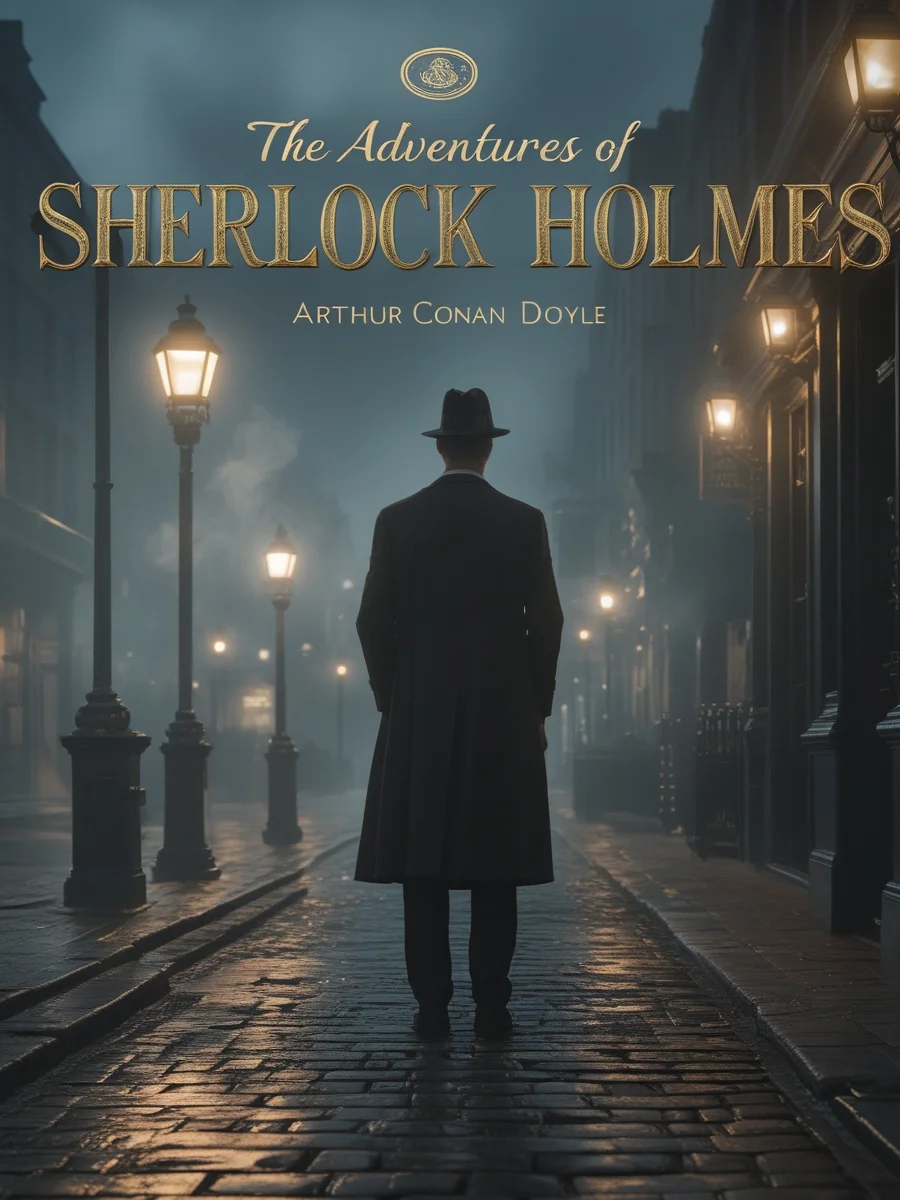
Conquer the World's Greatest Detective Stories
Read The Adventures of Sherlock Holmes with total ease using the DodaBooks Annotated Edition:
- Complete, authentic 1892 text of all twelve short stories
- Instant margin explanations for Victorian currency, hansom cabs, and police methods
- Illustrated character profiles and London railway maps
- Pristine digital formatting designed for Kindle, iPad, Kobo, and phone