Is Sense and Sensibility Hard to Read? Reading Difficulty, Regency Slang & Study Guide
When modern readers pick up Jane Austen’s Sense and Sensibility, they are often greeted by a narrative experience that feels simultaneously intimate and challenging. On one level, the core story is timelessly relatable: two sisters enduring romantic heartbreak, navigating financial insecurity, and struggling with unrequited love. The emotional stakes are immediate, and the comedic dialogue sparkles with sharp wit.
On the other hand, Sense and Sensibility was written in the late eighteenth and early nineteenth centuries, reflecting the formal literary conventions of Regency England. Austen’s prose features complex periodic sentences, elaborate double negatives, subtle ironies, and specialized legal terminology concerning inheritance and marriage settlements. Readers accustomed to contemporary pacing and direct exposition may initially find themselves re-reading paragraphs to untangle who is speaking and what is truly meant beneath the polite social veneer.
This comprehensive reading difficulty guide analyzes the readability metrics of Sense and Sensibility, breaks down the linguistic and historical hurdles of Regency prose, provides a vital glossary of early nineteenth-century vocabulary, and outlines a structured 14-day study plan to help you master Austen’s debut masterpiece.
| Assessment Category | Measurement / Benchmark | Practical Reading Implication |
|---|---|---|
| Lexile Measure | 1100L–1180L | Comparable to Pride and Prejudice, Jane Eyre, and Wuthering Heights; upper-level high school to college reading |
| Reading Age / Grade Level | Grades 9–12 (Age 14+) | Vocabulary requires occasional reference; syntax demands careful attention to double negatives and clauses |
| ATOS Book Level | 8.4 | Elevated syntactic complexity due to formal Regency phrasing and balanced periodic sentences |
| Total Word Count | ~120,000 words (50 chapters) | Medium-to-long novel; typically 350–420 pages depending on typeface and margin width |
| Estimated Reading Time | 8 to 12 hours | Best approached in daily segments of 3 to 4 chapters (~30–45 minutes daily over two weeks) |
| Primary Difficulties | Double negatives, subtle irony, Regency inheritance laws, historical currency | Requires an understanding of the economics of marriage and social rank in 1811 England |
📊 Readability Metrics: What Makes Austen’s Prose Demanding?
Quantitative readability formulas place Sense and Sensibility in the upper-intermediate category for high school and university students, and moderate reading for experienced adults.
                      [READABILITY PROFILE: SENSE AND SENSIBILITY]
                                         │
        ┌────────────────────────────────┼────────────────────────────────┐
        ▼                                ▼                                ▼
[LEXILE: ~1140L]                 [SENTENCE LENGTH: ELEVATED]      [CONCEPTUAL RESTRAINT]
- Rich Regency vocabulary        - Balanced periodic clauses      - Subtext over direct action
- Frequent use of litotes        - Indirect free discourse        - Irony requires active decoding
1. Complex Periodic Sentences and Syntactic Balance
Unlike modern fiction, which favors short, declarative sentences, Jane Austen wrote in the formal eighteenth-century tradition influenced by Samuel Johnson. Her sentences are carefully balanced architectural structures featuring parallel clauses, semicolons, and deliberate syntactic suspensions where the complete meaning is revealed only at the very end of the sentence:
“His understanding was in every respect a little inferior to his wife’s, but he was very well disposed, and had he been born to an easy independence, might have been a respectable member of society; but he was poor, and the struggle to live on narrow means had rendered him a selfish, cold-hearted calculator.”
2. The Art of the Double Negative (Litotes)
Austen frequently employs litotes—ironic understatement created by denying the opposite. When Austen wants to say a character is pleased or attentive, she will write that he was “not insensible to the compliment” or that she “could not be without satisfaction.”
- Modern readers must train their brains to recognize that two negatives equal an understated positive.
- These constructions are not accidental wordiness; they reflect the polite, cautious emotional reserve of Regency gentlefolk, who considered blunt declarations vulgar.
🏛️ The Three Cultural and Linguistic Hurdles
                  ┌─────────────────────────────────────────┐
                  │   THREE HURDLES IN READING JANE AUSTEN  │
                  └────────────────────┬────────────────────┘
                                       │
         ┌─────────────────────────────┼─────────────────────────────┐
         ▼                             ▼                             ▼
┌───────────────────┐        ┌───────────────────┐         ┌───────────────────┐
│ Regency Semantic  │        │ Free Indirect     │         │ The Economics of  │
│ Word Shifts       │        │ Ironic Discourse  │         │ Marriage & Law    │
│ Familiar words    │        │ Narrator blends   │         │ Entails, settlements,│
│ with dead meanings│        │ with characters   │         │ £500 vs £50,000   │
└───────────────────┘        └───────────────────┘         └───────────────────┘
1. Regency Semantic Shifts (“False Friends”)
One of the most frequent sources of confusion in Sense and Sensibility is vocabulary. Austen uses common English words that carried very different connotations in 1811:
- When a gentleman has an attachment, it does not mean an email file; it means a deep, serious romantic commitment.
- When an aristocrat displays condescension, it was considered a compliment, meaning gracious affability toward social inferiors, rather than arrogant patronizing.
- When a character is described as sensible, it does not mean reasonable or practical; it means possessing acute emotional sensitivity and feeling!
2. Free Indirect Discourse: Decoding the Irony
Austen was a pioneer of free indirect discourse—a narrative technique where the third-person narrator slips into a character’s internal thoughts and speech patterns without quotation marks.
- In Chapter 2, when John and Fanny Dashwood discuss reducing their gift to the sisters, the narrator seems to agree that £3,000 would impoverish their son.
- In reality, Austen is satirizing their self-delusion. The humor lives entirely in the gap between what the characters say and what the reader understands to be true. Readers who miss this irony can mistake Austen for a conservative defender of greed.
3. The Economics of Marriage and Inheritance
To appreciate the emotional stakes of the plot, you must understand the financial rules of Regency England:
- Primogeniture and Entailment: Wealth and real estate passed undivided to the eldest male heir. This legal structure allowed John Dashwood to inherit the entire Norland estate, while leaving his stepmother and three half-sisters with only £10,000 capital, generating £500 in annual interest.
- Income Levels: An annual income of £500 allowed the Dashwoods to afford a modest cottage in Devonshire and two servants, but made it impossible to maintain a carriage or enter fashionable London society.
- By contrast, John Willoughby was burdened by gambling debts and needed to marry Miss Sophia Grey for her £50,000 fortune (generating £2,500 annually) to avoid bankruptcy.
📖 Glossary of Crucial Regency Terms in Sense and Sensibility
| Regency Term | Historical Definition (1811 Context) | Practical Narrative Meaning |
|---|---|---|
| Sensibility | Emotional sensitivity, passion, responsiveness to art | Marianne’s guiding philosophy; feeling intensely and spontaneously |
| Sense | Prudence, self-command, sound judgment, discretion | Elinor’s guiding philosophy; governing feelings by moral duty |
| Jointure / Settlement | Financial provision guaranteed to a woman upon her marriage or widowhood | The legal fund that provides Mrs. Dashwood with her £500 annual income |
| Living (Parish Living) | The permanent position and income of a parish rector or vicar in the Church of England | The £200/year position at Delaford offered by Brandon to Edward Ferrars |
| Barouche / Curricle | High-end, fashionable horse-drawn carriages of the aristocracy | Symbols of extreme wealth and ostentation (e.g., Robert Ferrars and Willoughby) |
| Post-chaise | A hired, fast traveling carriage used for long journeys across England | The vehicle used by Brandon during his emergency night ride to Devon |
| Chaperon | An older married woman accompanying young unmarried ladies in public | The social role fulfilled by Mrs. Jennings for the sisters in London |
| Flannel Waistcoat | An undergarment made of warm woolen flannel worn by older people or invalids | Marianne’s humorous, contemptuous symbol for Colonel Brandon’s age |
| Pin Money | An annual allowance paid by a husband to his wife for personal expenses | A vital part of Regency marriage contracts negotiated by wealthy families |
💡 The Art of Reading Jane Austen: Slow Down for Dialogue
To master Sense and Sensibility, adjust your reading speed. Austen is not an action-adventure author whose pages can be skimmed for plot twists. Her genius lies in micro-interactions:
- Notice What Characters Omit: When Edward Ferrars visits Barton Cottage, notice how carefully he avoids discussing his future plans or mentioning his ring. His silence is as expressive as his words.
- Listen to Dialogue: In scenes featuring Lucy Steele, pay attention to her calculated compliments. She flatters people to disguise her sharp social maneuvering.
- Contrast the Sisters: In every crisis, compare how Elinor and Marianne react. When Willoughby leaves, Marianne starves herself and wanders in the rain; when Elinor discovers Edward’s secret engagement, she smiles, carries on tea, and shields her mother from sorrow.
📅 The 14-Day Study Plan: Master the Novel in Two Weeks
Because the novel contains fifty chapters, reading 3 to 4 chapters daily (roughly 25 to 30 pages) allows you to absorb the plot, analyze the character dynamics, and appreciate Austen’s sparkling wit without feeling overwhelmed.
| Day | Chapters | Assigned Reading | Key Events & Discussion Points |
|---|---|---|---|
| Day 1 | Chapters 1–4 | Norland Park | Mr. Dashwood’s death; Fanny manipulates John; introduction of Edward Ferrars |
| Day 2 | Chapters 5–8 | The Move to Barton | Arrival in Devonshire; Barton Cottage; meeting Sir John, Lady Middleton, and Brandon |
| Day 3 | Chapters 9–12 | The Dashing Willoughby | Marianne falls in the rain; Willoughby’s dramatic rescue; the passionate courtship |
| Day 4 | Chapters 13–16 | Broken Hopes | The aborted trip to Whitwell; Willoughby’s abrupt departure; Marianne’s wild grief |
| Day 5 | Chapters 17–20 | Edward’s Visit | Edward visits Barton; the mysterious hair ring; arrival of Anne and Lucy Steele |
| Day 6 | Chapters 21–24 | The Secret Engagement | Lucy Steele reveals her 4-year secret engagement to Edward; Elinor’s silent agony |
| Day 7 | Chapters 25–28 | Journey to London | Travel with Mrs. Jennings; Marianne’s frantic letters to Willoughby; cold silence |
| Day 8 | Chapters 29–31 | The London Rejection | The assembly ball; Willoughby’s cruel letter; Brandon reveals Eliza’s tragic history |
| Day 9 | Chapters 32–36 | Edward Disowned | Edward’s engagement exposed; Mrs. Ferrars disinherits him; Brandon offers Delaford |
| Day 10 | Chapters 37–40 | Leaving London | The sisters leave town; stopping at Cleveland; Marianne’s wandering in wet grass |
| Day 11 | Chapters 41–44 | The Fever & Confession | Marianne’s putrid fever; Willoughby’s midnight ride and dramatic confession to Elinor |
| Day 12 | Chapters 45–46 | The Recovery | Marianne survives; Mrs. Dashwood arrives; return to Barton; Marianne’s repentance |
| Day 13 | Chapters 47–48 | The Shocking Marriage | News that Lucy married “Mr. Ferrars”; Edward arrives free; Lucy married Robert! |
| Day 14 | Chapters 49–50 | The Double Wedding | Elinor and Edward marry at Delaford; Marianne falls in love with Brandon; resolution |
❓ Frequently Asked Questions
Is Sense and Sensibility harder to read than Pride and Prejudice?
Most readers find Sense and Sensibility slightly more formal and serious than Pride and Prejudice. While Pride and Prejudice moves rapidly with witty banter and romantic spark, Sense and Sensibility deals more deeply with silent suffering, financial insecurity, and severe illness, requiring slightly more patience with its early chapters.
Do I need a study guide or annotations to enjoy the book?
You can certainly enjoy the romance and comedy without notes, but having a guide that explains Regency inheritance laws, historical money values, and vocabulary shifts makes the character motivations and social satire dramatically clearer.
Why does the novel spend so much time discussing money?
Jane Austen was a realist. In Regency England, women had almost no legal rights to own property or enter professions. Marriage was a gentlewoman's only financial livelihood. Austen emphasizes financial figures (£500 vs. £50,000) because they dictate the literal survival and social status of her heroines.
Is the book suitable for high school readers?
Yes, absolutely. It is a staple of high school and AP English Literature curricula worldwide. Its themes of sibling love, emotional maturity, peer pressure, and character judgment resonate deeply with teenagers and young adults.
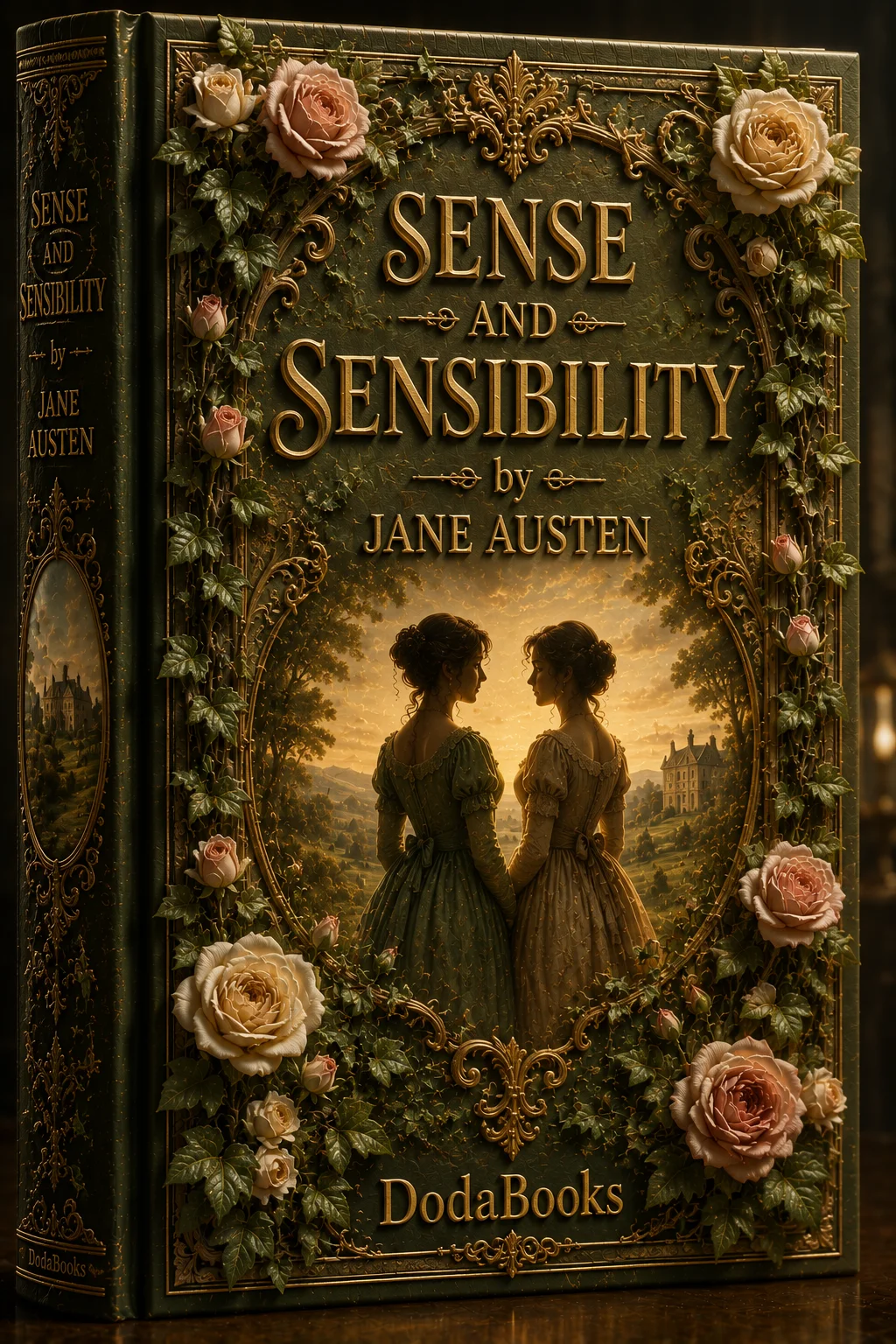
💕 Master Sense and Sensibility in Its Definitive Edition
Read Jane Austen’s timeless classic with complete typographic clarity. The DodaBooks Edition delivers:
- ✅ Complete Unabridged 1811 Text — All 50 chapters in authentic Regency prose
- ✒️ Smart Responsive Typography — Balanced line-heights, curly quotes, and clean spacing
- 📜 Full Chapter Navigation — Seamlessly navigate between Norland, Barton, and London
- 🔒 100% DRM-Free Ownership — Read across Kindle, Kobo, iPad, and Android without limits
- 📥 Instant Direct Download — Start your 14-day study journey immediately