Is Little Women Hard to Read? Reading Difficulty & Schedule Guide
If you are planning to read Louisa May Alcott’s Little Women (1868–1869) for high school, an AP English Literature course, a university seminar, a family book club, or simply because you loved Greta Gerwig’s acclaimed 2019 film adaptation, you are likely wondering what kind of challenge lies ahead. Is the 1860s language stiff, moralizing, and archaic? How long does it take to read both parts? And what age is appropriate to begin?
The short answer: Little Women is one of the most accessible, warm, and readable nineteenth-century classics in the English language (Difficulty Rating: 5.0 / 10).
Unlike many Victorian authors who wrote in dense, convoluted sentences packed with high Latinate terminology, Louisa May Alcott wrote in a crisp, lively, and natural conversational American voice. Her dialogue crackles with youthful wit, sisterly banter, and genuine emotion.
However, at approximately 185,000 words across 47/48 chapters, Little Women is a substantial novel. Modern readers frequently encounter three specific hurdles: nineteenth-century domestic and culinary terms (blancmange, pelisse, rusks), John Bunyan’s allegorical framework (The Pilgrim’s Progress), and the subtle pacing shift when the narrative transitions from the lively childhood plays of Part I to the mature adult realities of Part II (Good Wives).
This comprehensive guide breaks down the true reading difficulty of Little Women, maps out the four specific hurdles to watch for, compares it to other classics, and provides a battle-tested 14-day reading schedule to make your read effortless.
⚡ Little Women Reading Difficulty: At a Glance
- Difficulty Rating: 5.0 / 10 (Accessible & Engaging) — Considerably easier than Jane Eyre (6.0/10), far more straightforward than Frankenstein (6.5/10), and roughly comparable to Pride and Prejudice (5.5/10) and Anne of Green Gables (4.5/10).
- Length: Approximately 185,000 words across 47/48 chapters (typically 480–560 pages in standard print editions).
- Estimated Reading Time: 12 to 14 hours for an average adult reader (at 250 words per minute).
- Recommended Reading Age: Ages 10–12 (Grades 5–7) for independent middle-grade readers; equally rewarding for high schoolers, college students, and adults.
- Primary Stumbling Blocks: 1860s domestic terminology (clothing, foods, Victorian illness remedies), John Bunyan's religious allegories, and the structural shift from childhood comedy to adult grief.
🧗 The 4 Specific Hurdles for Modern Readers
While Little Women reads with the warmth of a beloved family memoir, first-time readers should prepare for four distinct literary elements:
1. 19th-Century Domestic & Culinary Terminology
Alcott’s novel is deeply rooted in 1860s New England domestic life. She frequently uses everyday terms that have vanished from modern American English:
+-------------------------------------------------------------------------------+
|                       KEY 1860S DOMESTIC TERMS IN LITTLE WOMEN                |
+-------------------+-----------------------------------------------------------+
| TERM              | 19TH-CENTURY MEANING & CONTEXT                            |
+-------------------+-----------------------------------------------------------+
| Blancmange        | A sweet gelatinous dessert made with milk, sugar, and     |
|                   | almonds (Jo brings this to sick Laurie in Chapter 5).     |
+-------------------+-----------------------------------------------------------+
| Pickled Limes     | Salt-cured, sour pickled limes popular among schoolgirls  |
|                   | as a currency of social status in Chapter 7.              |
+-------------------+-----------------------------------------------------------+
| Pelisse           | A woman's long cloak or coat reaching to the ankles, often|
|                   | trimmed with fur or velvet.                               |
+-------------------+-----------------------------------------------------------+
| Rusks             | Twice-baked dry, sweet bread or biscuits served with tea. |
+-------------------+-----------------------------------------------------------+
| Flannels & Gruel  | Traditional Victorian remedies for colds and fevers: warm|
|                   | wool cloths and thin oatmeal porridge.                    |
+-------------------+-----------------------------------------------------------+
| Poplin / Tarlatan | Poplin was a heavy ribbed silk/wool fabric; tarlatan was  |
|                   | an inexpensive, stiff, open-weave muslin used for gowns.  |
+-------------------+-----------------------------------------------------------+
| Reticule          | A small drawstring handbag or purse carried by women to   |
|                   | hold embroidery, letters, and smelling salts.             |
+-------------------+-----------------------------------------------------------+
| Chignon           | A knot or coil of hair arranged at the back of a woman's  |
|                   | head, often padded with horsehair or false hair.          |
+-------------------+-----------------------------------------------------------+
| Sensation Stories | Cheap, melodramatic pulp fiction serialized in weekly     |
|                   | story papers, featuring poison, murder, and disguises.    |
+-------------------+-----------------------------------------------------------+
| Tidy              | An ornamental, crocheted fabric cover placed over the arms|
|                   | and backs of chairs and sofas to protect upholstery.      |
+-------------------+-----------------------------------------------------------+
How to conquer it: You don’t need to memorize Victorian housekeeping manuals. As long as you recognize that blancmange is pudding, tarlatan is party dress fabric, pickled limes are sour snacks, and a reticule is a handbag, you can breeze through the domestic chapters with complete comprehension.
2. John Bunyan’s Allegorical Framework (The Pilgrim’s Progress)
The entire conceptual backbone of Little Women is John Bunyan’s 1678 allegory The Pilgrim’s Progress. Marmee gives each daughter a copy on Christmas morning, and the sisters consciously treat their daily moral struggles as a pilgrimage toward the “Celestial City”:
- Chapter titles directly quote Bunyan: “Playing Pilgrims”, “The Palace Beautiful”, “The Valley of Humiliation”, “Jo Meets Apollyon”, “Vanity Fair”, and “The Valley of the Shadow”.
- Each sister carries a symbolic “burden” (Meg’s vanity, Jo’s temper, Beth’s timidity, Amy’s selfishness) that she must lay down before reaching mature womanhood.
How to conquer it: You do not need to read John Bunyan to enjoy Little Women. Simply understand that Alcott is using Bunyan’s Christian framework to illustrate personal moral growth: conquering pride, learning patience, and practicing radical kindness. When Jo “meets Apollyon,” she is not fighting a literal winged demon; she is wrestling with the devastating consequences of her own uncontrolled rage after Amy burns her manuscript.
3. Pacing Shift from Childhood Fun to Adult Trials
Many readers are surprised by the dramatic difference in tone between Part I and Part II:
- Part I (Chapters 1–23): Filled with lighthearted schoolgirl adventures, the Pickwick Club, amateur theatricals in the attic, snowball fights, and holiday celebrations.
- Part II (Chapters 24–47): Deals with the sober, sometimes painful realities of adulthood: economic anxiety in marriage, marital misunderstandings, the pain of unrequited love, living away from home in New York, and Beth’s slow, heartbreaking death.
How to conquer it: Recognize that Little Women is a true Bildungsroman (coming-of-age story). It does not freeze its heroines in eternal childhood. The poignant beauty of Part II comes from watching the sisters carry the warmth of their childhood into the adult world. Treat Part I and Part II as two distinct phases of life rather than expecting eternal teenage mischief.
4. Victorian Sentimentalism and Moral Lessons
Alcott lived during an era when domestic literature was expected to provide moral instruction. Occasionally, the narrative pauses for Marmee to deliver gentle moral homilies on conquering anger, the dangers of gossip, or the value of useful labor over idle luxury.
How to conquer it: Notice how Alcott balances moral teaching with humor. Marmee is never sanctimonious; she openly admits to Jo that she struggled with a violent, resentful temper for forty years. Alcott’s moral lessons feel earned because the characters frequently fail, make mistakes, and learn through painful experience.
🏛️ Historical Context: The Civil War Home Front
Understanding the historical backdrop of 1861–1865 Concord, Massachusetts removes many potential points of confusion for modern readers:
- Father March’s Absence: Mr. March is not away on business; he volunteered as a Union Army chaplain in the American Civil War. His absence creates both emotional vulnerability and immediate financial strain on the household.
- The March Family’s Genteel Poverty: The Marches were previously wealthy, but Mr. March lost their fortune attempting to help an unfortunate friend. The girls’ poverty is “genteel”—they still have a modest home, beloved books, piano access, and their devoted servant Hannah, but they cannot afford carriage hire, silk dresses, or European excursions without patronage.
- Women’s Wartime Relief Work: Throughout Part I, Marmee and the girls spend their evenings sewing army shirts, rolling bandages, and packing supply boxes for the Sanitary Commission. Their personal thrift is inextricably tied to the patriotic sacrifice required during the Civil War.
- Transcendentalist Philosophy: Alcott’s real-life father, Bronson Alcott, was a prominent Transcendentalist who associated closely with Ralph Waldo Emerson and Henry David Thoreau. The March household reflects these real-life values: vegetarian ideals, simplicity, intellectual independence, and disdain for superficial luxury.
💡 Practical Strategies for Fast, Painless Reading
To make your journey through Little Women as enjoyable as possible, keep these four reader-tested strategies in mind:
- Read in Two Distinct Waves: Take a one- or two-day breather between Chapter 23 (the end of Part I) and Chapter 24 (the beginning of Part II / Good Wives). A three-year temporal leap occurs between the two parts, and acknowledging that gap allows the adult maturity of the sisters to feel earned and natural.
- Focus on Dialogue Over Expository Musings: Alcott’s greatest literary gift was conversational dialogue. When characters speak, the prose moves with modern speed and sharp wit. Do not get bogged down in the brief philosophical reflections that occasionally conclude chapters.
- Keep a Simple Family Tree Handy: If you are reading for class or a book club, keeping a quick reference card for the four sisters (Meg: 16, Jo: 15, Beth: 13, Amy: 12 at the start) and their respective suitors (Brooke, Laurie, Bhaer) prevents confusion during the multi-character social gatherings.
- Choose a Modern, Cleanly Typeset Edition: Many bargain reprints cram dense Victorian type into microscopic two-column margins. Choosing an edition with generous line spacing, modern typography, and a digital table of contents drastically reduces visual fatigue over 185,000 words.
📊 How Hard Is Little Women Compared to Other Classics?
+---------------------------------------------------------------------------------------+
|                       CLASSIC COMING-OF-AGE & DOMESTIC NOVELS BENCHMARK               |
+-----------------------------+-------------+------------+------------------------------+
| BOOK & AUTHOR               | DIFFICULTY  | WORD COUNT | PRIMARY CHALLENGE            |
+-----------------------------+-------------+------------+------------------------------+
| Anne of Green Gables        | 4.5 / 10    | ~104,000   | Lyrical nature descriptions; |
| (L.M. Montgomery)           | (Accessible)|            | highly accessible vocabulary |
+-----------------------------+-------------+------------+------------------------------+
| Little Women                | 5.0 / 10    | ~185,000   | 185k words; 1860s domestic   |
| (Louisa May Alcott)         | (Accessible)|            | terms; Pilgrim's Progress    |
+-----------------------------+-------------+------------+------------------------------+
| Pride and Prejudice         | 5.5 / 10    | ~122,000   | Regency conversational irony;|
| (Jane Austen)               | (Moderate)  |            | subtle social satire         |
+-----------------------------+-------------+------------+------------------------------+
| Jane Eyre                   | 6.0 / 10    | ~185,000   | 185k words; periodic syntax; |
| (Charlotte Brontë)          | (Moderate)  |            | untranslated French dialogue |
+-----------------------------+-------------+------------+------------------------------+
| Wuthering Heights           | 7.0 / 10    | ~107,000   | Thick Yorkshire dialect;     |
| (Emily Brontë)              | (Challenging|            | complex nested narrators     |
+-----------------------------+-------------+------------+------------------------------+
As the comparison reveals, Little Women is one of the most accessible 19th-century classics available, ranking just slightly above Anne of Green Gables in difficulty due to its longer length and two-part structure.
📅 The Proven 14-Day Little Women Reading Schedule
Reading Little Women in two weeks requires reading roughly 3 to 4 chapters per day (about 13,000 words, or approximately 50 minutes of reading). This plan maps naturally onto the dramatic story:
+-------------------------------------------------------------------------------+
|                        THE 14-DAY LITTLE WOMEN READING PLAN                   |
+-----+-------------+---------------+-------------------------------------------+
| DAY | CHAPTERS    | PART          | MAJOR DRAMATIC HIGHLIGHTS                 |
+-----+-------------+---------------+-------------------------------------------+
| 1   | Ch. 1–4     | Part I        | Christmas Eve, Hummels, Meeting Laurie    |
+-----+-------------+---------------+-------------------------------------------+
| 2   | Ch. 5–8     | Part I        | Laurence library, Piano, Jo Meets Apollyon|
+-----+-------------+---------------+-------------------------------------------+
| 3   | Ch. 9–12    | Part I        | Vanity Fair, Pickwick Club, Camp Laurence |
+-----+-------------+---------------+-------------------------------------------+
| 4   | Ch. 13–16   | Part I        | Castles in the Air, Jo sells her hair     |
+-----+-------------+---------------+-------------------------------------------+
| 5   | Ch. 17–20   | Part I        | Beth's scarlet fever, Aunt March, Recovery|
+-----+-------------+---------------+-------------------------------------------+
| 6   | Ch. 21–23   | Part I        | Laurie's prank, John Brooke's engagement  |
+-----+-------------+---------------+-------------------------------------------+
| 7   | Ch. 24–27   | Part II       | Dovecote wedding, Sensation stories       |
+-----+-------------+---------------+-------------------------------------------+
| 8   | Ch. 28–30   | Part II       | Domestic jelly failure, Amy's art party   |
+-----+-------------+---------------+-------------------------------------------+
| 9   | Ch. 31–33   | Part II       | Jo in New York, Meeting Professor Bhaer   |
+-----+-------------+---------------+-------------------------------------------+
| 10  | Ch. 34–36   | Part II       | Bhaer's advice, Laurie proposes to Jo     |
+-----+-------------+---------------+-------------------------------------------+
| 11  | Ch. 37–39   | Part II       | Amy in Europe, Confronting Lazy Laurence  |
+-----+-------------+---------------+-------------------------------------------+
| 12  | Ch. 40–42   | Part II       | The Valley of the Shadow (Beth's death)   |
+-----+-------------+---------------+-------------------------------------------+
| 13  | Ch. 43–45   | Part II       | Jo's true story, Amy & Laurie married     |
+-----+-------------+---------------+-------------------------------------------+
| 14  | Ch. 46–47   | Part II       | Under the Umbrella proposal, Plumfield    |
+-----+-------------+---------------+-------------------------------------------+
💡 4 Practical Tips for an Effortless Read
- Embrace the Characters as Real People: Remember that Louisa May Alcott was writing about herself and her own beloved sisters. Approach them not as dusty historical figures, but as real girls with temper tantrums, sibling rivalries, and dreams.
- Don’t Rush Through Part II: Many readers feel sad when Meg marries or when Laurie leaves. Savor Part II’s mature beauty: it contains some of Alcott’s most brilliant writing, especially Jo’s time in New York and Beth’s serene acceptance.
- Appreciate Professor Bhaer: Don’t dismiss Bhaer because he is older and wears shaggy clothes. Notice how he truly listens to Jo, challenges her intellect, and supports her writing in ways Laurie never could.
- Choose an Edition with Concord Notes: Having built-in explanatory notes for 1860s Civil War history and Bunyan references enriches the reading experience tenfold.
❓ Frequently Asked Questions (FAQ)
At what age should a child read Little Women?
Little Women is ideal for readers aged 10 to 14 (Grades 5 through 9) for independent reading. However, because it explores profound themes of grief, marriage, artistic ambition, and gender politics, adult readers and college literature students find it equally rewarding.
How long does it take to read the entire book?
At an average adult reading speed of 250 words per minute, it takes approximately 12 to 14 hours of total reading time to finish both parts of Little Women (185,000 words). Following our 14-day schedule of roughly 45 to 50 minutes per day makes completing it easily manageable.
Is Little Women harder to read than Pride and Prejudice?
No, most readers find Little Women slightly easier to read than Pride and Prejudice. Alcott’s American conversational style is more direct and less formal than Jane Austen’s Regency irony and complex sentence clauses.
Why do some editions stop at chapter 23?
Because in the 19th century, Part 1 (Chapters 1–23) and Part 2 (Chapters 24–47) were originally published as separate books a year apart. In the UK, Part 2 was titled Good Wives. Budget publishers sometimes mistakenly reprint only Part 1. Modern authoritative editions always include both parts.
What is the easiest way to read Little Women for beginners?
The easiest way is to read an annotated digital edition with inline notes decoding 1860s domestic terms and Bunyan allusions, such as the DodaBooks Annotated Ebook. Listening to an unabridged audiobook while following along in the text is also a fantastic way to enjoy the sisterly dialogue.
📚 Related Articles & Guides
Looking for an overarching analysis of domestic realism and American literature? Explore our master Little Women Novel Guide.
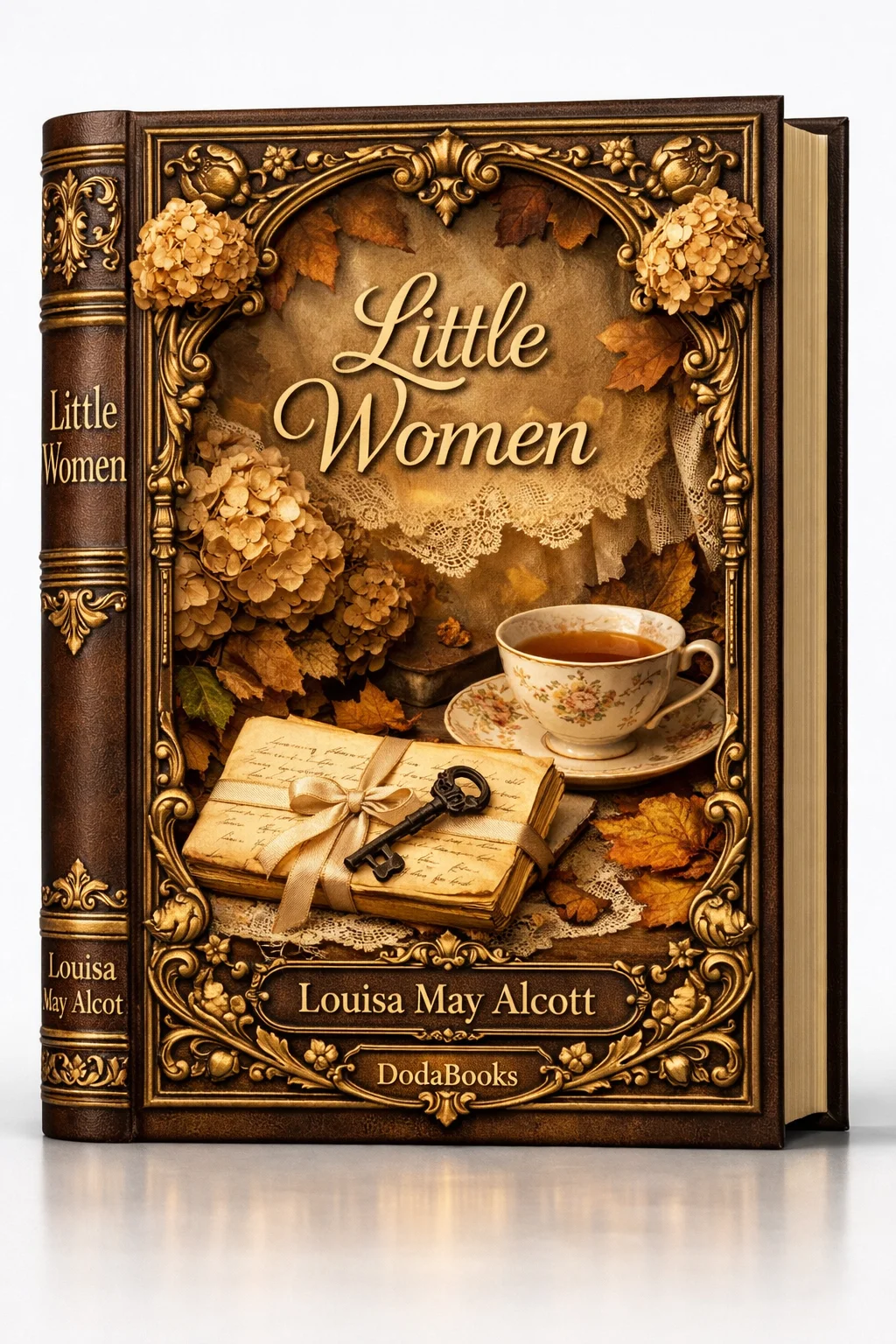
🏠 Read the Definitive Annotated Edition of Little Women
Experience Louisa May Alcott’s beloved classic with complete Civil War historical context, Concord notes, and literary commentary:
- ✅ Complete Unabridged 48-Chapter Text — Includes both Part I and Part II (Good Wives) uncut
- 📜 Pilgrim’s Progress Concordance — Decode every Bunyan allegory and Victorian moral allusion
- 🏛️ Orchard House & Alcott Biography Notes — Discover the real-life sisters behind Jo, Meg, Beth, and Amy
- ✒️ Smart Typography & Formatting — Beautifully formatted for Kindle, Kobo, and iPad
- 🔒 Universal DRM-Free Formats — Delivered instantly in EPUB, PDF, and AZW3 formats