Is Crime and Punishment Hard to Read? Reading Difficulty & Level Guide
When readers decide to tackle 19th-century Russian literature, Fyodor Dostoevsky’s Crime and Punishment (1866) is almost always the first title that comes to mind. Yet many prospective readers hesitate on the threshold: Is Dostoevsky too dense, gloomy, and philosophically impenetrable? How hard is it to follow Russian names with three different patronymics and nicknames? Does the psychological torment make the book a chore to read?
Is Crime and Punishment hard to read? The short answer is no: it earns an accessible difficulty rating of 6.5 / 10 (Moderate to Challenging).
While it deals with heavy existential themes—murder, psychological delirium, nihilism, and spiritual resurrection—Crime and Punishment is fundamentally structured as a gripping psychological detective thriller. Dostoevsky was an avid reader of sensational crime fiction, newspaper tabloids, and Edgar Allan Poe; he engineered the novel with intense dramatic encounters, ticking-clock interrogations, and dramatic plot twists that keep readers turning pages far into the night.
However, readers approaching the novel for the first time will encounter four distinct comprehension hurdles:
- The Russian Naming System: Characters possess a formal first name, patronymic, family surname, and multiple affectionate diminutive nicknames used interchangeably.
- The Feverish, Claustrophobic Atmosphere: Dostoevsky places the reader directly inside Raskolnikov’s hallucinatory, paranoic consciousness during a sweltering St. Petersburg heatwave.
- 1860s Russian Intellectual Debates: Understanding the ideological clashes between Western Utilitarianism, Russian Nihilism, and Christian Orthodoxy that fuel Raskolnikov’s murder theory.
- Length and Structural Density: Spanning roughly 210,000 words across six parts and an Epilogue (about 500–550 pages in standard print).
This comprehensive reading guide breaks down the true reading level of Crime and Punishment, provides a clear decoder for Russian names, compares it against other classic novels, and maps out a comfortable 21-day reading schedule.
⚡ Crime and Punishment Reading Difficulty: At a Glance
- Difficulty Rating: 6.5 / 10 (Moderate / Intellectually Rewarding) — Far more dramatic and faster-paced than War and Peace (8.0/10) or The Brothers Karamazov (8.0/10); roughly comparable in accessibility to Mary Shelley's Frankenstein (6.5/10) and Alexandre Dumas's The Count of Monte Cristo (6.0/10).
- Length: Approximately 210,000 words across 41 chapters organized into 6 Parts plus a two-part Siberian Epilogue (about 500–550 pages in standard print).
- Estimated Reading Time: 15 to 18 hours for an average adult reader (about 45–50 minutes per day on a 21-day schedule).
- Lexile Measure & Grade Level: Lexile measure roughly 1040L–1180L (Grades 10–12 / High School to College undergraduate level).
- Primary Stumbling Blocks: Russian naming conventions and diminutives, intense internal monologues, and mid-19th-century philosophical debates.
📊 Classics Difficulty Comparison Matrix
To understand where Crime and Punishment falls on the spectrum of classic 19th-century literature, examine this comparative benchmark:
+---------------------------------------------------------------------------------------------------------------+
|                               19TH-CENTURY NOVEL READING DIFFICULTY COMPARISON                                |
+--------------------------+------------+--------------+------------------+-------------------------------------+
| TITLE & AUTHOR           | DIFFICULTY | PAGE COUNT   | PROSE COMPLEXITY | PRIMARY CHALLENGE                   |
+--------------------------+------------+--------------+------------------+-------------------------------------+
| The Hound of the         | 3.5 / 10   | ~180 pages   | Clear, modern    | Short novella length, straightforward|
| Baskervilles (Conan Doyle)|           |              | journalistic     | deduction, high momentum            |
+--------------------------+------------+--------------+------------------+-------------------------------------+
| The Moonstone            | 5.0 / 10   | ~500 pages   | Witty, episodic, | 14 shifting narrators, 1840s opium  |
| (Wilkie Collins)         |            |              | dramatic dialogue| medical science, epistolary format  |
+--------------------------+------------+--------------+------------------+-------------------------------------+
| Jane Eyre                | 5.5 / 10   | ~500 pages   | Introspective,   | Moral monologues, 19th-century      |
| (Charlotte Brontë)       |            |              | poetic romantic  | religious debates, slow childhood   |
+--------------------------+------------+--------------+------------------+-------------------------------------+
| The Count of Monte Cristo| 6.0 / 10   | ~1,200 pages | High momentum,   | Endurance, 117 chapters, French     |
| (Alexandre Dumas)        |            |              | theatrical dialog| politics, large cast of characters  |
+--------------------------+------------+--------------+------------------+-------------------------------------+
| Crime and Punishment     | 6.5 / 10   | ~520 pages   | Intense, feverish| Russian naming system, intense      |
| (Fyodor Dostoevsky)      |            |              | psychological    | psychological guilt & nihilism      |
+--------------------------+------------+--------------+------------------+-------------------------------------+
| Frankenstein             | 6.5 / 10   | ~220 pages   | Dense, formal    | Philosophical debate, formal        |
| (Mary Shelley)           |            |              | Romantic rhetoric| Latinate syntax, nested frames      |
+--------------------------+------------+--------------+------------------+-------------------------------------+
| The Brothers Karamazov   | 8.0 / 10   | ~800 pages   | Complex theology,| Theological debates (Grand          |
| (Fyodor Dostoevsky)      |            |              | polyphonic voices| Inquisitor), massive philosophical scope|
+--------------------------+------------+--------------+------------------+-------------------------------------+
| War and Peace            | 8.0 / 10   | ~1,300 pages | Vast historical, | 500+ characters, military history,  |
| (Leo Tolstoy)            |            |              | Russian & French | extended philosophical treatises    |
+--------------------------+------------+--------------+------------------+-------------------------------------+
As the comparison demonstrates, Crime and Punishment is substantially more accessible than Dostoevsky’s later masterpiece The Brothers Karamazov or Tolstoy’s War and Peace. The central plot—a murder followed by a psychological cat-and-mouse duel between killer and detective—provides an ironclad, suspenseful narrative spine that pulls the reader along.
🧗 The 4 Primary Reading Hurdles Explained
1. The Russian Naming System Decoded
The single most common stumbling block for English readers is tracking Russian character names. In 19th-century Russian literature, a single character can be referred to by three or four completely different names depending on who is speaking and their level of intimacy:
- Full Formal Name (First Name + Patronymic): Formed from the father’s first name with the suffix -ovich / -evich (for men, meaning “son of”) or -ovna / -evna (for women, meaning “daughter of”). This is the polite form of address used in formal society (e.g., Rodion Romanovich, Sofya Semyonovna, Avdotya Romanovna).
- Surname (Family Name): Often changes endings by gender: Raskolnikov (male), Raskolnikova (female); Marmeladov (male), Marmeladova (female).
- Diminutive / Intimate Nicknames: Family, lovers, and close friends use affectionate diminutives that look completely different from the official name:
- Rodion becomes Rodya, Rodka, or tenderly Rodyenka.
- Avdotya becomes Dunya or Dunechka.
- Sofya becomes Sonya or Sonechka.
- Dmitri becomes Mitya.
- Pyotr becomes Petya.
+-----------------------------------------------------------------------------------------------+
|                            RUSSIAN CHARACTER NAMES DECODER MATRIX                             |
+-----------------------+------------------------+---------------------+------------------------+
| CHARACTER             | FULL FORMAL NAME       | SURNAME             | DIMINUTIVES / NICKNAMES|
+-----------------------+------------------------+---------------------+------------------------+
| The Protagonist       | Rodion Romanovich      | Raskolnikov         | Rodya, Rodka, Rodyenka |
+-----------------------+------------------------+---------------------+------------------------+
| His Devoted Sister    | Avdotya Romanovna      | Raskolnikova        | Dunya, Dunechka        |
+-----------------------+------------------------+---------------------+------------------------+
| The Faithful Heroine  | Sofya Semyonovna       | Marmeladova         | Sonya, Sonechka        |
+-----------------------+------------------------+---------------------+------------------------+
| The Loyal Friend      | Dmitri Prokofyich      | Razumikhin          | Mitya (occasionally)   |
+-----------------------+------------------------+---------------------+------------------------+
| The Drunken Father    | Semyon Zakharovich     | Marmeladov          | None                   |
+-----------------------+------------------------+---------------------+------------------------+
| The Chief Magistrate  | Porfiry Petrovich      | (No surname given)  | None (always formal)   |
+-----------------------+------------------------+---------------------+------------------------+
| The Dark Seducer      | Arkady Ivanovich       | Svidrigailov        | None                   |
+-----------------------+------------------------+---------------------+------------------------+
| The Pompous Suitor    | Pyotr Petrovich        | Luzhin              | None                   |
+-----------------------+------------------------+---------------------+------------------------+
How to conquer it: Keep a bookmark or cheat sheet of this table beside your book for the first three chapters. Within fifty pages, you will automatically recognize that Rodya and Rodion Romanovich are the exact same person.
2. The Claustrophobic “Fever Dream” Atmosphere
Dostoevsky does not describe St. Petersburg like a picturesque postcard of palaces and canals. He sets the novel in the squalid, impoverished Haymarket (Sennaya Square) district in the dead of summer:
- Sensory Overload: The air is thick with dust, lime, alcohol fumes from cheap taverns, and the stench of unwashed crowds.
- The Physicality of Guilt: Raskolnikov’s garret is described as a “yellow cupboard” or “coffin” barely six paces long. His mental state is defined by cold chills, sudden delirium, sweating convulsions, and manic bursts of speech.
How to conquer it: Recognize that the feverish, chaotic pacing is intentional! Dostoevsky is putting you directly into the panicked, guilty mind of a murderer. Don’t fight the intensity; let the psychological momentum sweep you along.
3. Decoding 1860s Russian Intellectual Ideologies
Raskolnikov did not kill the pawnbroker because he was a career burglar; he killed her to test a philosophical idea that was sweeping Russian universities in the 1860s:
- Radical Utilitarianism: The idea that actions are moral if they maximize overall happiness. Raskolnikov calculates: Kill one useless, venomous old pawnbroker who bleeds the poor, take her money, and use it to fund hundreds of noble careers and save thousands from destitution.
- Russian Nihilism: The complete rejection of traditional religious and social morals in favor of rational scientific materialism.
- The “Napoleonic” / Extraordinary Man Idea: The belief that rare men of genius (like Napoleon or Caesar) have the moral duty to step across laws and shed blood to establish new orders.
Dostoevsky’s Critique: Dostoevsky proves that rationalist utilitarian equations collapse when confronted with real human flesh. You cannot kill an old woman without also killing the innocent Lizaveta who walks in; you cannot kill a human being without severing your own soul from the human race.
4. Navigating the Philosophical Dialogue Monologues
Occasionally, characters engage in extended multi-page monologues—such as Marmeladov’s tavern confession in Part 1, Porfiry Petrovich’s discourses in Part 4, or Svidrigailov’s musings on eternity.
These are not boring digressions; they are high-stakes psychological confessions where characters lay their deepest traumas, vices, and hopes bare. Read them like dramatic theatrical soliloquies.
📅 The 21-Day Reading Schedule
To read Crime and Punishment smoothly across three weeks (averaging about 25 pages or two chapters per day in a 45-minute daily session), follow this balanced 21-day plan:
+--------------------------------------------------------------------------------------------------------------------+
|                                      THE 21-DAY CRIME AND PUNISHMENT READING PLAN                                  |
+------+-------------+------------------------------------+----------------------------------------------------------+
| DAY  | SECTION     | CHAPTERS COVERED                   | KEY PLOT MILESTONES                                      |
+------+-------------+------------------------------------+----------------------------------------------------------+
| 01   | Part 1      | Chapters 1–2                       | Squalid St. Petersburg; rehearsal pawn visit; Marmeladov |
| 02   | Part 1      | Chapters 3–4                       | Letter from mother; Dunya's engagement to Luzhin         |
| 03   | Part 1      | Chapters 5–7                       | The mare-beating dream; the axe murders of Alyona & Lizaveta|
| 04   | Part 2      | Chapters 1–2                       | Delirium; police summons; fainting; hiding loot under stone|
| 05   | Part 2      | Chapters 3–5                       | Razumikhin nurses Rodya; Dr. Zosimov; Luzhin insulted    |
| 06   | Part 2      | Chapters 6–7                       | Raskolnikov on the street; Marmeladov run over by carriage|
| 07   | Part 3      | Chapters 1–3                       | Dunya & Pulkheria arrive; family confrontation; Razumikhin|
| 08   | Part 3      | Chapters 4–6                       | Visiting Porfiry Petrovich; the "On Crime" article debate|
| 09   | Part 4      | Chapters 1–2                       | Svidrigailov appears; the bathhouse with spiders         |
| 10   | Part 4      | Chapters 3–4                       | Raskolnikov visits Sonya; kissing the feet; Lazarus gospel|
| 11   | Part 4      | Chapters 5–6                       | Porfiry's cat-and-mouse duel; Nikolay's false confession|
| 12   | Part 5      | Chapters 1–2                       | Luzhin schemes; the disastrous memorial funeral dinner   |
| 13   | Part 5      | Chapter 3                          | Luzhin frames Sonya with the 100-ruble note; exposed     |
| 14   | Part 5      | Chapters 4–5                       | Raskolnikov confesses to Sonya; "Kiss the earth!"        |
| 15   | Part 6      | Chapters 1–2                       | Katerina Ivanovna dies in the street; Svidrigailov funds |
| 16   | Part 6      | Chapters 3–4                       | Porfiry's final visit: "Confess, Rodion Romanovich!"     |
| 17   | Part 6      | Chapters 5–6                       | Svidrigailov corners Dunya; gunshots; Svidrigailov suicide|
| 18   | Part 6      | Chapters 7–8                       | Raskolnikov kisses Sennaya Square; confesses to police   |
| 19   | Epilogue    | Section 1                          | Siberian fortress on the Irtysh; convicts despise Rodya  |
| 20   | Epilogue    | Section 2 (Part 1)                 | Easter illness; the apocalyptic dream of plague microbes |
| 21   | Epilogue    | Section 2 (Part 2)                 | The riverbank breakdown; embracing Sonya; resurrection   |
+------+-------------+------------------------------------+----------------------------------------------------------+
💡 Top 3 Tips for First-Time Readers
- Pick the Right Translation: Avoid clunky, dated public-domain translations that sound like stiff Victorian legal briefs. Choose a fluid modern translation like Oliver Ready’s for Penguin Classics, or read the cleanly formatted DodaBooks Edition.
- Treat Porfiry Petrovich’s Scenes Like a Chess Match: When Raskolnikov meets Porfiry (in Part 3, Chapter 5; Part 4, Chapter 5; and Part 6, Chapter 2), slow down! Every polite pleasantry, offer of tea, and chuckle is a calculated forensic move designed to elicit a psychological confession.
- Don’t Expect a Conventional Detective Ending: The climax is not a courtroom trial or a high-speed chase; it is an inward spiritual surrender. The novel is about how a proud, broken human soul learns to accept love, guilt, and redemption.
❓ Frequently Asked Questions
Is Crime and Punishment suitable for high school students?
Yes, highly suitable. Because it has the structure of a murder investigation and explores universal themes of identity, peer pressure, morality, and guilt, it is one of the most frequently assigned novels in high school AP English Literature courses and college humanities curriculums.
Why does Raskolnikov bury the stolen goods without counting them?
Because he did not murder the pawnbroker for money. The money was merely a rationalization. The moment he committed the crime, the sight of the stolen purse filled him with unbearable nausea and horror. He buried the treasure under a random stone because its physical presence made his psychological guilt intolerable.
What is the difference between Crime and Punishment and The Brothers Karamazov?
Crime and Punishment (1866) is tighter, more focused, and paced like a psychological thriller centered on one man and one crime. The Brothers Karamazov (1880) is a massive philosophical and theological family saga exploring free will, the existence of God, and institutional corruption across three radically different brothers. Crime and Punishment is universally recommended as the best starting point for reading Dostoevsky.
Can I read a chapter summary before reading each part?
Yes! Reviewing the narrative arc can help you keep track of the complex character web and philosophical themes. Explore our complete Crime and Punishment Summary by Part & Chapter.
What is the best edition of Crime and Punishment to buy?
For everyday readers who want clear typography, integrated Russian naming guides, and universal DRM-free compatibility across devices, we recommend the DodaBooks Edition. Read our complete buying and translation comparison in Where to Buy Crime and Punishment: Best Editions.
📚 Related Articles
Interested in more 19th-century mystery epics and psychological thrillers? Explore our The Moonstone Reading Difficulty Guide or our The Count of Monte Cristo Reading Difficulty Guide.
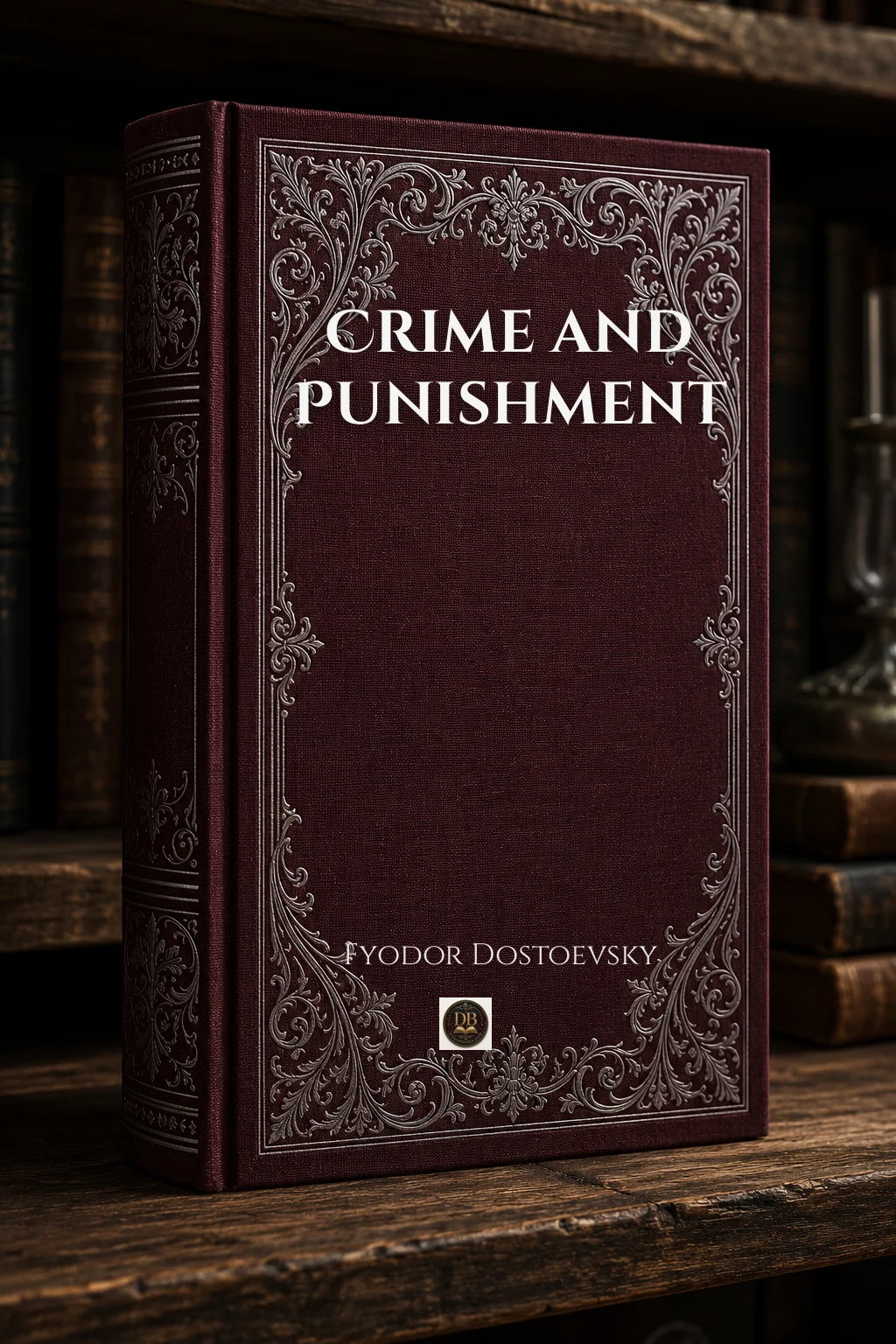
🪓 Experience Dostoevsky’s Masterpiece in Full Splendor
Read the story of Raskolnikov’s divided soul, Sonya’s faith, and the path to redemption in an authoritative, distraction-free edition:
- ✅ Complete, unabridged 41-chapter text across all six parts and the Siberian Epilogue
- 🏛️ St. Petersburg geography & 1860s Russian context decoded — understand the intellectual currents
- 🗂️ Passage-specific annotation cards detailing Russian naming customs and philosophical debates
- 🔒 DRM-free EPUB format — readable on any Kindle, Kobo, iPad, or mobile device
- 📥 Instant digital download delivered directly after checkout