Is Catriona Hard to Read? Reading Difficulty & Study Guide (David Balfour)
For millions of readers worldwide who fell in love with the breathless Highland manhunts, sword fights, and wilderness survival of Kidnapped, opening its sequel Catriona (published in America as David Balfour) can be a surprising and complex experience. While Kidnapped was a relentless physical adventure across the heather, Catriona matures into a sophisticated, morally intricate novel of legal corruption, high-stakes political intrigue, and psychologically fraught romantic courtship.
In terms of quantitative readability, Catriona sits firmly in the accessible sweet spot of 19th-century historical adventure fiction. Stevenson’s sentence rhythm is musical, propulsive, and vivid. However, modern readers often experience reading friction in three specific areas: the extensive use of authentic 18th-century Scots legal terminology, the heavy regional dialects of characters like Alan Breck and the Covenanter Andie Dale, and the intricate political backdrop of the post-Culloden Jacobite aftermath.
This comprehensive reading guide analyzes the readability metrics of Catriona, deciphers its most challenging Scottish legal jargon, unpacks the historical context of the Appin Murder trial, and provides a structured 10-day chapter reading schedule to help you master Stevenson’s classic sequel with complete confidence.
| Readability Metric | Measured Score | What It Means for Readers |
|---|---|---|
| Lexile Measure | 1040L – 1120L | Ideal for high school upperclassmen, college students, and adult readers |
| Flesch Reading Ease | 62.5 (Standard) | Smooth narrative cadence, though Scots legal terms add periodic complexity |
| Flesch-Kincaid Grade Level | Grade 8.8 | Accessible to general fiction readers without specialized historical degrees |
| Total Word Count | ~115,000 words | Approximately 340 pages in standard paperback print across 30 chapters |
| Average Reading Time | 7 to 8 hours | Comfortably finished in ten days at 45 minutes of daily reading |
| Primary Reading Obstacle | Scots Legal Jargon & Dialect | 18th-century Scottish court procedures, clan politics, and Lowland Scots idioms |
🧭 Why Is Catriona Hard to Read? (The 4 Core Challenges)
1. 18th-Century Scots Legal Terminology
The first half of the novel (Chapters 1–20) revolves around the trial of James Stewart of the Glens for the 1752 Appin Murder. Because young David Balfour attempts to navigate the Scottish legal system, Stevenson uses authentic 18th-century Scottish legal terms that differ dramatically from English or American law:
- Readers encounter words like “precognition” (pre-trial witness interrogation under oath), “the panel” (the accused criminal standing in the dock), and “Lord Advocate” (the chief prosecutor of the Crown).
- David frequently debates matters of cess, wadsets, letters of caption, and advocates.
Without explanatory context, modern readers can find the procedural showdowns between David and Lord Advocate Prestongrange disorienting.
2. Scottish Vernacular and Regional Dialects
Stevenson was a master stylist who captured the exact vocal cadence of distinct Scottish social castes:
- David Balfour: Speaks a cultivated, educated Lowland Scots-English marked by biblical phrasing and formal Presbyterian grammar.
- Alan Breck Stewart: Speaks a theatrical, colorful mixture of Highland Gaelic idioms, French military terms, and fiery Stewart clan oaths.
- Andie Dale: The turnkey on the Bass Rock speaks in heavy, broad Lowland vernacular, rich in 17th-century Covenanter colloquialisms that require readers to adjust their inner ear.
3. The Shift from Action Adventure to Romantic Psychology
In Kidnapped, the plot was driven by immediate physical peril: running from redcoats, hiding in heather cages with Cluny Macpherson, and leaping over raging torrents. In Catriona, the tension becomes psychological and moral:
- Part I is a legal thriller where David battles political intimidation and the temptation to keep silent to save his own career.
- Part II is a delicate, emotionally frustrating romance set along the canals of Leiden, where David and Catriona’s mutual pride and strict Presbyterian propriety create agonizing obstacles to their happiness.
Readers expecting non-stop swordplay may feel impatient with the psychological domesticity of the Dutch chapters, though Stevenson regarded this romantic study as his finest achievement.
4. Post-Culloden Jacobite Politics
The novel presumes a basic familiarity with the aftermath of the 1745 Jacobite Rising:
- The bitter clan feud between the Campbells (loyal to the Protestant King George II) and the Stewarts and MacGregors (Jacobites loyal to the exiled Catholic House of Stuart).
- The Disarming Act of 1746, which banned the wearing of the tartan and the carrying of broadswords.
- The desperate, corrupt condition of exiled Jacobite chieftains in France, who were frequently tempted to spy for English gold.
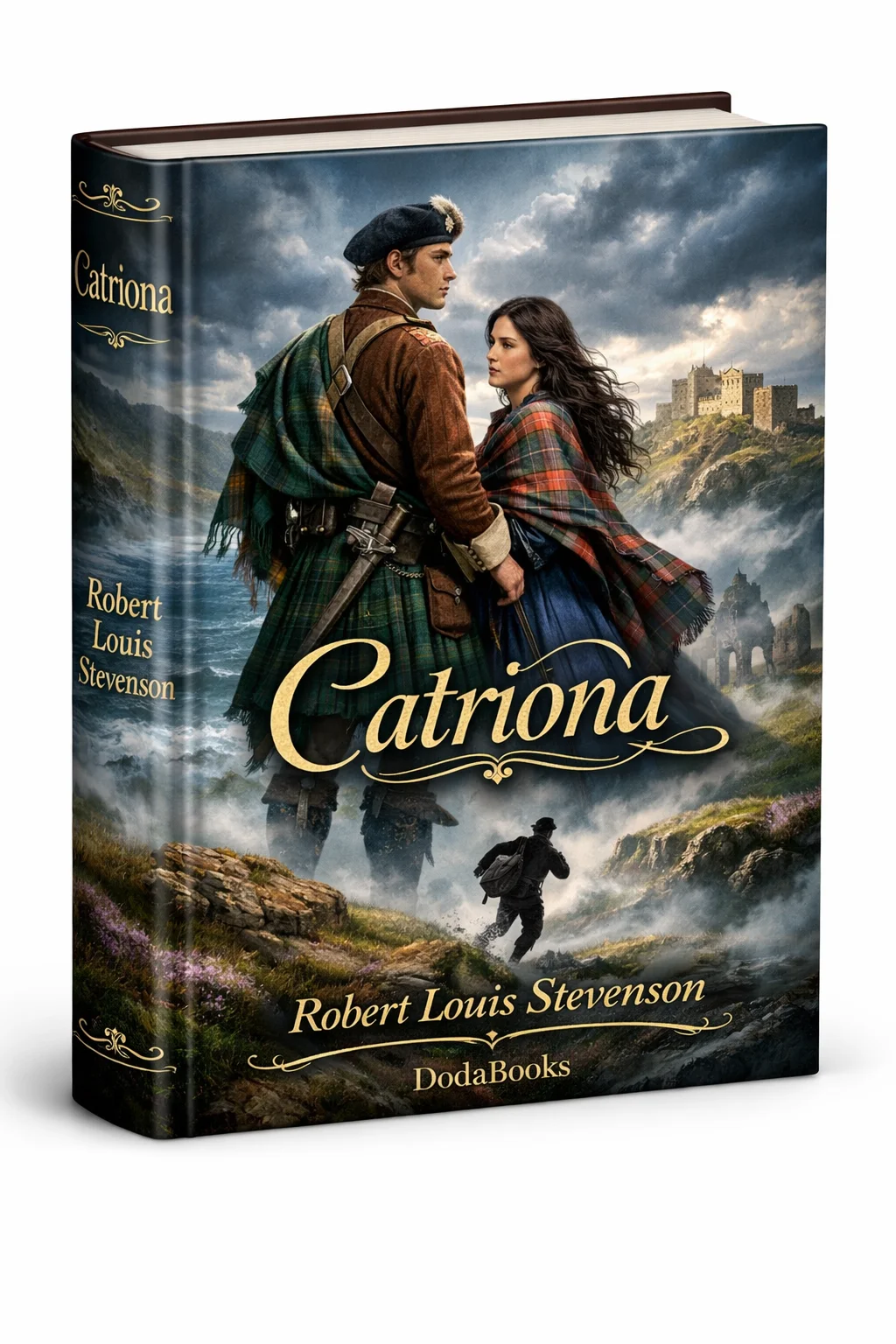
🏴 Read Robert Louis Stevenson with Seamless Clarity
Eliminate reading friction with the DodaBooks Annotated Edition of Catriona. Designed specifically for modern readers:
- 🧭 Instant Legal & Dialect Notes — Every 18th-century Scots term and Gaelic idiom defined on-page
- 💡 Historical Background Cards — Contextualizing the real Appin Murder trial, the Bass Rock, and Jacobite exiles
- 🗺️ Restored Scottish & Dutch Maps — Trace David’s route from Edinburgh to Gullane, Rotterdam, and Leiden
- 📱 Universal DRM-Free EPUB — Read across Kindle, Apple Books, Kobo, and Android tablets
📜 The Scottish Legal & Highland Lexicon: Essential Glossary
To help you breeze through the political debates and Scottish dialogue, here is a quick reference guide to the core terms used throughout Catriona:
+------------------------------------------------------------------------+
|                     THE 18th-CENTURY SCOTS LEGAL LEXICON               |
|                                                                        |
|  Legal Term          Historical Meaning         Role in the Novel      |
|  --------------------------------------------------------------------  |
|  Precognition        Pre-trial witness          David demands to give  |
|                      interrogation under oath   his evidence to Crown  |
|  The Panel           The accused prisoner       Refers to innocent     |
|                      standing criminal trial    James Stewart          |
|  Lord Advocate       Chief legal prosecutor     Title held by William  |
|                      for Scotland               Grant of Prestongrange |
|  Letter of Caption   Arrest warrant for debt    Used to threaten and   |
|                      or criminal contempt       intimidate witnesses   |
|  Wadset              Mortgage of land with      David settles debts    |
|                      feudal pledge rights       for his tenant farmers |
|  Factor              Estate manager collecting  Colin Campbell's job   |
|                      rents for absent owners    when assassinated      |
+------------------------------------------------------------------------+
Essential Scots Vernacular & Idioms
- Laird: A landed Scottish estate owner (David Balfour of Shaws).
- Clachan: A small rural Highland hamlet or cluster of cottages.
- Braw: Handsome, fine, or splendid (referring to Alan Breck’s French clothes).
- Blether: Foolish, nonsensical talk or empty boasting.
- Fash: To trouble, worry, or vex oneself (“Do not fash yourself, David”).
- Dour: Stubborn, unyielding, or stern (typical of Lowland Presbyterian character).
- Ken: To know or recognize (“I ken fine who fired the shot”).
- Gird: A sudden hoop, binding, or fit of violent temper.
📅 The 10-Day Structured Reading Schedule
With thirty chapters totaling approximately 115,000 words, Catriona divides naturally into a comfortable ten-day reading schedule of exactly three chapters per day (roughly 40 to 45 minutes of reading daily):
       [ 10-DAY CATRIONA / DAVID BALFOUR READING ROADMAP ]
+---------------------------------------------------------------+
| PART I: THE LORD ADVOCATE (EDINBURGH & THE BASS ROCK)         |
| • Day 1: Chapters 1–3   | The British Linen Bank & Catriona   |
| • Day 2: Chapters 4–6   | Confronting Lord Advocate Prestongrange|
| • Day 3: Chapters 7–9   | Barbara Grant & The Plot Against David|
| • Day 4: Chapters 10–13 | Pilrig House & Hiding Alan Breck     |
| • Day 5: Chapters 14–17 | Kidnapped on the Bass Rock & Tod Lapraik|
| • Day 6: Chapters 18–20 | The Murder of James of the Glens    |
+---------------------------------------------------------------+
| PART II: FATHER AND DAUGHTER (HOLLAND & PARIS)                |
| • Day 7: Chapters 21–23 | North Sea Voyage & Arrival in Holland|
| • Day 8: Chapters 24–26 | The Lodgings in Leiden & Cold Canals|
| • Day 9: Chapters 27–28 | James More's Treachery in Dunkirk   |
| • Day 10: Chapters 29–30| Alan Breck Intervenes & The Shaws Wedding|
+---------------------------------------------------------------+
Tips for Getting the Most Out of the Schedule:
- Don’t Skip Chapter 15 (“The Tale of Tod Lapraik”): Andie Dale’s terrifying ghost story on the Bass Rock is one of Stevenson’s most celebrated supernatural tales, written in magnificent, authentic vernacular Scots.
- Notice the Contrast in Chapter 20: Contrast the grim, tragic injustice of James Stewart’s hanging with David’s quiet release, illustrating the ruthless machinery of imperial realpolitik.
- Savor Alan Breck’s Return in Chapter 29: Watch how Alan effortlessly commands the stage, resolving weeks of awkward Lowland-Highland misunderstandings in a few strokes of Scottish wit.
👥 Who Should Read Catriona?
Perfect For:
- Anyone Who Finished Kidnapped: Reading Kidnapped without Catriona is like stopping halfway through a great symphony. This book brings David and Alan’s arc to its magnificent, emotionally satisfying conclusion.
- Fans of Scottish History & Sir Walter Scott: Features the same rich historical tapestry as Waverley and Rob Roy, but written with Stevenson’s superior modern pacing and psychological intimacy.
- Readers Who Love Nuanced Historical Romances: David and Catriona’s relationship is a refreshingly realistic, complex depiction of two proud, stubborn young people learning to overcome pride, poverty, and family trauma.
Might Struggle If:
- You expect a simple continuation of the boys’ adventure story from Kidnapped. This is an adult novel dealing with legal ethics, political bribery, and domestic tensions.
- You refuse to engage with historical vernacular. You will need to embrace a few dozen Scots legal terms to appreciate the political drama.
❓ Frequently Asked Questions
Is Catriona as good as Kidnapped?
Stevenson himself considered Catriona superior to Kidnapped in terms of prose style, character depth, and thematic maturity. While Kidnapped remains the more famous action adventure, Catriona is widely regarded by literary critics as Stevenson's most sophisticated historical novel, offering rich political satire and a deeply moving romance.
Why didn't David Balfour just run away instead of trying to testify?
David's defining character trait is his unshakeable Scottish Presbyterian conscience. Having witnessed the Appin murder, he knows with certainty that James Stewart is innocent and that the Campbells are framing him. David believes that remaining silent to protect his own skin would make him complicit in murder, proving that personal honor is worth more than worldly advancement.
What happened to Alan Breck historically?
The real Alan Breck Stewart safely escaped Scotland after the 1752 Appin murder, returning to his regiment in the French Army. He lived in Paris and French military outposts for decades, occasionally slipping back into Scotland on secret Jacobite missions, and is believed to have died in France around the time of the French Revolution in 1791.
Why does Catriona Drummond have two different last names?
Following the 1603 proscription of the MacGregor clan by King James VI, it was illegal under penalty of death for anyone in Scotland to use the surname MacGregor. The clan members were forced to adopt aliases, frequently taking the names of neighboring friendly clans such as Drummond, Murray, or Campbell. In the novel, Catriona uses both names depending on her company.
⚔️ Master Robert Louis Stevenson’s Epic Sequel
Take the confusion out of 18th-century Scottish law and Jacobite clan politics with the definitive DodaBooks Annotated Edition:
- 📖 Complete 30-Chapter Text — Featuring both Part I (Edinburgh) and Part II (Holland & Paris)
- 💡 Exhaustive Footnotes — Deciphering Scots legal terms, clan rivalries, and the Appin trial
- 🗺️ Restored Scottish Maps — Track David’s route from Edinburgh to the Bass Rock, Leiden, and Paris
- 🔓 100% DRM-Free — Yours forever across Kindle, Kobo, iPad, and Android