Is Anne of Green Gables Hard to Read? Reading Level, Age Guide & Vocabulary Breakdown
For over a century, Lucy Maud Montgomery’s Anne of Green Gables (1908) has been embraced by middle-grade students, young adults, and lifelong readers across the globe. Yet modern readers approaching Montgomery’s prose for the first time often wonder how difficult the text actually is compared to modern fiction.
While the narrative follows an eleven-year-old protagonist through childhood and adolescence, Montgomery wrote for a broad Victorian audience accustomed to rich, poetic, and syntactically complex prose. Anne Shirley speaks with an astonishing vocabulary, peppering her speech with dramatic rhetorical flourishes, obscure 19th-century domestic terms, and unreferenced quotations from Victorian poets.
This comprehensive guide analyzes the reading level, Lexile score, vocabulary demands, and potential reading obstacles in Anne of Green Gables, complete with comparative difficulty ratings and a structured reading plan.
| Metric | Score & Recommendation |
|---|---|
| Overall Difficulty Rating | 4.0 / 10 (Moderate Classic) |
| Lexile Measure | 860L – 970L |
| Accelerated Reader (ATOS) Level | 7.3 (Interest Level: Middle Grades 4–8) |
| Flesch-Kincaid Grade Level | Grade 6 to Grade 7 (Ages 11–13) |
| Recommended Independent Reading Age | 10–14 years old (Ageless for adults and read-alouds from age 8) |
| Estimated Reading Time | 6 to 8 hours (approx. 104,000 words across 38 chapters) |
| Recommended Edition | DodaBooks Annotated Edition of Anne of Green Gables |
📊 Reading Level Metrics & Quantitative Analysis
To evaluate how demanding Anne of Green Gables is, educators and reading specialists examine several standardized quantitative metrics:
- Lexile Framework (860L–970L): Places the book squarely within the reading band expected for proficient 6th- to 8th-grade students. For comparison, J.K. Rowling’s Harry Potter and the Sorcerer’s Stone measures 880L, while Louisa May Alcott’s Little Women measures 1300L.
- ATOS Book Level (7.3): Indicates that the vocabulary complexity and average sentence length correspond to a student in the third month of the seventh grade.
- Sentence Length & Variety: Montgomery’s average sentence length ranges between 18 and 26 words. While dialogue between children is snappy and brisk, Montgomery’s descriptive passages depicting Prince Edward Island feature long, multi-clause periodic sentences that require focused attention.
🔍 The 4 Key Elements That Make Anne of Green Gables Challenging
While the storyline is warm, engaging, and emotionally intuitive, modern readers typically encounter four specific challenges within the text:
1. Anne’s Dramatic Rhetorical Vocabulary
Unlike typical literary children who speak in simple, everyday language, Anne Shirley is an voracious reader who intentionally uses the biggest, most grandiloquent words she can find. She views elevated language as a spiritual necessity:
“I love big words. If you have big ideas you have to use big words to express them, haven’t you?”
Young readers frequently encounter sophisticated vocabulary in Anne’s monologues, such as:
- “Kindred spirits”: People who intuitively understand and share one’s soul and values.
- “Scope for the imagination”: Room to daydream, invent stories, and elevate mundane reality.
- “Depths of despair”: Anne’s melodramatic label for profound emotional disappointment.
- “Unblemished” / “Sublime” / “Rapturous”: Romantic descriptors applied to trees, brooks, and dresses.
- “Vicissitudes” / “Prosaic” / “Ineffable”: Formal words used naturally by Anne when explaining her emotional reactions.
2. Victorian Domestic and Material Culture
Set in late 19th-century Prince Edward Island, the novel references obsolete household items, clothing styles, and agricultural practices:
- Wincey: A plain, coarse fabric made of wool and cotton, traditionally used for utilitarian work dresses.
- Puffed Sleeves: The voluminous sleeve fashion of the late Victorian era, which symbolizes social inclusion for Anne.
- Liniment: A medicinal liquid rubbed onto the skin to soothe sore muscles, famously mistaken by Anne for vanilla extract in Mrs. Allan’s cake.
- Currant Wine: Homemade alcoholic beverage fermented from red currants, mistakenly given to Diana Barry in place of non-alcoholic raspberry cordial.
- Cutter & Gig: Types of light, horse-drawn carriages used for winter and summer travel over dirt roads.
3. Literary Allusions and Poetic Quotations
Montgomery was an exceptionally well-educated woman who saturated Anne’s dialogue with unreferenced quotations from classical literature. Without explanatory footnotes, modern readers often miss the dramatic subtext:
- Alfred Lord Tennyson: Anne’s reenactment of Lancelot and Elaine (the “Lily Maid of Astolat”) on Barry’s Pond parodies Victorian Arthurian romance.
- Sir Walter Scott: Anne quotes lines from Marmion and Scottish ballads when defending her moral pride.
- Robert Browning & Elizabeth Barrett Browning: The novel’s closing line—“God’s in his heaven, all’s right with the world!"—is a direct quotation from Browning’s dramatic poem Pippa Passes.
4. Scottish-Presbyterian Social Customs and Restraint
Modern readers may initially find the community of Avonlea startlingly strict and repressed. Marilla Cuthbert’s initial belief that laughter should be restrained, that fictional stories are dangerous “lies,” and that pride in one’s appearance is sinful reflects the rigid Scottish-Presbyterian Calvinism of 1870s Maritime Canada. Understanding this cultural context is vital to appreciating Marilla’s emotional growth.
📚 Comparative Difficulty: How Anne of Green Gables Compares to Other Classics
| Classic Novel | Difficulty Rating (1–10) | Lexile Measure | Sentence Complexity | Typical Reading Age |
|---|---|---|---|---|
| The Secret Garden (Burnett) | 3.5 / 10 | 970L | Moderate; Yorkshire dialect sections | Ages 9–12 |
| Anne of Green Gables (Montgomery) | 4.0 / 10 | 860L–970L | Moderate; elevated vocabulary & descriptions | Ages 10–14+ |
| Peter and Wendy (Barrie) | 4.5 / 10 | 980L | Whimsical, subtle British irony | Ages 10–13 |
| Little Women (Alcott) | 5.5 / 10 | 1300L | Complex 19th-century moralizing | Ages 11–15 |
| Jane Eyre (Brontë) | 7.0 / 10 | 890L | Dense psychological prose, gothic themes | Ages 14+ |
| Wuthering Heights (Brontë) | 8.5 / 10 | 880L | Complex dual narration, heavy Yorkshire dialect | Ages 16+ |
Compared to other Victorian and Edwardian classics, Anne of Green Gables is remarkably approachable. Montgomery’s narrative humor and clear story arcs keep readers engaged even when individual sentences contain archaic terms.
🗓️ The 14-Day Reading Plan: Pacing the 38 Chapters
Because the book contains 38 relatively short chapters, dividing the text into manageable daily reading sessions makes the novel effortless and rewarding:
Week 1: Arrival & Misadventures in Avonlea
Day 1:  Chapters 1–3   (The Mistake at Bright River Station; Anne's Arrival)
Day 2:  Chapters 4–6   (Anne's Tragic History; Marilla Makes Up Her Mind)
Day 3:  Chapters 7–10  (Anne's Prayers; The Feud with Mrs. Rachel Lynde)
Day 4:  Chapters 11–13 (Sunday School Buttercups; Bosom Friends with Diana)
Day 5:  Chapters 14–16 (The Amethyst Brooch; The Slate over Gilbert's Head)
Day 6:  Chapters 17–19 (The Raspberry Cordial Disaster; Saving Minnie May)
Day 7:  Chapters 20–22 (The Haunted Wood; The Liniment Cake Catastrophe)

Week 2: Maturation, Queen's Academy, and Triumph
Day 8:  Chapters 23–25 (Walking the Roof Ridge-Pole; Matthew's Puffed Sleeves)
Day 9:  Chapters 26–28 (The Story Club; Green Hair; The Lily Maid Rescue)
Day 10: Chapters 29–31 (The Charlottetown Exhibition; Queen's Class Forms)
Day 11: Chapters 32–33 (The Provincial Exam Pass List; The Hotel Concert)
Day 12: Chapters 34–35 (A Queen's Girl; Winning the Avery Scholarship)
Day 13: Chapters 36–37 (Summer at Green Gables; Matthew's Sudden Death)
Day 14: Chapter 38     (The Bend in the Road; Gilbert's Chivalrous Gift)
For chapter-by-chapter summaries and study notes, refer to our complete Anne of Green Gables Summary by Chapter.
💡 4 Tips for Getting the Most Out of Anne of Green Gables
- Read Anne’s Monologues Aloud: Montgomery’s dialogue has a distinct musical rhythm. Reading Anne’s speeches out loud helps readers appreciate her comic timing and emotional sincerity.
- Keep a Character Map Handy: Avonlea is populated with colorful villagers, schoolmates, and ministers. Consult our guide to Anne of Green Gables Characters Explained to keep track of the Barrys, Pyes, and Allans.
- Use an Annotated Edition: Having immediate definitions for Victorian terms like wincey, liniment, and currant wine prevents frustration. Check our review of the Best Editions of Anne of Green Gables to find copies with comprehensive footnotes.
- Embrace the Setting: Prince Edward Island is as much a character as Anne herself. Take time to visualize the red dirt roads, blooming apple orchards, and Atlantic breezes Montgomery describes so lovingly.
❓ Frequently Asked Questions
What grade level is Anne of Green Gables appropriate for?
The novel is typically classified as 6th to 8th grade reading level (ages 11–14) for independent reading. However, advanced 4th and 5th graders (ages 9–10) frequently read and enjoy it, and it makes an exceptional family read-aloud for children as young as eight.
Is Anne of Green Gables suitable for adult readers?
Absolutely. While frequently shelved under children's literature, Montgomery originally wrote the novel for readers of all ages. Adults appreciate Montgomery's sharp regional satire, psychological depth, subtle feminist themes, and tender depiction of aging and grief far more deeply than younger readers.
How long does it take to read Anne of Green Gables?
At approximately 104,000 words across 38 chapters, the average reader reading at 250 words per minute will complete the book in 6 to 8 hours. Following our 14-day reading schedule requires roughly 25 to 35 minutes of daily reading.
What makes Anne's vocabulary so distinctive?
Anne's speech reflects her voracious appetite for romantic poetry, Victorian melodrama, and theological literature. She deliberately rejects plain language in favor of grandiose words to elevate her impoverished surroundings and reclaim her personal agency.
Which edition is best for readers who need help with difficult words?
The DodaBooks Annotated Edition is specifically formatted with inline explanations for Victorian terms, Canadian customs, and poetic allusions, making it the easiest and most enriching way to read the novel.
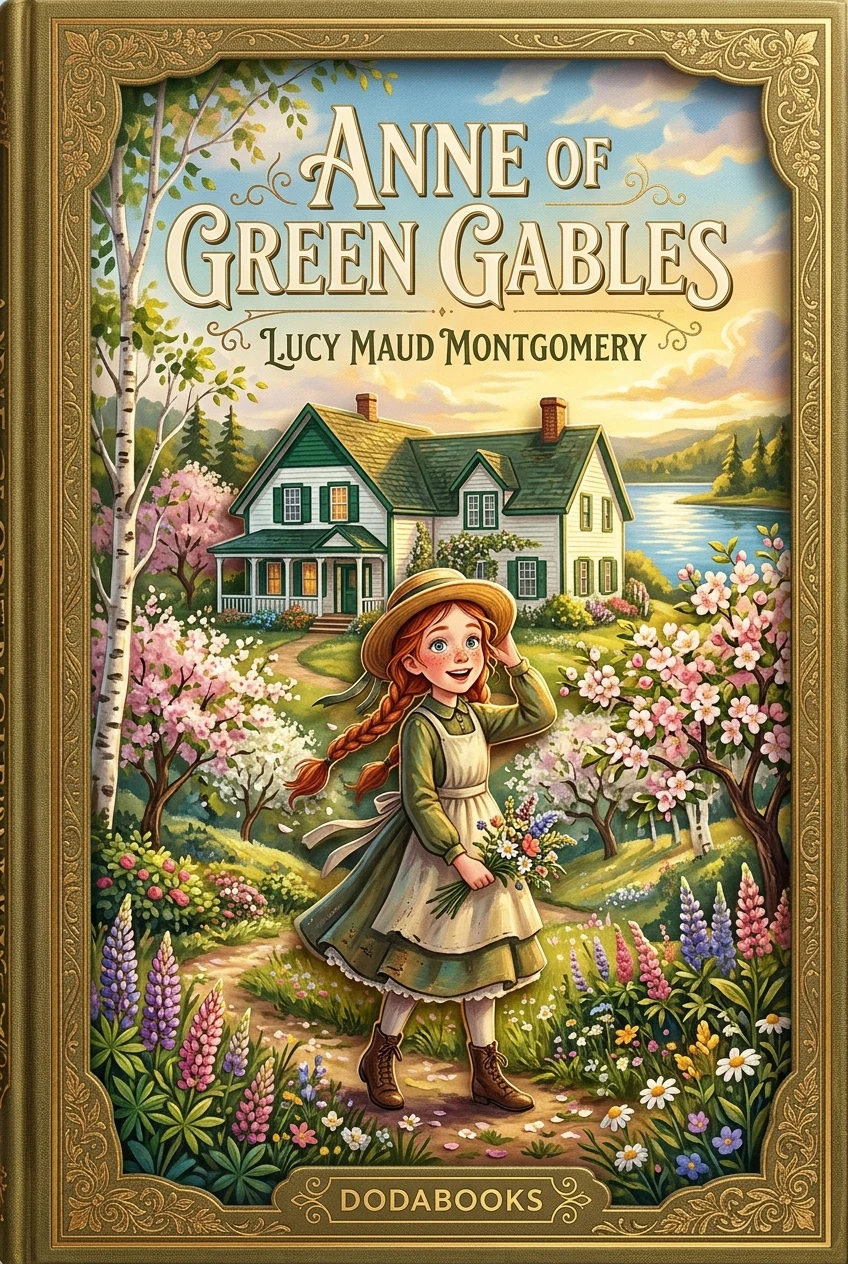
👒 Read Anne of Green Gables with Effortless Clarity
Overcome archaic vocabulary, obscure Victorian references, and historical allusions with the definitive DodaBooks Annotated Edition of Anne of Green Gables.
- 🔍 Over 300 Curated Annotations — Instantly unpack difficult vocabulary, poetry, and geography
- 📖 Complete Uncut 1908 Text — Pristine, unabridged edition with beautiful typography
- 🔒 100% DRM-Free Forever — Read seamlessly on Kindle, Kobo, iPad, and computer
- ⚡ Instant Download — High-resolution EPUB delivered directly to your device
Explore our master Anne of Green Gables Guide for complete analysis of Montgomery’s themes, historical context, and literary impact.