Herman Melville: Mariner and Mystic by Raymond M. Weaver
The Monumental 1921 Biography That Rescued Moby-Dick from Total Obscurity, Discovered the Manuscript of Billy Budd, and Transformed a Forgotten Whaleman into an Immortal American Titan
It is one of the most astonishing ironies in world literary history that when Herman Melville died in New York City on September 28, 1891, the New York Times misspelled his name in his obituary as “Henry Melville,” casually noting that he had once been a moderately popular writer of South Sea adventure tales who had been completely forgotten for more than thirty years. Moby-Dick was out of print, Pierre was dismissed as the raving of a lunatic, and Melville’s final masterpiece, Billy Budd, lay unfinished and forgotten in a dusty tin breadbox in a family apartment.
The monumental event that reversed this catastrophic oblivion and permanently altered the canon of world literature was the publication in 1921 of Herman Melville: Mariner and Mystic by Columbia University scholar Raymond M. Weaver (1888–1948). Published to commemorate Melville’s centenary, Weaver’s groundbreaking biography did not merely recount the facts of a writer’s life—it ignited the worldwide “Melville Revival,” established Moby-Dick as the undisputed supreme epic of American literature, and revealed to an astonished twentieth-century public that America had produced a visionary metaphysical genius comparable to Shakespeare and Dante.
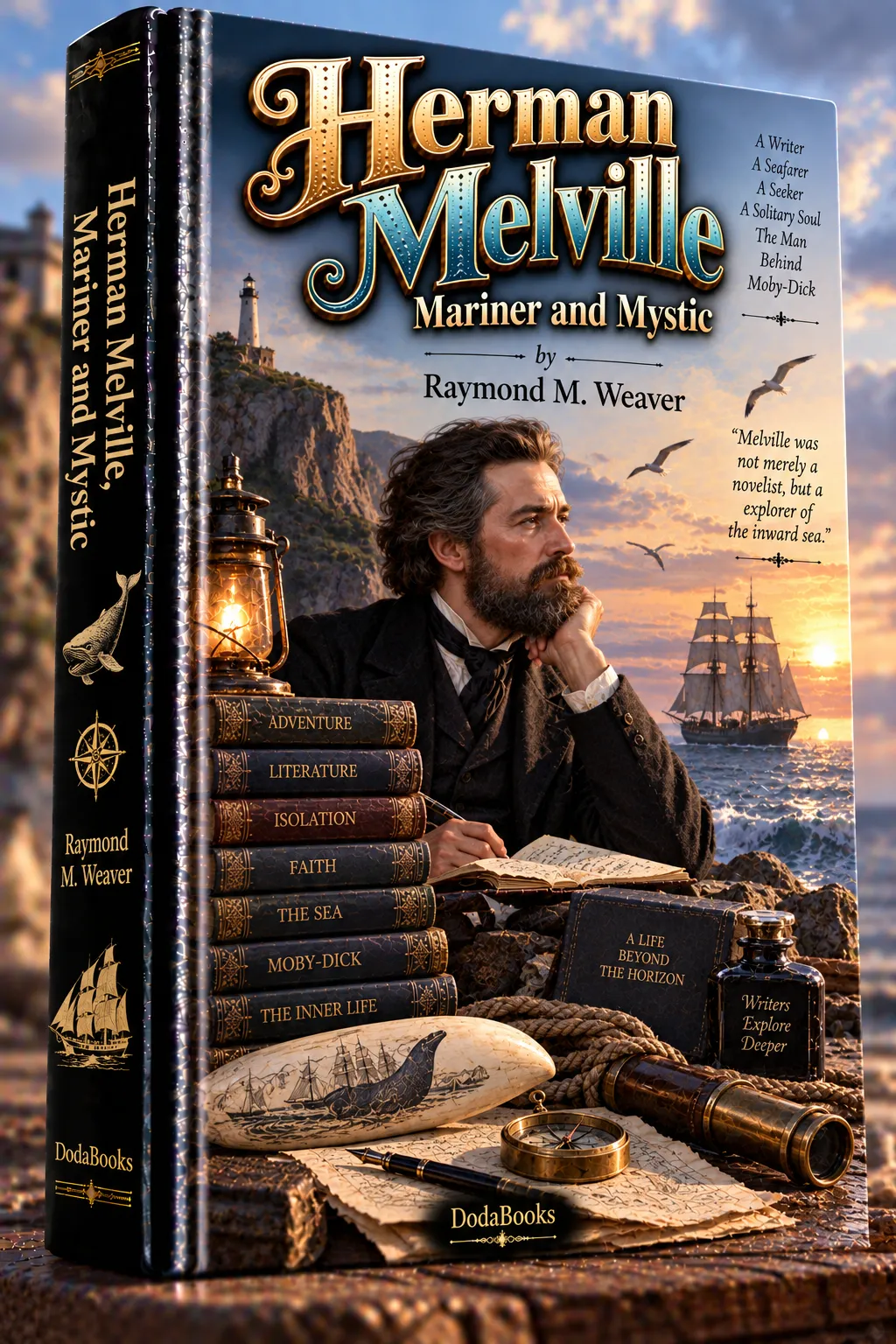
Discover the Book That Saved Moby-Dick
Read Raymond M. Weaver's pioneering 1921 biography Herman Melville: Mariner and Mystic, annotated with family letters, archival discoveries, and the story of Billy Budd.
Read Weaver's Biography NowThe Great Oblivion: Why Melville Was Forgotten for Thirty Years
To understand the revolutionary impact of Weaver’s work, one must recognize how thoroughly Herman Melville had been erased from the American cultural consciousness by the turn of the twentieth century.
Melville’s early novels, Typee (1846) and Omoo (1847), had made him an international celebrity as the “man who lived among the cannibals.” But when Melville abandoned lighthearted South Seas travelogues to probe the metaphysical depths of human existence—culminating in the oceanic fury of Moby-Dick (1851) and the incestuous, nihilistic tragedy of Pierre (1852)—the Victorian reading public turned on him with vicious bewilderment:
- Critical Rejection: Contemporary reviewers condemned Moby-Dick as “maniacal,” “bombastic,” and “unreadable garbage.” The London Athenaeum scoffed at its philosophical soliloquies, while American journals advised Melville to return to straightforward adventure or cease writing altogether.
- Financial Ruin and the Custom House: Crushed by commercial failure and debt, Melville retreated into absolute silence. For nineteen agonizing years (1866–1885), he worked six days a week as a humble, anonymous district inspector at the New York Custom House on Gansevoort Pier, earning four dollars a day while his books rotted on publisher shelves or burned in warehouse fires.
- The Tin Breadbox: When Melville died in 1891, he left behind a cache of unpublished poetry and an unedited prose manuscript tied with red twine in an old tin box. For three decades, his surviving family guarded these papers in silence, believing the world had no interest in the failed writer.
Raymond Weaver’s Historic Breakthrough: Unlocking the Archives
The transformation began in 1919 when Carl Van Doren, then a professor of literature at Columbia University, noticed that Melville’s centenary was passing without any serious commemoration in America. Van Doren encouraged his brilliant young colleague, Raymond M. Weaver, to investigate whether any living descendants or papers survived.
Weaver’s subsequent detective work reads like a literary thriller:
- The Meeting with Eleanor Melville Metcalf: Weaver tracked down Melville’s granddaughter, Eleanor Melville Metcalf, living in South Orange, New Jersey. Skeptical at first of university academics, Metcalf was won over by Weaver’s passionate devotion to her grandfather’s genius.
- The Discovery of Billy Budd: Metcalf opened the family archives to Weaver, presenting him with Melville’s private journals, annotated Bibles, sea letters, and—most momentous of all—the handwritten manuscript of Billy Budd, Sailor. Weaver meticulously transcribed the chaotic, heavily revised pages, publishing the first edition of Billy Budd in 1924 and bestowing a final masterpiece upon world literature.
- The Synthesis of Mariner and Mystic: In Mariner and Mystic, Weaver synthesized these newly discovered primary sources into a magnificent psychological portrait, framing Melville not merely as a sailor who wrote books, but as a wounded, heroic mystic engaged in a life-and-death struggle against cosmic silence and social hypocrisy.
"He was a mariner who had sailed all seas,
and a mystic who had sounded the deepest gulfs of the human spirit.
In an age of complacent optimism and mechanical progress,
Melville stood alone, wrestling with the white whale of ultimate truth."
— Raymond M. Weaver, Herman Melville: Mariner and Mystic
Explore the Definitive Biography of Herman Melville
The DodaBooks annotated edition features extensive footnotes explaining 19th-century whaling terms, the Hawthorne correspondence, and the discovery of Billy Budd.
Get the Annotated Edition for $0.99The Modernist Reassessment: Why the 1920s Embraced Melville
Why did Melville remain completely unread by the Victorian generation of 1850–1890, only to be hailed as a prophet by the generation of the 1920s?
As Weaver perceptively argues in Mariner and Mystic, Victorian America was built upon an ideology of boundless optimism, material expansion, and sentimental religious faith. Melville’s dark vision—his insistence on cosmic ambiguity, the insolubility of evil, and the terrifying indifference of nature—was profoundly intolerable to nineteenth-century bourgeois sensibilities.
However, after the cataclysm of World War I (1914–1918), the Western world woke up from its Victorian dream:
- Disillusionment with Progress: The generation of Ernest Hemingway, T. S. Eliot, and F. Scott Fitzgerald had witnessed the collapse of Victorian moral certainties in the muddy trenches of Europe.
- The Modernist Hunger for Myth: Post-war readers no longer wanted placid domestic novels; they demanded works of fierce, uncompromising mythic depth that confronted existential despair head-on.
- The Resurrection of Ahab: In Captain Ahab’s doomed, monomaniacal defiance against the unreasoning forces of the universe, the Lost Generation recognized its own existential condition. Raymond Weaver’s biography provided the exact intellectual framework the 1920s needed to crown Melville as modern literature’s greatest prophet.
Interlinking with the Melville and Classics Collection
For readers embarking on an exploration of Herman Melville and nineteenth-century American intellectual history, Mariner and Mystic forms the indispensable foundation:
- The Masterpiece Itself: Revisit Melville’s monumental whaling epic with full historical commentary in our dedicated Moby-Dick Annotated Edition Guide.
- American Thought & Intellectual Context: To understand how Melville fit into the broader evolution of American democracy and literature, examine Vernon Louis Parrington’s Pulitzer Prize-winning classic in Main Currents in American Thought Guide.
- Victorian Intellectual Reformers: For another compelling portrait of a nineteenth-century writer who challenged religious and social dogmas, read our new Harriet Martineau by Florence Fenwick Miller Guide.
Why the DodaBooks Edition of Weaver’s Biography Is Essential
While modern biographies of Melville have appeared in subsequent decades (such as those by Leon Howard or Hershel Parker), Raymond M. Weaver’s Herman Melville: Mariner and Mystic retains a sacred, electric energy that no modern academic study can match. It was written at the very moment of resurrection, infused with the incandescent thrill of discovery.
The DodaBooks Annotated Edition presents this foundational literary monument in an unmatched digital presentation:
- Comprehensive Archival Notes: Clarifies where Weaver’s pioneering readings were later expanded or adjusted by modern scholarship, while preserving his original textual discoveries.
- The Complete Billy Budd Discovery Account: Includes the full story of how Weaver opened the tin breadbox and brought Melville’s final masterpiece to light.
- Flawless Formatting: Fully searchable, with hyperlinked chapters, verified quotes, and typography crafted for optimal e-reading.
Witness the Resurrection of an American Titan
Step inside the dramatic 1921 breakthrough that pulled Herman Melville and Moby-Dick back from the edge of oblivion and remade American literature forever.
Download the Complete EbookFrequently Asked Questions
Who was Raymond M. Weaver?
Raymond Melbourne Weaver (1888–1948) was an American literary scholar and professor of English at Columbia University. He is celebrated in literary history as the father of the 'Melville Revival' and the biographer who discovered and published the manuscript of Melville's Billy Budd.
What was the 'Melville Revival'?
The Melville Revival was the sudden, dramatic rediscovery of Herman Melville's works by literary critics and the reading public in the 1920s. Centered around Melville's 1919 centenary and ignited by Weaver's 1921 biography, it transformed Melville from an obscure, forgotten travel writer into recognized titan of American literature.
How did Weaver discover the manuscript of Billy Budd?
In 1919, while conducting research for Mariner and Mystic, Weaver visited Melville's granddaughter, Eleanor Melville Metcalf. She gave him access to a family tin box containing Melville's private papers, where Weaver found the forgotten, unpublished manuscript of Billy Budd, which he transcribed and published in 1924.
Why was Moby-Dick so unpopular during Melville's lifetime?
Victorian readers and reviewers in the 1850s were expecting another lively South Sea adventure like Typee. Instead, Moby-Dick was a dense, dark, experimental epic filled with cetological treatises, Shakespearean soliloquies, and bleak metaphysical skepticism that alienated 19th-century audiences.
Where can I get the complete annotated ebook of Weaver's biography?
The complete digital edition of Herman Melville: Mariner and Mystic is available for immediate download directly from DodaBooks at https://dodabooks.com/ebook/herman-melville-mariner-and-mystic-by-raymond-m-weaver/.