Grateful Peter’s New Year’s Gift
Ruth Lamb’s Heartwarming 1888 Tale of Snowy Streets, Humble Gratitude, and the Transformative Warmth of an Unselfish Heart
In the rich, golden era of Victorian winter storytelling—popularized by Charles Dickens’ A Christmas Carol and Hans Christian Andersen’s The Little Match Girl—stories of cold winter evenings, flickering hearths, and redemptive acts of kindness held a sacred place in family life. Among the most beloved authors of moral and family fiction in late nineteenth-century Britain was Ruth Lamb (1829–1916).
Writing prolifically for the renowned Religious Tract Society, The Girl’s Own Paper, and The Leisure Hour, Ruth Lamb mastered the delicate art of crafting emotional, morally uplifting stories that spoke directly to the hearts of both children and adults. Published in 1888, Grateful Peter’s New Year’s Gift is Lamb at her most tender and luminous: a story about how a single, sincere act of remembered gratitude can melt the icy barriers of pride and bring joy to a frozen world.
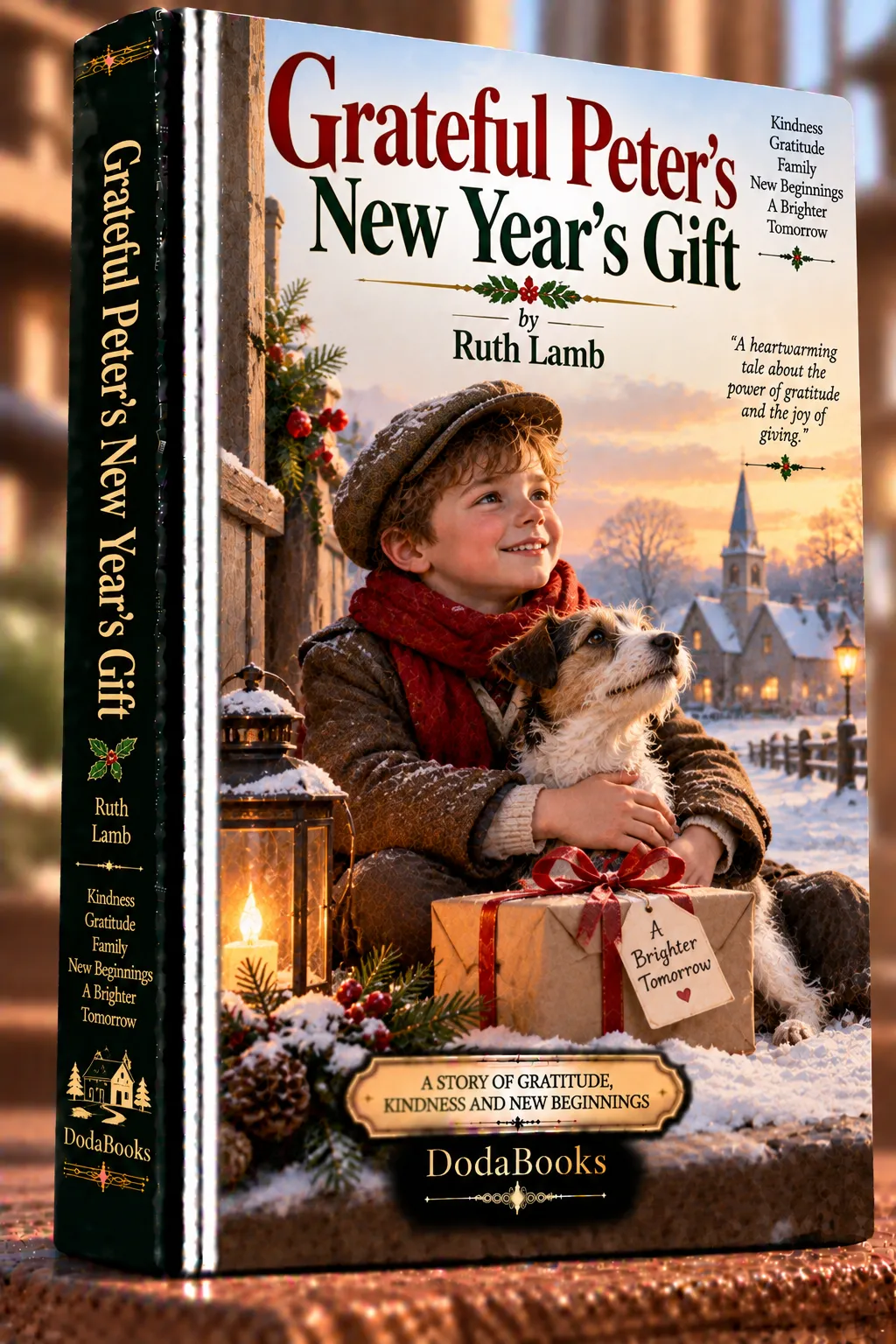
Rediscover the Pure Magic of Victorian Winter Storytelling
Read Ruth Lamb's heartwarming 1888 winter classic with historical annotations detailing Victorian charity, snowy London streets, and New Year holiday traditions.
Get Grateful Peter's New Year's GiftThe Victorian emphasis on perseverance, faith, and emotional healing similarly animates Lucy Ellen Guernsey’s classic tale.
The Snowy Street and the Grateful Heart
The narrative opens on the final evening of the year. Heavy white snow is falling across the cobblestone streets of Victorian London, blanketing church spires, frosted shop windows, and the huddled crowds rushing home to warm family firesides.
In the midst of the freezing winter gale stands young Peter, an impoverished, hardworking errand boy. Peter’s clothing is thin, his boots are worn, and his hands are red with frost. Yet inside Peter’s heart burns an extraordinary warmth: an unyielding memory of gratitude.
Months earlier, when Peter was sick and penniless on the street, an elderly, reclusive stranger showed him an unexpected act of compassion, paying for medicine and speaking words of gentle encouragement that saved the boy’s life. Now, on New Year’s Eve, Peter has spent weeks saving his tiny copper earnings—foregoing meals and warm clothing—to purchase a humble, handcrafted New Year’s gift to express his enduring gratitude to his mysterious benefactor.
The Movement of Peter's Winter Gift:
[Snowy, Freezing London Streets] ➔ [Remembering an Act of Mercy] ➔ [The Humble Handcrafted Gift] ➔ [Melting the Recluse's Icy Hearth] ➔ [Reconciliation & Joy]
The Recluse and the Gift: Melting the Frozen Soul
Peter’s benefactor is Mr. Grahame, an elderly, bitter merchant who lives in a cavernous, dimly lit town house. Shattered by past bereavements and betrayed by former associates, Grahame has locked himself away from society, convincing himself that all human beings are selfish, mercenary, and ungrateful.
When Peter arrives at the old merchant’s doorstep through the swirling blizzard, carrying his modest New Year’s gift, the encounter triggers a profound psychological and spiritual awakening:
- Grahame initially suspects the boy is a beggar seeking money, only to be astonished when Peter refuses all payment, explaining that he came solely to say thank you.
- The sincerity, humility, and radiant innocence of the boy’s gratitude pierce through decades of cynical bitterness, dissolving Grahame’s icy isolation.
- What begins as a boy’s humble New Year’s token becomes the catalyst for widespread charity, family reconciliation, and the restoration of a broken life.
Lamb writes with exquisite emotional delicacy, steering clear of artificial melodrama while capturing the profound truth that true gratitude is a reciprocal blessing that ennobles both the giver and the receiver.
Classic Victorian Winter Atmosphere
Luminous, sensory descriptions of Victorian London under falling snow, frosted lamplight, crackling hearths, and church bells.
A Timeless Lesson in Gratitude
A gentle, heartwarming moral narrative demonstrating how simple, unselfish gratitude possesses the power to soften the hardest hearts.
Victorian Social Compassion
An honest, empathetic look at the lives of Victorian working-class children, street errand boys, and urban winter poverty.
Annotated Holiday Companion
Explanatory notes detailing 19th-century New Year gift-giving customs, Victorian currency (farthings and pence), and charity history.
Ruth Lamb and the Victorian Tradition of Moral Storytelling
Ruth Lamb occupied a revered place in Victorian family life. Her stories were read aloud by parents beside nursery firesides across Britain, the United States, and the British colonies. Unlike didactic writers whose moralizing felt stern and punitive, Lamb’s genius lay in her warmth, psychological empathy, and genuine respect for children’s emotional lives.
In Grateful Peter’s New Year’s Gift, she reminds us of an essential truth often forgotten in our consumer-driven holiday seasons: that the most precious gifts cannot be purchased with fortunes of gold; they are woven from sincerity, memory, and love.
To explore how classic winter storytelling and children’s literature inspired generations of young readers, compare this work with our companions to Hans Christian Andersen’s Fairy Tales Guide and our bedtime reading classic The Magical 3D Bedtime Treasury Guide.
Bring Victorian Winter Warmth into Your Home
Read the definitive digital edition of Grateful Peter’s New Year’s Gift on DodaBooks, featuring historical holiday notes, author biographies, and crisp digital typography.
Purchase Grateful Peter on DodaBooksWhy Read the DodaBooks Annotated Edition of Grateful Peter?
Because the story incorporates authentic 19th-century British domestic terminology, period currency denominations, and Victorian holiday customs, modern families and readers benefit greatly from historical commentary.
The DodaBooks Annotated Edition provides:
- Guide to Victorian New Year Traditions: Explaining historical British New Year gift-giving practices and street customs.
- Glossary of Period Currency & Domestic Terms: Defining shillings, farthings, sixpences, crossing sweepers, and errand lads.
- Biographical Introduction to Ruth Lamb: Detailing her remarkable career writing for the Religious Tract Society and Girl’s Own Paper.
- Flawless Formatting Across All Devices: Designed with clean chapter divisions, balanced margins, and legible typography optimized for Kindle, iPad, Kobo, and smartphones.
The Victorian Culture of Gratitude and Nursery Hearth Reading
To appreciate the profound cultural footprint of Grateful Peter’s New Year’s Gift in 1888, one must understand the sacred role of the evening nursery reading hour in Victorian family life. Before the advent of radio, television, or digital entertainment, the family reading circle beside a glowing coal grate was the primary forum for moral and emotional education.
Ruth Lamb understood the psychology of children with rare tenderness. Rather than preaching terrifying sermons about sin and punishment, Lamb focused on the gentle, magnetic beauty of positive virtues: gratitude, generosity, unselfishness, and compassion.
In Peter’s simple gesture of saving his pennies to purchase a modest New Year’s gift for a benefactor, Victorian parents found an ideal emotional model for their own children. Lamb demonstrated that even the poorest child possesses an immense treasure in the capacity for grateful remembrance.
The Movement of Victorian Moral Storytelling:
[The Cold Exterior Blizzard] ➔ [The Family Fireside Reading Circle] ➔ [The Awakening of Childhood Empathy] ➔ [The Practice of Active Charity]
Her narrative affirms that when a child learns to say thank you with true sincerity, they are practicing a virtue that ennobles the human soul and brings lasting light into a troubled world.
Ruth Lamb’s Grateful Peter’s New Year’s Gift remains an exquisite gem of Victorian winter storytelling. Through its tender depiction of a boy’s humble gratitude melting a lonely man’s frozen heart, it reminds readers of every generation that the greatest gifts of life are not bought with wealth, but born of kindness, memory, and love.
In our modern culture of commercialized holidays and fleeting consumer trends, Ruth Lamb’s timeless message of quiet, practical gratitude shines with renewed brilliance. Grateful Peter’s New Year’s Gift continues to touch the hearts of young and old, reminding us of the profound peace that comes from an unselfish and grateful heart.
Frequently Asked Questions
Who was author Ruth Lamb?
Ruth Lamb (1829–1916) was a beloved Victorian British author who published numerous widely read moral, family, and children's stories in publications like The Girl's Own Paper and for the Religious Tract Society.
What is the primary moral message of Grateful Peter's New Year's Gift?
The story emphasizes that sincere, unselfish gratitude has the spiritual power to break through cynicism and isolation, demonstrating that genuine kindness is the most transformative gift in human life.
Why did Victorians celebrate New Year's gift-giving?
In 19th-century Britain, while Christmas was increasingly focused on family gatherings, New Year's Day was traditionally celebrated with the exchange of gifts and tokens of gratitude for friendships and favors received throughout the preceding year.
Is this story suitable for reading aloud to children?
Yes. The story is ideal for family reading during the winter and holiday seasons, offering a gentle, beautifully written tale of empathy, kindness, and gratitude for children ages 6 and up.
Where can I purchase and download the annotated digital edition?
The complete digital edition is available directly from DodaBooks in EPUB and PDF formats for all modern e-reading devices.
Related Articles
Readers who cherish wholesome youth adventures, pastoral family values, and early twentieth-century American stories will also enjoy exploring Edward Stratemeyer’s The Rover Boys on the Farm Guide.