Fifty Years in the Northwest by William H. C. Folsom: The Making of an Empire
The Monumental Firsthand Record of Fifty Years on the St. Croix Frontier: From Uncharted Indigenous Pine Forests and Fur Posts to Prosperous Cities and Commonwealths
When Maine-born lumberman, trader, and surveyor William Henry Carman Folsom (1817–1900) paddled his canoe up the St. Croix River in the spring of 1845, the vast region encompassing present-day Minnesota and northern Wisconsin was still an untamed borderland. Old Fort Snelling guarded the confluence of the Mississippi and Minnesota rivers, Native American Dakota and Ojibwe bands held dominion over their ancestral hunting grounds, and dense, unbroken white pine forests stretched north toward Lake Superior.
Over the ensuing half-century, Folsom did not merely witness the epic transformation of this northern frontier into an agricultural and industrial powerhouse—he actively helped build it. As a pioneer lumber baron, merchant, delegate to the Minnesota Constitutional Convention, and state senator, Folsom knew every river driver, steamboat captain, missionary, Indian agent, and territorial politician who shaped the Northwest. In his monumental 1888 volume, Fifty Years in the Northwest, Folsom produced one of the most comprehensive, detailed, and indispensable primary historical sourcebooks ever compiled for the upper Mississippi valley.
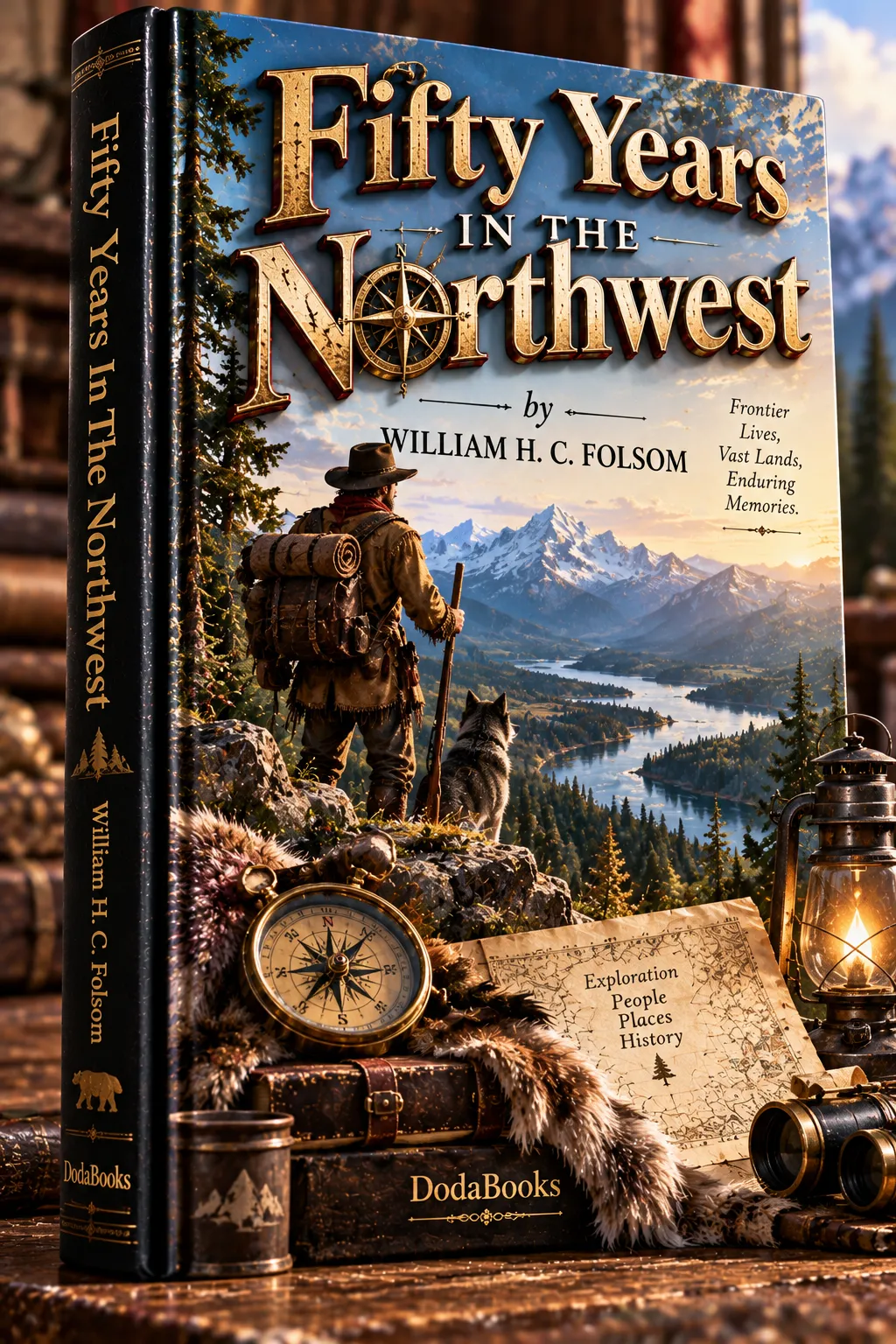
Step Inside the Untamed Frontier of the Old Northwest
Read William H. C. Folsom's legendary pioneer chronicle, enriched with historical annotations, town-by-town settlement records, and biographical portraits.
Read Folsom's History TodayThe St. Croix Valley: Gateway to the Northern Pine Forests
At the center of Folsom’s narrative lies the scenic, tumultuous valley of the St. Croix River, which forms the border between Minnesota and Wisconsin. Before the arrival of farming families and railroads, the St. Croix was the lifeblood of the great northern white pine lumber industry:
- The Lumbermen of Taylors Falls and Stillwater: Folsom vividly documents the dangerous world of the 1840s and 1850s lumber camps: felling colossal white pines during subzero winter blizzards, hauling logs onto frozen rivers with oxen, and the death-defying springtime river drives through the churning rapids of the St. Croix Dalles.
- The Famous St. Croix Boom: He describes the construction of the colossal boom systems near Stillwater, where millions of feet of floating timber from dozens of rival lumber companies were sorted, rafted, and floated down the Mississippi to mills as far south as St. Louis.
- Founding Pioneer Towns: Folsom preserves the exact origins of frontier communities, documenting the very first log cabins, sawmills, schoolhouses, and post offices in Taylors Falls, Marine on St. Croix, Osceola, Hudson, St. Paul, and Minneapolis.
Because Folsom served as an early county commissioner and territorial legislator, his records provide legal, civic, and economic precision that modern historians find priceless.
Dakota and Ojibwe Encounters: The Frontier in Transition
Unlike many nineteenth-century memoirs that erased indigenous populations or treated them merely as hostile stereotypes, Folsom writes with firsthand familiarity about the Dakota (Sioux) and Ojibwe (Chippewa) nations among whom he lived:
- The St. Croix Border Wars: Folsom documents the long-standing territorial friction between the woodland Ojibwe and the prairie Dakota, recounting battles fought near Taylors Falls and the St. Croix Dalles during the 1840s.
- Treaties and Dispossession: As an observer of federal Indian treaties, Folsom records the terms and tragic human costs of the 1837 and 1851 land cessions, noting the broken government promises, delayed treaty annuity payments, and fraudulent trade practices that stoked indigenous resentment.
- The 1862 US-Dakota War: Folsom provides a sober, detailed account of the catastrophic 1862 Dakota conflict in Minnesota, the panic that swept through the St. Croix settlements, the mobilization of local frontier militias, and the subsequent expulsion of indigenous peoples from the state.
"The pioneers who felled the first pines and drove the first oxen
into these northern valleys built more than sawmills and log huts;
they laid the foundations of sovereign commonwealths in the wilderness,
clearing the road for millions yet unborn."
— William H. C. Folsom, Fifty Years in the Northwest
Explore the Complete 760-Page Pioneer History with Notes
The DodaBooks annotated edition features comprehensive indexes, county-by-county breakdowns, and historical notes on Minnesota territorial pioneers.
Get Fifty Years in the Northwest for $0.99The Building of a Commonwealth: Politics and Infrastructure
Folsom’s career as a public servant allowed him to record the political architecture of the American frontier:
- The Dual Constitutional Convention of 1857: In one of the most bizarre episodes in American constitutional history, Republican and Democratic delegates in Minnesota were so deeply divided that they refused to sit in the same room. Folsom recounts how both parties met in separate chambers of the capitol, each drafting identical constitutions passed by conference committees to secure statehood in 1858.
- Railroads and Steamboats: He chronicles the dramatic transition from Mississippi river steamers and ox-cart trails (such as the famous Red River Trails) to the explosive railroad construction boom of the late 1860s that connected the wheat fields of the Red River Valley with Minneapolis flour mills.
- The Pioneer Character: Throughout the volume, Folsom highlights the indomitable resilience of ordinary settlers who endured prairie fires, devastating grasshopper plagues in the 1870s, typhoid epidemics, and brutal Minnesota winters where temperatures plunged to forty degrees below zero.
Interlinking with Related Regional and Pioneer Chronicles
Readers interested in the exploration, frontier settlement, and regional history of the American continent will find compelling connections across our library:
- French Exploration of the Upper Mississippi: Discover the early French explorers who first mapped the lakes and rivers of the Northwest two centuries before Folsom in Francis Parkman’s La Salle and the Discovery of the Great West Guide.
- Maritime Terminology & River Navigation: To decode the specialized nautical language, rigging, and seamanship terms used by nineteenth-century navigators and rivermen, consult Admiral W. H. Smyth’s The Sailor’s Word-Book Guide.
- Frontier Clashes in the Midwest: For another critical primary history of Midwest frontier friction and Black Hawk’s resistance in Illinois and Wisconsin, read The Black Hawk War Guide.
- Midwestern Boomtowns & Prairie Speculation: Explore the comedic, high-stakes real estate manias that built Western railroad towns in Herbert Quick’s Aladdin & Co. Guide.
- Overland Pioneer Migration: Compare the settlement of the Upper Midwest with the harrowing transcontinental journey across the plains in Kate Mulhall Oregon Trail Guide.
Why the DodaBooks Edition of Folsom’s History Is Indispensable
Original copies of Fifty Years in the Northwest are rare, heavy antiquarian tomes that are difficult to navigate due to their massive scope and Victorian typography. The DodaBooks Edition transforms this monumental archive into an accessible digital masterpiece:
- Fully Searchable Text & Detailed Navigation: Features an interactive table of contents organized by counties, towns, and historical epochs, allowing genealogists and historians to jump directly to specific settlements.
- Contextual Annotations: Explains early nineteenth-century land grant terms, lumber industry jargon (such as wanigan, peavey, and boom sticks), and historical boundary disputes.
- Pristine Digital Formatting: Completely reformatted for modern e-readers and smartphones, making all 760 pages of historical records, letters, and rosters easy to read anywhere.
Discover Your Pioneer Roots
Step back in time to the birch-bark canoes, roaring sawmills, and frontier log cabins of the upper Mississippi in William H. C. Folsom's definitive history.
Download the Complete EbookFrequently Asked Questions
Who was William H. C. Folsom?
William Henry Carman Folsom (1817–1900) was a prominent early Minnesota pioneer, lumberman, merchant, and politician. Born in Maine, he moved to the St. Croix Valley in 1845, served in both houses of the Minnesota legislature, was a member of the state constitutional convention, and authored Fifty Years in the Northwest in 1888.
Which geographic regions are covered in Fifty Years in the Northwest?
The book primarily focuses on the St. Croix Valley and upper Mississippi regions of Minnesota and Wisconsin, including Chisago, Washington, Ramsey, and Hennepin counties in Minnesota, as well as St. Croix, Polk, and Pierce counties in Wisconsin.
Why is this book so important for genealogists and local historians?
Folsom included detailed biographical sketches of hundreds of early settlers, complete with their birthplaces, arrival dates, family lineages, military service, and local contributions, making it one of the most comprehensive genealogical resources for the Upper Midwest.
Does the book discuss the lumber industry in detail?
Yes. As an active lumberman for decades, Folsom provides an unparalleled firsthand technical and economic account of white pine logging operations, timber claims, sawmill technology, river log drives, and the development of the famous St. Croix Boom.
Where can I purchase the complete digital edition?
The complete, annotated digital edition of Fifty Years in the Northwest is available for immediate download directly from DodaBooks at https://dodabooks.com/ebook/fifty-years-in-the-northwest-by-william-h-c-folsom/.