Bram Stoker’s Dracula (1897) is the foundational masterpiece of modern vampire literature, but modern readers accustomed to Hollywood film adaptations are often shocked by the novel itself. Unlike cinematic versions that center on a tragic, romantic anti-hero, Stoker’s novel is a terrifying, documentary-style Victorian mystery told through an intricate web of personal journal entries, letters, telegrams, phonograph recordings, and newspaper clippings.
Spanning from the mist-veiled Carpathian Mountains of Transylvania to the foggy seaports of Whitby and the asylum wards of Victorian London, Dracula chronicles an ancient predatory aristocrat’s biological invasion of modern Britain—and the desperate band of mortals who unite to destroy him.
| Feature | Detail |
|---|---|
| Author | Bram Stoker (1847–1912) |
| Published | May 26, 1897 (Archibald Constable and Company, London) |
| Narrative Form | Epistolary (Letters, journals, diaries, ship logs, telegrams) |
| Total Chapters | 27 chapters across 4 main dramatic movements |
| Key Settings | Castle Dracula (Transylvania), Whitby (Yorkshire), Purfleet & London (England), Varna |
| Core Antagonist | Count Dracula (Transylvanian warlord, sorcerer, undead vampire) |
| Core Protagonists | Jonathan Harker, Mina Murray Harker, Dr. John Seward, Prof. Abraham Van Helsing, Arthur Holmwood, Quincey Morris |
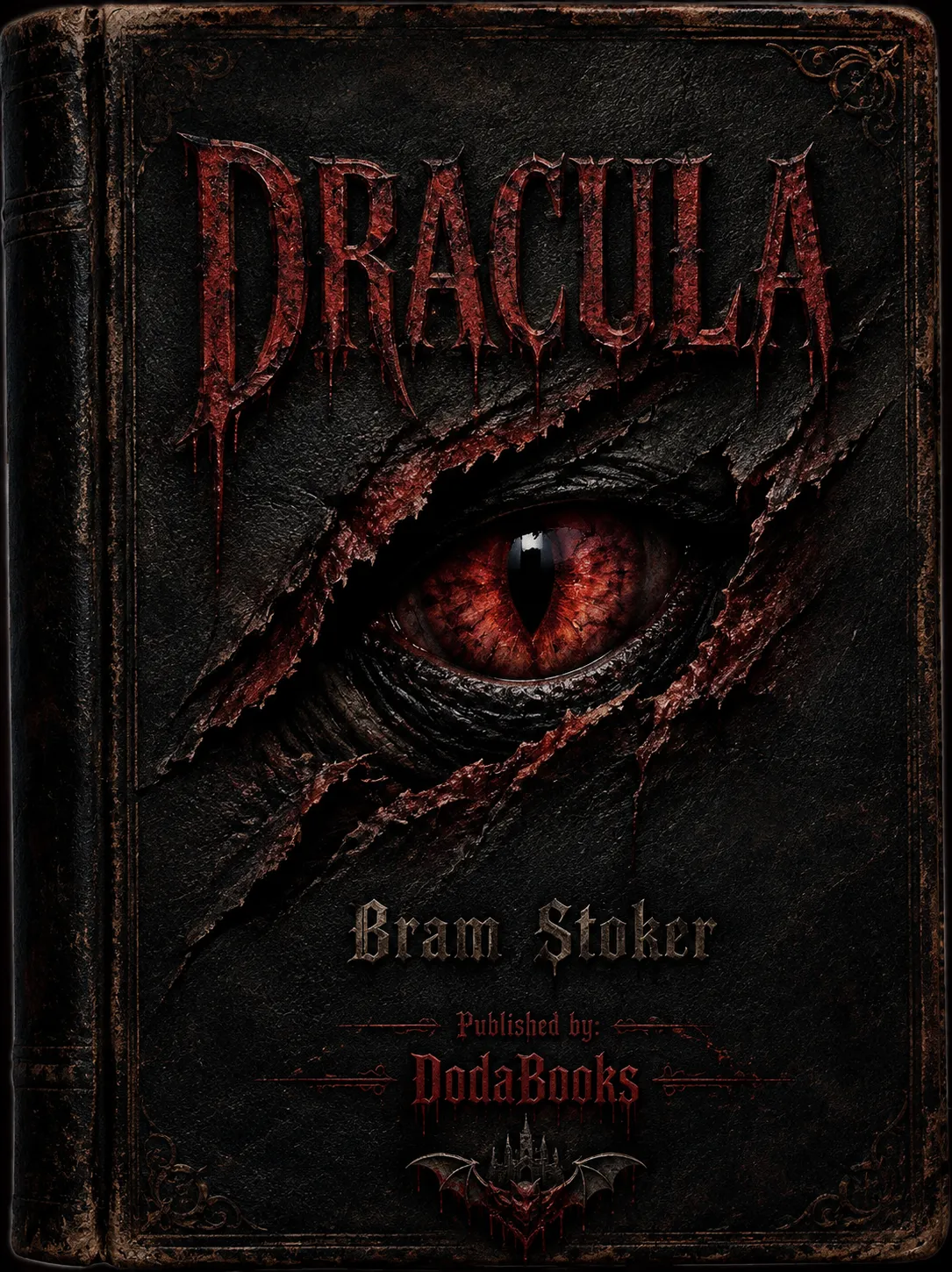
🦇
Dracula: Complete Chapter Summary & Plot Overview
From Jonathan Harker's terrifying imprisonment in Castle Dracula to the high-stakes Carpathian snow pursuit—the complete 27-chapter story explained.
📖 What Is Dracula About? (The Quick Answer)
At its core, Dracula tells the story of an ancient Transylvanian nobleman who purchases real estate in London with the intention of establishing an undead empire in the heart of the British Empire. Jonathan Harker, an earnest young English solicitor, travels to Transylvania to finalize the deeds, only to discover that his host is a nocturnal monster who feeds on human blood.
Escaping back to England in a state of nervous collapse, Harker reconnects with his fiancée Mina Murray. Meanwhile, Dracula arrives on English soil aboard a ghost ship, preying upon Mina’s vivacious friend Lucy Westenra. As Lucy wastes away and transforms into an undead predator, Dr. John Seward summons his mentor, the Dutch philosopher and scientist Professor Abraham Van Helsing. Recognizing the supernatural threat, Van Helsing organizes a small brotherhood of defenders who utilize both ancient religious relics and modern Victorian technology (typewriters, blood transfusions, train timetables) to hunt Dracula down and banish him from the earth.
🗺️ The Four Dramatic Movements of Dracula
Stoker constructs the novel’s 27 chapters into four distinct, escalating phases:
+-------------------------------------------------------------+
|                THE 4 DRAMATIC MOVEMENTS OF DRACULA          |
+-------------------------------------------------------------+
| ACT 1: IN THE SHADOW OF THE CARPATHIANS (Chapters 1–4)      |
| Jonathan Harker's journal at Castle Dracula; psychological  |
| horror, the three vampire sisters, realization of captivity.|
+-------------------------------------------------------------+
                              |
                              v
+-------------------------------------------------------------+
| ACT 2: THE INVASION OF WHITBY & LUCY'S FATE (Chapters 5–16) |
| The ghost ship Demeter crashes at Whitby; Lucy Westenra's   |
| illness; failed blood transfusions; Lucy's undead staking.  |
+-------------------------------------------------------------+
                              |
                              v
+-------------------------------------------------------------+
| ACT 3: THE BATTLE OF LONDON & MINA'S BAPTISM (Chapters 17–21)|
| Transcribing documents; discovering Carfax estate; Renfield's|
| asylum warnings; Dracula feeds on Mina and forces blood oath|
+-------------------------------------------------------------+
                              |
                              v
+-------------------------------------------------------------+
| ACT 4: THE CARPATHIAN PURSUIT & FINAL CHASE (Chapters 22–27)|
| Purifying Dracula's fifty earth-boxes; tracking the Czarina |
| Catherine by river; the winter showdown beneath the castle. |
+-------------------------------------------------------------+
📜 Chapter-by-Chapter Plot Breakdown
Act 1: Jonathan Harker at Castle Dracula (Chapters 1–4)
- Chapter 1: Jonathan Harker travels by train through Munich and Vienna into the rugged Transylvanian frontier. At the Golden Krone Hotel in Bistritz, the superstitious locals plead with him not to travel on St. George’s Eve—a night when evil spirits walk abroad. A frantic landlady presses a crucifix around his neck. At the Borgo Pass, Harker is collected by a mysterious calèche driver whose red eyes and unnatural command over wolves terrify the horses.
- Chapter 2: Harker arrives at the ruined, gloomy Castle Dracula. Count Dracula welcomes him inside, revealing himself as a pale, tall, courtly old man with an iron grip, pointed ears, and hairs on the palms of his hands. Harker is struck by the absence of mirrors and servants in the castle. Over long late-night conversations in the library, Dracula obsessively studies English maps, culture, and train schedules, discussing his purchase of Carfax, an abandoned estate in Purfleet, Essex.
- Chapter 3: Harker shaves using his pocket mirror; when Dracula enters without casting a reflection, the Count violently smashes the looking glass. Exploring forbidden corridors, Harker falls asleep in an ancient drawing room and is seduced by three female vampires (the “Weird Sisters”). Just as one leans to bite his throat, Dracula storms in, furiously pulling them off, declaring: “This man belongs to me!” He tosses them a squirming bag containing a stolen human infant to appease their hunger.
- Chapter 4: Harker realizes he is a prisoner being kept alive only to teach Dracula English legal customs. Peering out of the high battlements, Harker witnesses Dracula crawling head-first down the sheer castle wall like a giant bat. Discovering Dracula lying inert and engorged with fresh blood inside a wooden box filled with earth in the chapel vaults, Harker strikes at him with a shovel, only deflecting off his forehead. Knowing his execution date is set, Harker attempts a desperate scale down the outer castle wall into the gorge.
Act 2: The Whitby Shipwreck & The Tragedy of Lucy (Chapters 5–16)
- Chapters 5–6: The scene shifts to England through the correspondence of Mina Murray and her aristocratic friend Lucy Westenra. Lucy receives three marriage proposals in a single day: from Dr. John Seward (director of an insane asylum), Quincey Morris (a wealthy Texas adventurer), and Arthur Holmwood (Lord Godalming), whom she joyfully accepts. Meanwhile, at Seward’s asylum, an inmate named Renfield begins eating flies, spiders, and sparrows, raving about collecting the life force of living creatures.
- Chapters 7–8: A ferocious storm hits the coastal resort town of Whitby. The Russian schooner Demeter runs aground on the shore. A horrifying discovery reveals the captain lashed dead to the helm holding a crucifix, with the entire crew missing. A colossal black dog leaps from the deck and vanishes into the cliffs. That night, Mina finds Lucy sleepwalking at the cliffside cemetery near St. Mary’s church, with a dark, red-eyed figure bent over her neck. Two small puncture marks appear on Lucy’s throat.
- Chapters 9–12: Harker turns up alive in a hospital in Budapest suffering from brain fever; Mina rushes abroad to marry and nurse him. In England, Lucy falls into a deadly, unexplainable anemia. Dr. Seward summons his former teacher, Professor Abraham Van Helsing from Amsterdam. Van Helsing immediately recognizes the symptoms of vampiric blood loss and performs four successive emergency blood transfusions (from Arthur, Seward, Van Helsing, and Quincey). He adorns Lucy’s bedroom with garlic blossoms, but Lucy’s well-meaning mother repeatedly removes them, allowing Dracula to re-enter.
- Chapters 13–16: A wolf escapes from the London Zoo and crashes through Lucy’s window; Lucy’s mother dies of fright, and Lucy passes away. Shortly after her funeral, London newspapers report the “Bloofer Lady”—a beautiful woman kidnapping children on Hampstead Heath and leaving bite marks on their throats. Van Helsing brings Seward, Arthur, and Quincey to Lucy’s tomb, opening her coffin to reveal an uncorrupted, predatory monster. Confronted with the truth, Arthur drives a wooden stake through Lucy’s heart, and Van Helsing cuts off her head and fills her mouth with garlic, freeing her soul.
Act 3: The Gathering of Hunters & Dracula’s Retaliation (Chapters 17–21)
- Chapters 17–19: Mina transcribes Jonathan’s Transylvanian diary, Lucy’s letters, and Seward’s phonograph logs into a master chronological dossier. Van Helsing confirms Harker was sane: Dracula has arrived in England. The men arm themselves with crucifixes, sacred wafers, and knives, infiltrating Dracula’s estate at Carfax. Inside the rancid chapel, they discover fifty heavy wooden boxes of consecrated Transylvanian earth that Dracula imported to rest in during daylight hours.
- Chapters 20–21: Dracula strikes back with vicious cunning. He visits Renfield in the asylum, using Renfield’s obsession with life to gain entry to the asylum grounds. In the dead of night, Dracula infiltrates Seward’s private residence, feeding on Mina while Jonathan lies in a hypnotic stupor. When the men kick down the bedroom door, they witness a horrifying scene: Dracula forcing Mina to drink blood from an open gash on his chest, sealing an unholy psychic bond: “You are now of my flesh, blood of my blood!”
Act 4: The Pursuit Across Europe & The Final Duel (Chapters 22–27)
- Chapters 22–24: Van Helsing places a consecrated communion host on Mina’s forehead; it sears into her skin like a hot iron, leaving an open red burn of uncleanliness that brings her to tears. The hunters systematically locate and sterilize Dracula’s fifty earth-boxes across London with holy water and wafers, depriving him of resting sanctuaries. Cornered with only one box remaining, Dracula flees England aboard the ship Czarina Catherine, bound for the Black Sea port of Varna.
- Chapters 25–26: Van Helsing turns Mina’s psychic connection against Dracula: by hypnotizing Mina each day at dawn and sunset, she can hear the sloshing waves and creaking rigging, revealing Dracula’s exact sea location. Arriving in Varna ahead of him, the hunters discover Dracula outsmarted them by using fog to divert the ship up the Danube to Galatz. Splitting into teams, Harker and Arthur pursue by steam launch; Seward and Quincey ride on horseback; Van Helsing and Mina travel by carriage directly to Castle Dracula.
- Chapter 27: Van Helsing reaches Castle Dracula, slaughters the three vampire brides in their crypts, and seals the castle gates with sacred wafers. In the gathering blizzard outside the castle, the hunters converge on a peasant wagon carrying Dracula’s heavy earth-box. As the sun sinks to the mountain horizon, Jonathan Harker slashes through Dracula’s throat with a heavy Kukri knife, and Quincey Morris drives a Bowie knife through the vampire’s heart. Dracula dissolves into dust with a peaceful look on his face. Quincey Morris dies honorably from wounds sustained in the battle, and the red scar vanishes from Mina’s forehead, signifying redemption and peace.
💡 The Deeper Meaning: Victorian Anxiety & Imperial Reverse-Colonization
Why does Dracula endure while hundreds of other 19th-century penny dreadfuls are forgotten? Because beneath the vampire thrills, Stoker tapped directly into the deepest anxieties of late-Victorian society:
- Reverse Colonization: In the 1890s, Britain ruled one-quarter of the globe. Stoker flipped the imperial script: an ancient aristocratic invader from the primitive East arrives to colonize, feed upon, and infect the modern Western metropolis.
- Modern Technology vs. Ancient Superstition: The novel’s heroes defeat Dracula not through supernatural spells, but through Victorian logistics: shorthand typing, portable Kodak cameras, Winchester rifles, blood science, and train schedules.
- The New Woman & Sexual Repression: Stoker contrasts Lucy Westenra (whose sexual boldness and desire for multiple suitors leads to her monstrous downfall) with Mina Harker (the brilliant, disciplined intellectual whose maternal devotion and editorial skill orchestrate the monster’s destruction).
Ready to dive deeper into Bram Stoker's gothic masterpiece? Explore all historical notes, Victorian slang definitions, and folklore analysis in our complete annotated edition.
Get Dracula Annotated at DodaBooksFrequently Asked Questions
What is the main plot of Dracula?
Dracula tells the story of an ancient vampire count from Transylvania who attempts to move to London to establish an empire of the undead. After terrorizing Lucy Westenra and Mina Harker, a group of allies led by Professor Van Helsing and Jonathan Harker hunt him across Europe and destroy him at his castle.
Why is Dracula written as an epistolary novel?
Bram Stoker used letters, diaries, telegrams, and newspaper clippings to create a sense of realism and documentary authenticity. The reader pieces together the mystery alongside the characters, enhancing psychological suspense.
How does Dracula die in the novel?
Unlike movie adaptations where sunlight kills Dracula, in the book Jonathan Harker slashes Dracula's throat with a Nepalese Kukri knife while American adventurer Quincey Morris plunges a Bowie knife directly into his heart. Dracula crumbles into dust at sunset.
What does the communion wafer burn on Mina's forehead mean?
When Van Helsing touches a consecrated Catholic wafer to Mina's forehead, it leaves a red burn scar because she has been spiritually tainted by Dracula's forced blood transfusion. The scar disappears only when Dracula is finally destroyed, signifying her spiritual cleansing.
What are the powers and weaknesses of Count Dracula in the novel?
Dracula can shapeshift into a bat, wolf, mist, or dust, climb sheer walls like a lizard, control wolves and rats, and command fog. However, he is powerless during daylight, cannot enter a home uninvited, cannot cross running water except at slack tide, and is repelled by garlic, crucifixes, and sacred communion hosts.
Master Dracula with Comprehensive Annotations
- Detailed explanatory notes on 1890s London geography, Whitby history, and Romanian folklore
- In-depth analysis of Victorian psychology, mesmerism, and reverse-colonization themes
- Clean, beautiful typesetting designed for modern e-readers and tablets