Cynthia’s Chauffeur by Louis Tracy: Romance, Speed, and the Open Road
Disguised Lords at the Steering Wheel, Headstrong American Heiresses, and the Exhilarating Dawn of the Motorcar: Louis Tracy’s Delightful 1910 Rom-Com Across the English Countryside
At the dawn of the twentieth century, the invention and rapid popularization of the automobile transformed not only modern transportation, but the entire landscape of popular romantic fiction. Suddenly, wealthy young travelers were no longer bound to rigid railway timetables or chaperoned drawing rooms. The open road offered unprecedented freedom, spontaneous detours, mechanical mishaps, and intimate cross-class encounters that revolutionized the classic courtship novel.
Among the most charming, witty, and commercially celebrated examples of this new genre was Cynthia’s Chauffeur (1910) by the prolific British storyteller Louis Tracy (1863–1928). Trading the frozen alpine crevasses of The Silent Barrier for the sun-dappled lanes of Surrey, Yorkshire, and the Lake District, Tracy crafted a sparkling romantic comedy of mistaken identities, sharp social banter, and early automotive thrills that reads like an Edwardian precursor to classic Hollywood screwball comedies like It Happened One Night. In an era when class hierarchies were rigid and formal etiquette ruled courtship, Tracy showed how a sputtering four-cylinder engine and a shared toolkit could dismantle aristocratic barriers in an instant.
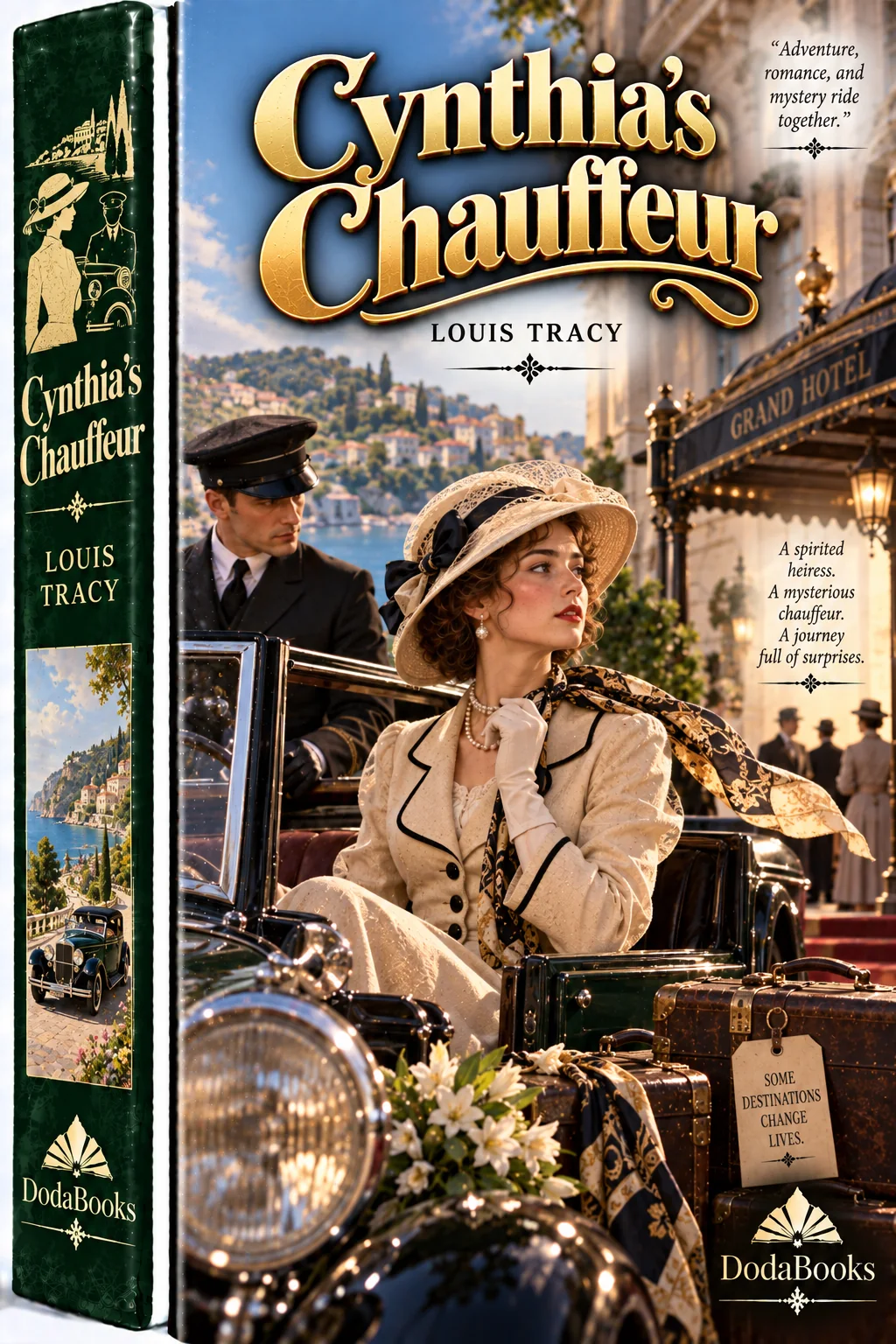
Hit the Open Road with Tracy's Sparkling Motoring Tale
Read Louis Tracy's delightful romantic comedy Cynthia's Chauffeur, enriched with historical annotations on early motorcars, Edwardian road maps, and social customs.
Read Cynthia's Chauffeur NowThe High-Spirited Plot: A Peer in Mechanic’s Overalls
The narrative takes off with an irresistible romantic deception that sets the stage for continuous comedic sparks. Cynthia Vanneck, a wealthy, vivacious, and fiercely independent young American heiress, arrives in England eager to embark on a grand automotive tour of the British Isles. When her scheduled chauffeur falls ill at the last minute on the very morning of the Epsom Derby, an unexpected replacement steps into the driver’s seat:
- The Aristocrat in Disguise: Viscount “Jack” Medenham, a charming, athletic, and wealthy young British peer, impulsively decides to take the wheel. Smitten by Cynthia’s beauty and spirited independence, Jack disguises himself in goggles, dust-coat, and leather cap, posing as a humble professional driver named “Fitzroy.”
- The Road Across England: As the sleek red touring car glides through picturesque English shires, historic cathedral towns, and rugged moorlands, Jack must balance his professional duties—cranking the engine, changing punctured pneumatic tires, and opening doors—with his growing romantic infatuation.
- The Comedy of Class Etiquette: The central delight of the novel stems from the constant tension between Jack’s aristocratic instincts and his servant persona. When pompous hotel managers, snooty suitors, or highway constables treat “Fitzroy” with condescension, Jack’s effortless patrician authority and razor-sharp wit leave everyone bewildered, especially the observant Cynthia.
As mechanical breakdowns, sudden rainstorms, and eccentric innkeepers force driver and passenger into close companionship, Cynthia begins to realize that her quiet, competent chauffeur is far more than he appears. Jack, meanwhile, finds himself falling deeper in love with a woman who judges men not by the antiquity of their crests, but by their courage, humor, and practical capability under pressure.
Early Motoring Culture: Goggles, Dust-Coats, and Speed Traps
What gives Cynthia’s Chauffeur such vivid historical texture is Tracy’s affectionate, technically precise portrait of the pioneering era of early automobiling:
- The Machine as Character: Tracy describes the early motorcar with loving mechanical detail: the brass headlamps fueled by acetylene gas, the exposed gearbox requiring double-declutching, the shuddering leather drive belts, and the crank-handle that could break a driver’s wrist if the engine backfired.
- The Perils of the Road: In 1910, driving across England was a genuine frontier adventure. Paved tarmac was rare, roads were covered in blinding dust or axle-deep mud, horses routinely bolted in terror at the roaring “devil wagons,” and flat tires occurred every thirty miles.
- The Battle with the Police: Tracy brilliantly satirizes the early British legal battles over motorcars, including village speed traps set by rural constables equipped with cheap stopwatches to catch daring drivers exceeding the draconian twenty-mile-per-hour national speed limit!
"There is no equalizer on earth like a broken motorcar.
When the carburetor floods or the tire blows in a thunderstorm,
the duke and the ditch-digger stand in the same mud,
and the man who can handle a spanner is king of the road."
— Louis Tracy, Cynthia's Chauffeur
Explore the Complete 1910 Rom-Com with Historical Footnotes
The DodaBooks annotated edition clarifies Edwardian motoring slang, decodes early traffic laws, and traces Cynthia's route through Yorkshire and the Lake District.
Get Cynthia's Chauffeur for $0.99Transatlantic Romance and the Modern Woman
Like many classic novels of the late-Victorian and Edwardian eras, Cynthia’s Chauffeur engages deeply with the figure of the American girl abroad:
- Cynthia as Modern Heroine: Unlike fragile, passive Victorian heroines, Cynthia Vanneck is practical, adventurous, and delightfully outspoken. She knows how an engine works, refuses to be intimidated by British social snobbery, and insists on driving her own car when she feels like it.
- The Subversion of the Chaperone: By placing the romance in an automobile, Tracy cleverly sidelined the traditional Victorian chaperone. While Cynthia travels with an elderly aunt, the open-top touring car allows for intimate conversations and shared roadside adventures that traditional drawing rooms never permitted.
- The Triumph of Sincerity: In the end, Jack does not win Cynthia because he is Viscount Medenham with an ancestral castle; he wins her because as “Fitzroy,” he proved himself loyal, brave, humorous, and genuinely devoted when stripped of all aristocratic privilege.
Social Satire and the Comedy of British Provincial Life
Beyond the central romance, Tracy enriches the narrative with a sparkling panorama of provincial Edwardian England. As the motorcar stops at wayside taverns, country inns, and market squares, the novel offers sharp social satire of British class consciousness in transition:
- The Pompous Innkeeper: Hotel proprietors who grovel before titles but treat chauffeurs like farm animals find themselves humiliated when “Fitzroy” effortlessly quotes Latin and corrects their knowledge of vintage wines.
- The Rival Suitor: Tracy introduces an unctuous, titled English suitor who relies on his aristocratic lineage to woo Cynthia, only to be outmaneuvered at every turn by the humble chauffeur’s quick wit, mechanical skill, and genuine chivalry.
- The Pastoral Idols: The English countryside itself is depicted with lyrical charm—from the rolling downs of Sussex to the windswept crags of Westmorland—celebrating the romantic landscape that made Edwardian travel writing so immensely popular.
Interlinking with Related Romantic and Adventure Works
Readers who enjoy sparkling romantic comedy, high-spirited adventures, and early twentieth-century settings will find wonderful connections across our catalog:
- Spanish Motoring Romance & Royal Intrigue: Journey across the Pyrenees and through royal Madrid behind roaring Edwardian engines in C. N. and A. M. Williamson’s The Car of Destiny Guide.
- Alpine Drama by the Same Author: Experience Louis Tracy’s thrilling high-altitude mountaineering adventure in The Silent Barrier Guide.
- Theatrical Comedy & High-Spirited Romance: Discover Maria Thompson Daviess’s delightful clash of Kentucky charm and Broadway stage production in Blue-Grass and Broadway Guide.
- Victorian Country-House Matchmaking: Contrast Tracy’s breezy open-road romance with Rhoda Broughton’s sharp social satire of indoor drawing-room flirtations in Doctor Cupid by Rhoda Broughton Guide.
- Aesthetic Romance & Bohemian Freedom: Discover another spirited independent young heroine in Grant Allen’s Linnet by Grant Allen Guide.
Why Read the DodaBooks Edition of Cynthia’s Chauffeur?
A forgotten treasure of Edwardian popular fiction, Cynthia’s Chauffeur is pure joy from beginning to end. The DodaBooks Edition restores this classic with exceptional attention to detail:
- Automotive & Historical Glossary: Details early automotive technology, period motor brands (such as Napier, Rolls-Royce, and Daimler), and early British road terminology.
- Travel Itinerary & Geographic Notes: Identifies the historic coaching inns, cathedral towns, and picturesque villages visited during Cynthia’s journey across England.
- Flawless Formatting: Clean digital typography, smooth chapter navigation, and optimized readability for all e-readers and mobile devices.
Crank the Engine and Join the Adventure
Experience the laughter, romance, and open-road freedom of Edwardian England in Louis Tracy's delightful classic Cynthia's Chauffeur.
Download the Complete EbookFrequently Asked Questions
Who was Louis Tracy?
Louis Tracy (1863–1928) was a prolific and celebrated British novelist, journalist, and adventure writer. Known for his versatility, he wrote famous detective mysteries, historical sagas, disaster novels, and bestselling romantic adventures like Cynthia's Chauffeur and The Silent Barrier.
What genre does Cynthia's Chauffeur belong to?
Cynthia's Chauffeur is an Edwardian romantic comedy and early 'motoring novel,' a popular subgenre in the 1900s and 1910s that used the novelty and freedom of early automobiles to drive plots of romantic misadventure and cross-class courtship.
What is the central premise of the book?
A wealthy young British nobleman, Viscount Medenham, secretly disguises himself as a hired chauffeur named Fitzroy to drive Cynthia Vanneck, a spirited American heiress, on an automotive tour across England, leading to comedy, mechanical mishaps, and romance.
How accurate is the novel's depiction of early motoring?
Remarkably accurate. Tracy was an early automobile enthusiast and vividly captures the practical realities of driving in 1910, including hand-cranking engines, frequent punctures, dust-coats, goggles, acetylene headlamps, and police speed traps.
Where can I get the complete digital edition?
The complete, annotated digital edition of Cynthia's Chauffeur by Louis Tracy is available for immediate download directly from DodaBooks at https://dodabooks.com/ebook/cynthias-chauffeur-by-louis-tracy/.