Catriona Characters: David Balfour & Alan Breck Explained
Robert Louis Stevenson’s Catriona (known in America as David Balfour) presents one of the most richly developed and psychologically sophisticated casts of characters in Scottish historical fiction. While its predecessor Kidnapped threw two mismatched fugitives into a physical wilderness of heather and granite, Catriona plunges its heroes into the far more treacherous moral wilderness of 18th-century Scottish state politics, legal corruption, and European exile.
At the core of the drama stands the evolution of David Balfour of Shaws. No longer the naive boy marooned on the Isle of Erraid, David has inherited his ancestral estate and must navigate the razor-thin line between legal duty, Christian honor, and raw political self-preservation. Balancing his stoic Lowland conscience is Catriona Drummond, the proud, fiercely loyal granddaughter of the legendary Rob Roy MacGregor, whose complex devotion to her treacherous father James More creates an agonizing obstacle to their love. Looming over them both is the brilliant, flamboyant swordsman Alan Breck Stewart, whose fierce loyalty to David once again proves the ultimate salvation of the story.
This comprehensive character guide analyzes every major figure in Catriona, examining their real-world historical origins, psychological complexities, and symbolic roles in Stevenson’s portrait of post-Jacobite Scotland.
| Character Name | Social & Political Role | Dominant Personality Traits | Symbolic & Narrative Significance |
|---|---|---|---|
| David Balfour of Shaws | Protagonist & Lowland Laird | Scrupulous, stubborn, courageous, honorable | The voice of Lowland Protestant conscience; chooses moral truth over political survival |
| Catriona Drummond | Heroine & Highland Outlaw’s Daughter | Proud, fiery, intensely loyal, vulnerable | Embodying the romantic, tragic soul of the Highland clans; Rob Roy’s true spiritual heir |
| Alan Breck Stewart | Jacobite Swordsman & Exile | Vain, gallant, lethal, unfailingly loyal | The romantic warrior archetype; represents the enduring spirit of Highland honor |
| James More Drummond | Outlaw Chieftain & Catriona’s Father | Charming, parasitic, treacherous, cowardly | The decay of the Highland clans; a disgraced renegade who sells out his kin for gold |
| Lord Advocate Prestongrange | Chief Crown Prosecutor for Scotland | Shrewd, pragmatic, cultured, ruthless | The machinery of imperial statecraft; sacrifices justice on the altar of public order |
| Miss Barbara Grant | Prestongrange’s Eldest Daughter | Witty, fashionable, perceptive, empathetic | High-society Edinburgh elegance; acts as David’s loyal ally and social tutor |
| Andie Dale | Covenanter Turnkey on Bass Rock | Pious, superstitious, garrulous, kind | The voice of 17th-century Presbyterian covenanting memory in an 18th-century prison |
| James Stewart of the Glens | Falsely Accused Jacobite Prisoner | Dignified, doomed, long-suffering, patient | The innocent martyr to clan vengeance; symbolizes the judicial corruption of the state |
⚔️ The Lovers and Fugitives
🛡️ DAVID BALFOUR OF SHAWS (THE STOIC LAIRD)
The Conscience of the Lowlands
“I am a Balfour of Shaws, and an honest man. If the Duke of Argyll wants a Stewart hanged to please his clan, he must hang him without my silence to help him.”
Psychological Development & Moral Maturity
In Kidnapped, David was largely a victim of circumstance, buffeted by pirates, shipwrecks, and Highland manhunts. In Catriona, he becomes a fully self-directed moral agent. Having secured his rightful inheritance as Laird of Shaws, David wields his newfound wealth not for luxury, but to fulfill his debts of honor:
- He risks his freedom and his neck by marching into the Lord Advocate’s chambers to testify for the innocent James Stewart.
- He endures kidnapping and imprisonment on the Bass Rock rather than sign a false affidavit retracting his testimony.
- He finances Catriona’s flight to Holland, sheltering her honor in Leiden with delicate, self-denying chivalry.
The Internal Conflict: Conscience vs. Pride
David’s greatest flaw is his stiff, obstinate Lowland pride. In Holland, his rigid Presbyterian scrupulousness prevents him from declaring his love to Catriona, fearing that she might feel coerced by her financial dependence upon him. His inability to articulate his feelings nearly drives Catriona into despair until Alan Breck intervenes to pierce their mutual obstinacy.
Why He Matters
David represents the moral synthesis of modern Scotland. He possesses the rationalism, legal literacy, and thrift of the emerging Whig commercial society, but his soul has been permanently broadened by his friendship with Alan Breck, imbuing him with a Highland code of personal courage and sacrifice.
🦅 CATRIONA DRUMMOND (THE HIGHLAND PRINCESS)
Rob Roy’s Proud Granddaughter
“I am of the clan MacGregor, and my father’s blood is in my veins. We have been hunted with dogs in the heather, but we have never bowed our heads to the redcoats or the Campbells.”
Background & Heritage
Catriona (whose full Gaelic name is Catriona Oig MacGregor Drummond) is the granddaughter of the legendary outlaw hero Rob Roy. Born in the wild glens of the Lennox and the Trossachs, she has grown up amidst clan feuds, proscribed names, and military terror. When her father James More is captured and imprisoned in Edinburgh Castle, Catriona demonstrates daring courage, disguising herself to smuggle him the tools for his prison break.
The Agony of Filial Loyalty
Catriona’s central tragedy is her unconditional, blind adoration of her father:
- She refuses to believe that James More is anything less than a noble, persecuted Highland chief.
- When James More descends into drunkenness, gambling, and extortion in Leiden, Catriona suffers agonizing humiliation, working to the bone to shield his dignity.
- The devastating climax of her arc occurs when she finally discovers that her father is an English spy who has agreed to betray Alan Breck to the gallows for thirty pieces of silver.
Why She Matters
Catriona is one of Stevenson’s most vibrant and fully realized female characters. Unlike the passive, fainting heroines of Victorian romantic fiction, Catriona is physically bold, emotionally articulate, fiercely passionate, and capable of choosing her own moral destiny when her ancestral family loyalty collapses into dishonor.
🗡️ ALAN BRECK STEWART (THE FLAMBOYANT SWORDSMAN)
The Incomparable Jacobite Knight
“David, my man, I am a Stewart of Appin, and a French king’s officer, and a soldier of fortune! I have my sword and my honor, and the redcoats haven’t built the prison yet that can hold Alan Breck.”
Return of the Highland Chevalier
Though Alan Breck remains in hiding during the first half of the book, his magnetic spirit dominates David’s every action. When he reappears in the final chapters in France, he remains the same delightful, contradictory hero readers fell in love with in Kidnapped:
- Vain about his silver-buttoned French coat and proud of his aristocratic Stewart pedigree.
- A lethal, cold-blooded swordsman when cornered, but possessed of an open, childlike heart.
- Fiercely observant of human nature, effortlessly cutting through the stiff romantic pride that separates David and Catriona.
The Confrontation with James More
Alan’s defining scene occurs in Chapter 29 at Dunkirk. When James More attempts to trap Alan into an ambush, Alan disarms him with biting psychological contempt rather than steel:
“You are the son of Rob Roy, James More, but you are a disgrace to your father’s tartan. You have sold your honor to the Campbells, and you have made a market of your own flesh and blood.”
Why He Matters
Alan Breck is Stevenson’s triumphant celebration of the Highland Jacobite spirit. In an era dominated by cold legal calculation and political compromise, Alan remains the pure, uncorrupted romantic adventurer—bound by personal oaths that neither gold nor threat can break.
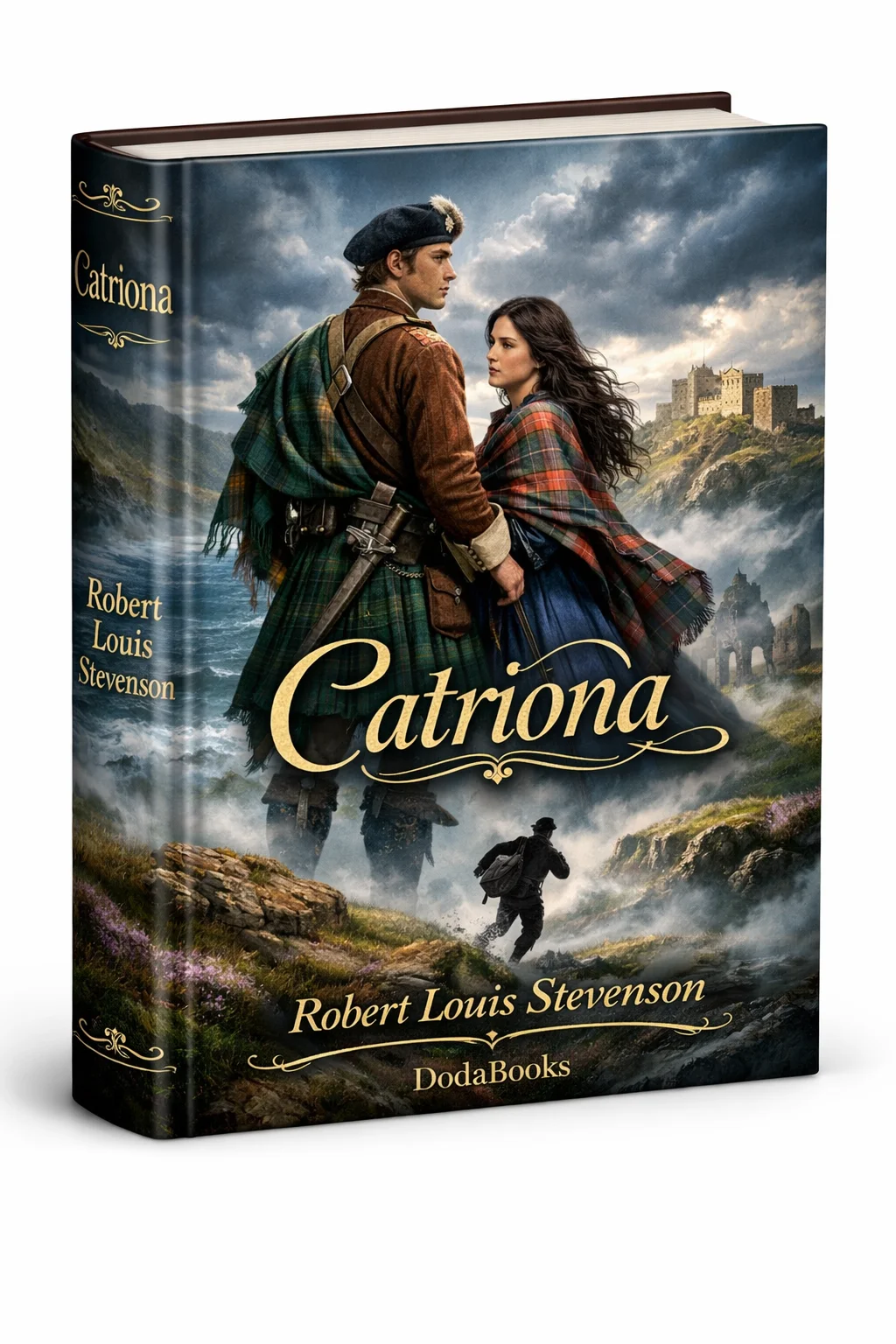
🏴 Uncover the Real History Behind Alan Breck & the Appin Trial
Delve into the official trial records, Jacobite letters, and clan archives that inspired Robert Louis Stevenson with the DodaBooks Annotated Edition:
- 🗂️ Complete 30-Chapter Text — Unabridged, featuring both parts of David Balfour’s journey
- 📜 Historical Trial Transcripts — Read the real 1752 testimony that sentenced James Stewart to the gallows
- 🔍 Interactive Dialect Footnotes — Deciphering 18th-century Scots legal terminology and Gaelic phrases
- 📱 Universal DRM-Free EPUB — Read seamlessly across Kindle, Kobo, iPad, and Android
🏛️ The Statesmen, Rogues & Witnesses
🐍 JAMES MORE DRUMMOND (THE DECAYED REBEL)
The Degraded Son of Rob Roy
“He had the manners of a courtier and the morals of an alley-cat. He spoke of his Highland honor with tears in his eyes while picking his friend’s pocket.”
The Pathology of the Turncoat
James More Drummond (historically, James MacGregor, 1695–1754) is one of the most chillingly realistic villains in Stevenson’s canon:
- Born to legendary Highland outlaw royalty, James More lacks both his father’s physical bravery and his mother’s moral loyalty.
- Charming, handsome, and smooth-tongued, he lives as a parasite off his daughter’s devotion and David’s open purse.
- He rationalizes his treason with self-pitying rhetoric, claiming that his exile and poverty force him to betray fellow Jacobites like Alan Breck to King George’s secret service.
Why He Matters
James More represents the tragic moral decay of the Highland clan system following the defeat at Culloden. Stripped of their lands, weapons, and traditional authority, once-proud chieftains were reduced to squalid European exile, pawning their heirlooms and turning informant against their own kinsmen.
⚖️ WILLIAM GRANT OF PRESTONGRANGE (THE PRAGMATIC PROSECUTOR)
The Architect of Imperial Peace
“Do you think I do not know that James of the Glens is innocent, Mr. Balfour? I know it better than you. But if James Stewart does not hang, the Campbell clan will burn the Highlands to the sea.”
The Real Historical Statesman
William Grant, Lord Prestongrange (1701–1764), was the Lord Advocate of Scotland during the Appin Murder crisis. Stevenson portrays him with subtle, admiring complexity:
- Prestongrange is not a mustache-twirling tyrant; he is an urbane, cultivated, brilliant jurist who genuinely likes David Balfour.
- He treats David with fatherly patience, inviting him to dinner and offering him legal clerkships and wealth if he will simply step aside.
- Yet, when David refuses to compromise, Prestongrange ruthlessly authorizes David’s secret kidnapping and detention on the Bass Rock to protect the state’s political trial.
Why He Matters
Prestongrange embodies the tragic moral compromise of Reason of State (Raison d’État). He represents the mature, cynical world of adult governance where abstract justice is perpetually sacrificed to maintain geopolitical stability.
👗 MISS BARBARA GRANT (THE EDINBURGH WIT)
The Sparkling High-Society Mentor
“You are a dear, ridiculous boy, Mr. Balfour! You come from the heather with your head full of John Knox and the Ten Commandments, and you expect Edinburgh advocates to behave like early Christians!”
The Charms of Enlightenment Edinburgh
Prestongrange’s witty eldest daughter provides the comedic sparkle of Part I:
- Highly educated, fashionable, and irreverent, Barbara delights in teasing David’s stiff provincial piety.
- She secretly uses her social influence to shield David from arrest, slipping him warnings and acting as an affectionate older sister.
Why She Matters
Barbara represents the intellectual sophistication of the Scottish Enlightenment. She proves that a woman in 18th-century Edinburgh could possess political savvy, moral courage, and cultural elegance equal to any man in Parliament.
📊 Character Political Alignments & Social Matrix
In 1751 Scotland, every gentleman was forced to choose between the Protestant Hanoverian crown and the exiled Catholic Stuart monarchy. The table below maps where the major characters stand in this brutal political divide:
              [ 1751 SCOTTISH POLITICAL LANDSCAPE ]

      HANOVERIAN (WHIG)                     JACOBITE (TORY)
     Pro-King George II                    Pro-Stuart Exile
   Rule of Law / Commerce                Clan Feudalism / France
             │                                      │
  ┌──────────┴──────────┐                ┌──────────┴──────────┐
  ▼                     ▼                ▼                     ▼
Lord Prestongrange  David Balfour    Alan Breck        Catriona Drummond
(Crown Prosecutor)  (Honest Laird)   (French Soldier)  (Outlaw Daughter)
  │                     │                │                     │
  │                     └─────────┬──────┘                     │
  │                               ▼                            │
  │                     [ THE REAL VICTIM ]                    │
  │                     James Stewart of the Glens             │
  │                     (Judicially Murdered 1752)             │
  │                                                            │
  └───────────────────────────────┬────────────────────────────┘
                                  ▼
                         [ THE TURNCOAT ]
                       James More Drummond
                   (Spies for Both Sides for Gold)
🧠 The Reconciliation of Divided Scotland
At its deepest literary level, Catriona is Robert Louis Stevenson’s allegorical prayer for the healing of Scotland:
[ THE HIGHLAND PAST (CATRIONA) ]       [ THE LOWLAND FUTURE (DAVID) ]
• Celtic, Gaelic speech & song         • Scots-English legal jurisprudence
• Passionate clannish loyalty          • Individual moral accountability
• Tragic defeat & military exile       • Commercial prosperity & peace
                     \                    /
                      \                  /
                   [ THE UNION AT SHAWS MANOR ]
                   • Ancient Celtic honor tempered by law
                   • Rational prosperity elevated by romance
                   • A unified Scottish national identity
When David Balfour leads Catriona Drummond across the threshold of Shaws Manor as his wife, Stevenson completes the historical synthesis that began in Kidnapped. The ancient feud between Highland Stewart and Lowland Whig is extinguished not through military subjugation, but through mutual understanding, shared suffering, and enduring love.
❓ Frequently Asked Questions
Why does Lord Prestongrange kidnap David Balfour instead of executing him?
Prestongrange genuinely respects David's moral integrity and recognizes him as the legitimate Laird of Shaws with influential legal friends. Executing or formally imprisoning David would cause a massive public scandal. By holding him in comfortable, unofficial captivity on the Bass Rock until the Appin trial concludes, Prestongrange silences David's inconvenient eyewitness testimony without harming his person.
How does Alan Breck Stewart escape from Scotland to France?
Following the Appin murder, Alan Breck hides in the sand dunes near Gullane on the Firth of Forth. With the logistical help of David Balfour and a daring Jacobite fishing crew, Alan slips aboard a French smuggler's vessel bound for Dunkirk, safely escaping the British redcoat dragnet.
Why is Catriona so defensive about her father James More?
Catriona has grown up under the shadow of the proscription of the MacGregor clan, where her family was hunted like animals. To preserve her self-worth, she idolizes her father as a heroic, persecuted Highland prince. Admitting that James More is a selfish drunkard and turncoat spy would destroy her entire emotional identity, which is why she resists the truth until his final betrayal is exposed in Dunkirk.
What was the Bass Rock used for historically?
The Bass Rock is a sheer volcanic island in the Firth of Forth. Historically, it served as a notorious state prison during the 17th-century "Killing Times," where dozens of Scottish Covenanters were imprisoned and tortured for refusing to accept the King's episcopal church hierarchy. Stevenson uses this grim historical resonance to underscore David's confinement.
⚔️ Savor Stevenson’s Masterful Scottish Adventure
Complete David Balfour’s epic saga with the definitive digital edition of Catriona from DodaBooks:
- 🗂️ Complete 30-Chapter Text — Featuring both Part I (Edinburgh) and Part II (Holland & Paris)
- 📜 Historical Character Dossiers — Discover the real-world lives of Prestongrange, Rob Roy, and Alan Breck
- 💡 Exhaustive Dialect Notes — Over 100 on-page annotations decoding 18th-century Scottish terminology
- 📥 Instant DRM-Free Download — Compatible with Kindle, Kobo, iPad, and Android