Cartels: Challenge to a Free World
Wendell Berge’s Explosive 1944 Blueprint Exposing How International Corporate Conspiracies Sabotaged Democracy, Medicine, and Allied Defense
In 1944, as Allied armies were fighting their way across Normandy and through the Pacific, a quiet yet seismic battle for the future of the global economy was being waged inside the United States Department of Justice. Wendell Berge (1903–1955), serving as Assistant Attorney General in charge of the Antitrust Division under President Franklin D. Roosevelt, dropped a bombshell on the international business establishment with the publication of Cartels: Challenge to a Free World.
Drawing directly from classified subpoenaed files, secret patent-pooling contracts, and unvarnished corporate correspondence uncovered during federal antitrust prosecutions, Berge delivered the most damning and meticulously documented indictment of transnational monopoly capitalism ever published. He revealed a staggering reality: behind the patriotic rhetoric of corporate leaders, international cartels had carved up the globe, suppressed life-saving medicines, choked industrial innovation, and directly compromised democratic security on the eve of World War II.
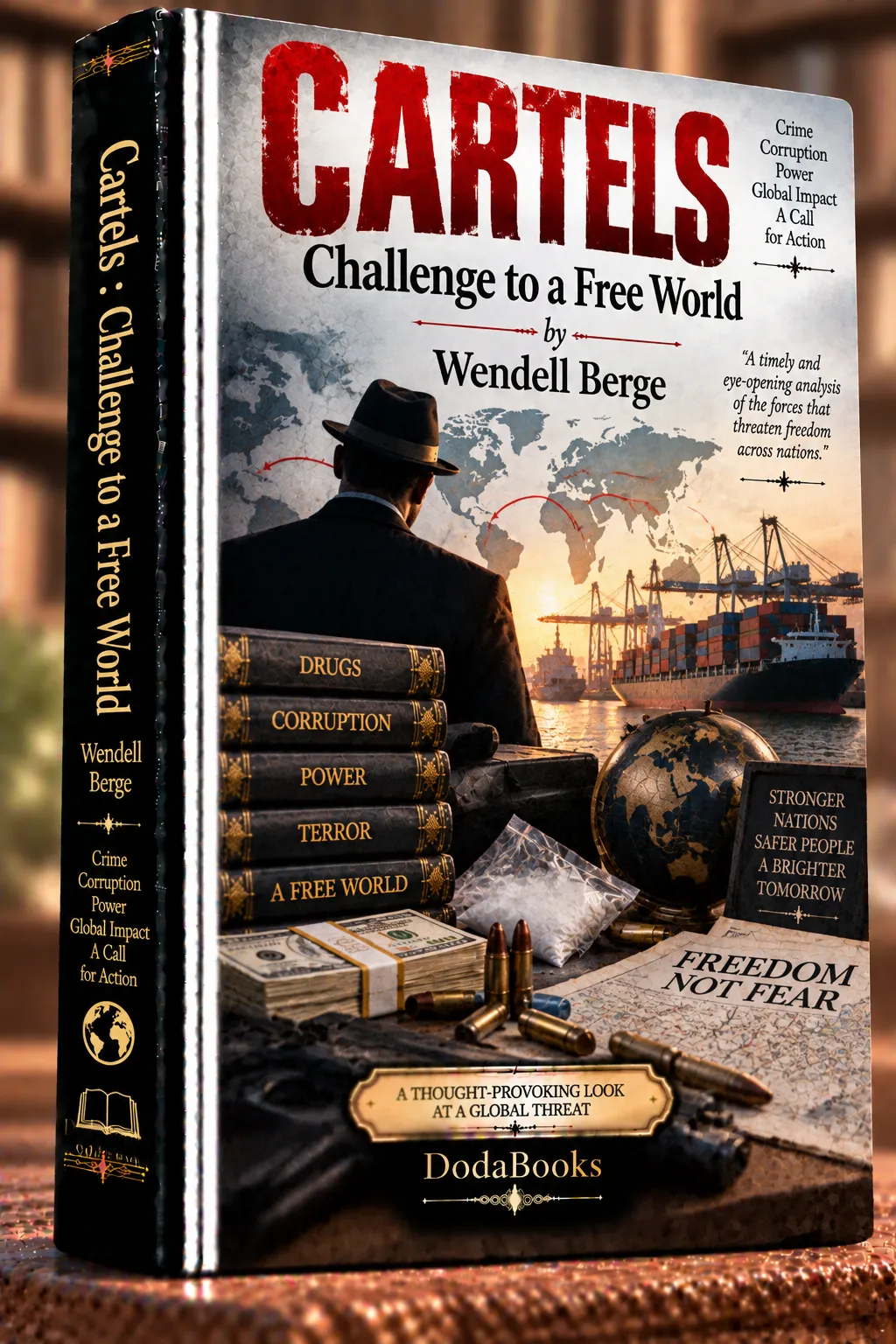
Uncover the Secret History of Global Monopoly Power
Read Wendell Berge's explosive antitrust masterpiece with comprehensive modern annotations detailing patent-pooling conspiracies, I.G. Farben, and Sherman Act jurisprudence.
Get Cartels: Challenge to a Free WorldThe interwar era’s drive toward systematic institutional quantification was similarly reflected in scientific biology through Charles Davenport’s biometric treatise.
The Anatomy of an Economic Conspiracy
What exactly is a cartel, and why did Wendell Berge consider it an existential threat to democratic civilization? Berge defined a cartel not merely as a large business enterprise, but as an extralegal treaty between supposed commercial competitors designed to eliminate competition, fix prices, restrict production, and divide world markets into exclusive private fiefdoms:
“Cartels are private governments. They collect private taxes from the consuming public in the form of artificially inflated prices; they wage economic warfare; they restrict the freedom of trade; and they supersede the sovereignty of constitutional nations with secret commercial pacts.”
Berge demolished the self-serving corporate myth that cartels were “stabilizing mechanisms” that protected industries from destructive price wars. He demonstrated that by fixing prices at artificially high levels and throttling new technological breakthroughs to protect existing capital investments, cartels created artificial scarcity, deepened economic depressions, and transferred massive wealth from the public into the hands of an unaccountable oligarchy.
The Smoking Guns: Shocking Revelations from Federal Dockets
What made Cartels: Challenge to a Free World an immediate sensation was Berge’s uncompromising refusal to deal in vague generalities. Every chapter laid bare exact corporate names, specific patent numbers, and verbatim quotes from confidential corporate cables. Among the most shocking case studies documented in the book:
1. The Synthetic Rubber Catastrophe
Berge revealed how the secret patent agreements between Standard Oil of New Jersey and the notorious German chemical trust I.G. Farben crippled American defense readiness. While Standard Oil faithfully transferred its synthetic rubber research (Buna) to Germany, I.G. Farben—under instructions from the Nazi regime—stonewalled and withheld critical manufacturing data from American engineers, leaving the United States critically vulnerable when Japanese forces seized 90% of the world’s natural rubber supplies in Southeast Asia in 1942.
2. The Suppression of Life-Saving Medicine
Perhaps the most morally repulsive chapter in Berge’s exposé details the cartelization of pharmaceutical research. Cartel agreements between American, German, and Swiss chemical giants restricted the production of atebrine (a crucial synthetic substitute for quinine in treating malaria), hormones, and vitamin D. In several cases, cartel partners deliberately buried patents for cheaper, more effective medical treatments to protect the astronomical profit margins of existing, inferior drugs.
3. The Chokehold on Optical Glass and Beryllium
Berge documented how secret pacts between Bausch & Lomb and Carl Zeiss of Jena restricted American production of military-grade optical glass—including submarine periscopes, bombsights, range finders, and aerial cameras. Even after the outbreak of war in Europe, American manufacturers were contractually barred from supplying Allied nations without permission from Berlin.
Unmatched Legal Authority
Written by the sitting Assistant U.S. Attorney General in charge of the Antitrust Division, drawing directly from official grand jury evidence and exhibits.
Explosive Declassified Evidence
Verbatim transcripts of secret international agreements, corporate cables, and patent-pooling cartels spanning oil, rubber, aluminum, and pharmaceuticals.
Blueprint for Post-War Democracy
A rigorous economic philosophy outlining how free market competition, technological access, and independent enterprise protect constitutional self-government.
Modern Scholarly Annotations
Comprehensive footnotes explaining Sherman Act legal doctrines, Nuremberg industrialist trials, and contemporary parallels in Big Tech and pharmaceutical monopolies.
Experience the Full Annotated Work
Read the definitive edition of Cartels: Challenge to a Free World formatted with exquisite digital typography and comprehensive scholarly footnotes.
Get Cartels: Challenge to a Free World on DodaBooksThurman Arnold and the Golden Age of Antitrust
Wendell Berge did not fight this battle alone; he was the primary intellectual heir and successor to Thurman Arnold, who headed the Antitrust Division from 1938 to 1943. Under Arnold and Berge, the Antitrust Division underwent an unprecedented resurgence, filing more antitrust suits in five years than in the previous half-century of the Sherman Act’s existence.
Berge and Arnold represented the peak of New Deal legal realism. They rejected the Marxist thesis that monopoly was the inevitable byproduct of industrial technology that could only be remedied by state nationalization. Instead, they argued that genuine competitive markets were inherently resilient, dynamic, and productive—provided the state aggressively enforced legal rules to prevent predatory collusion and patent monopolies.
To Berge, political freedom and economic freedom were two sides of the same coin:
“We cannot preserve democratic political institutions if our economic life is dominated by industrial autocrats. If the market is not kept open to independent enterprise, the inevitable alternative is either corporate fascism or totalitarian state collectivism.”
Why Berge's 1944 Warning is Urgently Needed Today
From modern pharmaceutical price-fixing scandals and proprietary patent thickets to platform monopolies dominating global search, e-commerce, and cloud computing, Wendell Berge's analytical framework remains the gold standard for understanding corporate power.
The Misuse of the Patent System
A central technical contribution of Berge’s work is his forensic analysis of how corporate cartels perverted the United States patent system. The original constitutional purpose of patent law was to promote scientific progress by granting an inventor a limited, temporary monopoly in exchange for public disclosure of their discovery.
Berge demonstrated how cartels corrupted this principle through:
- Patent Thickets: Surrounding a basic discovery with thousands of trivial improvement patents to prevent competitors from entering the field for generations.
- Cross-Licensing Traps: Exchanging patents among dominant players while agreeing never to license to independent startups.
- Grant-Back Covenants: Forcing smaller licensees to surrender all future technological improvements back to the cartel headquarters, ensuring that no independent company could ever develop competitive parity.
By weaponizing patent law, cartels transformed a legal instrument intended to stimulate invention into a corporate weapon designed to suppress it.
Own the Definitive Historical Edition
Read Wendell Berge's monumental work in an impeccably formatted digital edition with complete indices, legal case annotations, and historical analysis.
Get Cartels on DodaBooksThe Enduring Legacy of Wendell Berge
Following the end of World War II, Wendell Berge played an instrumental role in shaping the economic de-cartelization policies of occupied Germany and Japan, ensuring that monopolistic industrial combines like Krupp, I.G. Farben, and the Japanese Zaibatsu were dismantled to prevent future militarist resurgence.
Today, Cartels: Challenge to a Free World remains a foundational text for antitrust lawyers, economists, investigative journalists, and citizens who care about the survival of an open, equitable economy. Berge’s clear moral voice, backed by undeniable legal evidence, cuts through modern economic obfuscation to deliver an eternal truth: a free society cannot long endure if its economy is controlled by private cartels.
Frequently Asked Questions
Who was Wendell Berge?
Wendell Berge (1903–1955) was an eminent American antitrust attorney who served as Assistant U.S. Attorney General in charge of the Antitrust Division from 1943 to 1947 under Presidents Franklin D. Roosevelt and Harry S. Truman. He was responsible for prosecuting major international monopolies during World War II.
What was the main purpose of Cartels: Challenge to a Free World?
Published in 1944, the book exposed how international corporate monopolies and patent cartels (notably involving I.G. Farben, Standard Oil, and DuPont) restricted industrial production, fixed prices, suppressed technological innovations, and compromised Allied national security prior to and during WWII.
How did cartels abuse the patent system according to Berge?
Berge demonstrated that multinational corporations pooled patents and used restrictive cross-licensing agreements to create impenetrable 'patent thickets.' This allowed them to eliminate independent competition, block startup innovators, and even suppress vital medical and technological discoveries.
Why is this historical book relevant to modern antitrust debates?
Berge's analysis of market division, predatory patent pooling, and private corporate governance directly mirrors modern antitrust investigations into Big Tech platforms, digital ecosystem lock-in, and contemporary pharmaceutical patent thickets.
Where can I get the complete annotated edition of Berge's book?
The complete digital edition, featuring extensive historical notes and case commentary, is available for immediate download at DodaBooks at https://dodabooks.com/ebook/cartels-challenge-to-a-free-world-by-wendell-berge/.