Cameron of Lochiel
Philippe Aubert de Gaspé’s Sweeping Romance of Highland Chivalry, French Seigneurial Honor, and the Heartbreak of the 1759 Conquest
In the annals of North American historical fiction, few works hold the monumental cultural stature that Cameron of Lochiel occupies in Canada. Originally published in French in 1863 as Les Anciens Canadiens by Philippe Aubert de Gaspé (1786–1871) and brilliantly translated into English by the celebrated Canadian poet Sir Charles G. D. Roberts, this epic novel captures the fateful collision of two proud nations on the banks of the St. Lawrence River during the Seven Years’ War.
Drawing from the living memories of his own aristocratic family and the oral folklore of Quebec’s countryside, de Gaspé crafts a deeply moving story of brotherly friendship torn asunder by the fires of empire. At its heart lies the bond between a young French-Canadian nobleman and a Scottish Jacobite exile, forced by the tragic machinery of war to face each other as mortal enemies across the Plains of Abraham.
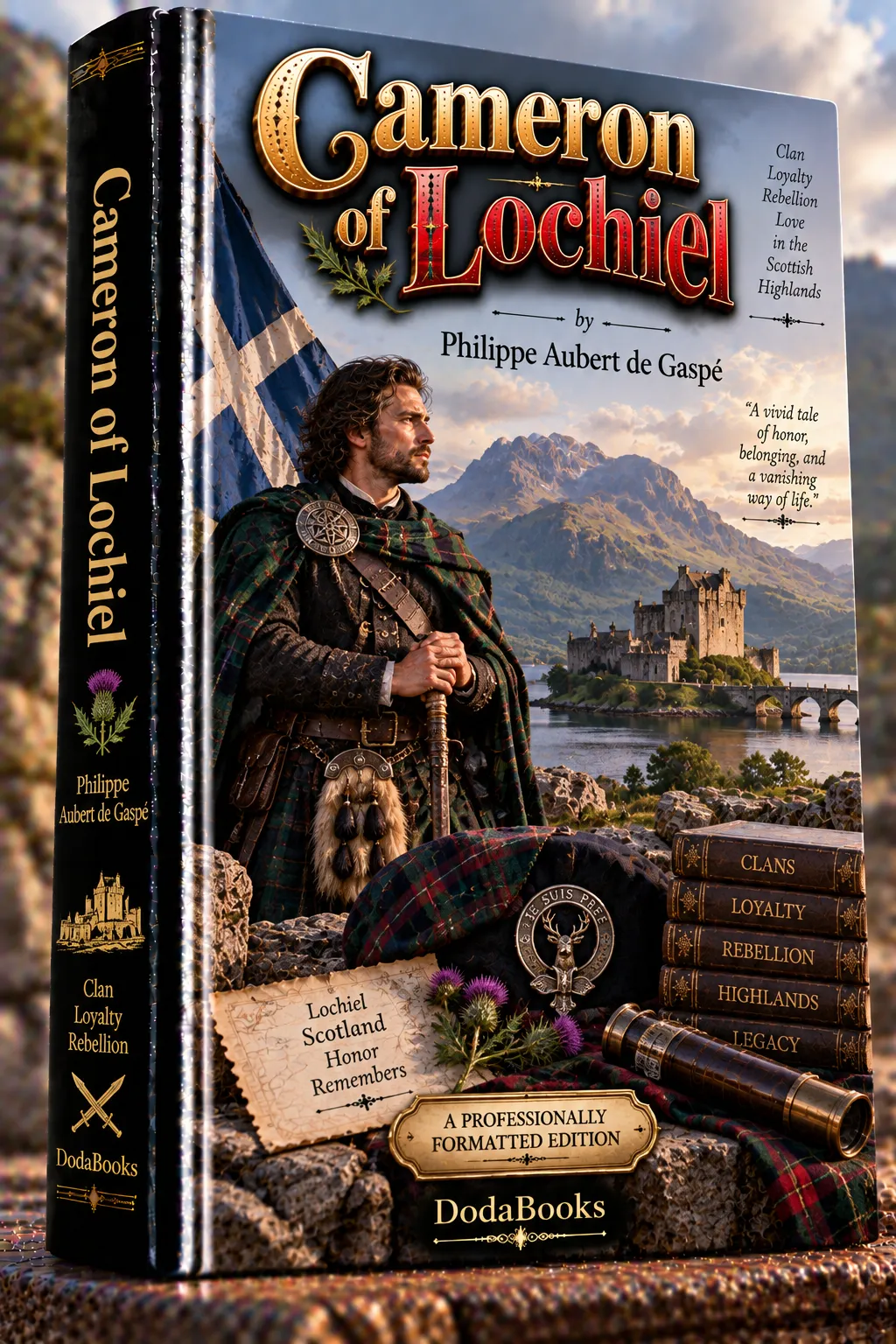
Experience the Definitive Canadian Epic
Read Philippe Aubert de Gaspé's immortal romance translated by Sir Charles G. D. Roberts, enriched with historical annotations explaining New France, the Highland regiments, and the 1759 siege of Quebec.
Get Cameron of LochielThis evocative blending of Celtic lore and romantic chivalry shares deep kinship with Sir Walter Scott’s maritime epic.
The Bond of Blood and Honor: Jules and Archie
The dramatic engine of Cameron of Lochiel is the intense fraternity forged between two young men at the Jesuit College in Quebec City during the twilight years of French colonial rule:
- Jules d’Haberville: Heir to an illustrious seigneurial manor on the south shore of the St. Lawrence, embodyng the gracious hospitality, Roman Catholic piety, and aristocratic chivalry of New France.
- Archibald Cameron of Lochiel: A young Scottish orphan of the noble Clan Cameron, whose father fell fighting for Bonnie Prince Charlie at Culloden in 1746. Sent to Canada as a ward, Archie is embraced by the d’Haberville family as a beloved foster son and brother.
During their youthful years, the two friends share pastoral idylls, canoe expeditions across wilderness waterways, and the fireside legends of the habitants. But this golden age is shattered when Archibald is recalled to Britain to accept a commission as an officer in Fraser’s Highlanders (the 78th Regiment of Foot). When Great Britain launches its decisive amphibious campaign against New France in 1759 under General James Wolfe, Archie returns to the St. Lawrence not as a son of Quebec, but as an invading soldier bound by military oath.
The Cruel Crucible: Scorched Earth on the St. Lawrence
The supreme moral climax of the novel occurs during General Wolfe’s brutal summer campaign preceding the Battle of the Plains of Abraham. Determined to provoke the French commander, the Marquis de Montcalm, into open battle outside Quebec’s fortified walls, Wolfe dispatched detachment units to burn Canadian villages, mills, and farms along the south shore.
In an agonizing stroke of dramatic fate, Captain Archibald Cameron is ordered to command the Highland raiding party assigned to put the district of Saint-Jean-Port-Joli to the torch—the very territory encompassing the d’Haberville manor where he was raised.
Archie’s internal torment is excruciating:
“To refuse obedience to his superior officer was instant court-martial and disgrace; to obey was to lay waste the hearthstone that had given him shelter when he was a friendless outcast. Between military honor and sacred gratitude, every fiber of his soul was rent in twain.”
Archie executes his duty with as much humanity as the savage rules of war permit, ensuring that the inhabitants are spared bodily harm and salvaging family relics from the flames. Yet when Jules d’Haberville returns from the front lines to find his ancestral home a smoking ruin, the wound inflicted upon their friendship seems irreparable. De Gaspé explores the bitter paradox of imperial conquest: how geopolitical conflicts force honorable men to commit atrocities against those they revere.
Foundational Quebec Literature
The landmark historical novel of Quebec, preserving 18th-century French-Canadian seigneurial traditions, folklore, and cultural memory.
Highland Military Chivalry
A gripping inside portrait of Fraser's 78th Highlanders during the Seven Years' War, caught between Jacobite memories and British imperial service.
Charles G. D. Roberts' Lyrical Translation
Rendered into majestic, evocative English prose by one of Canada's greatest Victorian poets and Confederation romancers.
Comprehensive Historical Annotations
Detailed notes explaining seigneurial tenure, Jesuit classical education, Maypole celebrations, and the military strategy of General Wolfe and Montcalm.
Folklore, Phantoms, and Habitants: Preserving a Lost World
Beyond its military and romantic melodrama, Cameron of Lochiel is an extraordinary treasury of French-Canadian folklore. Philippe Aubert de Gaspé was seventy-six years old when he wrote the novel, motivated by a passionate desire to record the vanishing customs, supernatural tales, and convivial feasts of the Ancien Régime before they were erased by Anglo-Saxon commercial modernization.
The novel is rich in authentic ethnological detail:
- La Corriveau and the Sorcerer’s Isle: De Gaspé weaves in the chilling legend of Marie-Josephte Corriveau, the convicted murderess whose caged corpse was said to haunt the crossroads of Lévis, along with tales of the Loup-Garou (werewolf) and phantom will-o’-the-wisps on the Isle of Orleans.
- Seigneurial Festivities: Vivid scenes of New Year’s Day blessings, Twelfth Night cake ceremonies, communal cornhuskings, and Maypole dances celebrate the warm, patriarchal harmony that de Gaspé believed characterized old Quebec rural life.
- Habitant Resilience: Characters like the faithful servant José provide rustic humor, commonsense wisdom, and unshakeable loyalty, demonstrating the indomitable spirit of the French-Canadian people in the face of military defeat.
Step into the Golden Age of New France
Secure your copy of de Gaspé's legendary masterpiece. Expertly typeset for modern digital reading with explanatory apparatus and historical introductions.
Download Cameron of Lochiel NowThe Reconciliation: Forgiveness Across Bloodlines
How does a conquered people make peace with their conquerors without surrendering their soul? This is the ultimate question de Gaspé confronts in the novel’s poignant concluding chapters.
Following the fall of Quebec and the Treaty of Paris in 1763, Archie Cameron returns to Saint-Jean-Port-Joli seeking reconciliation and hoping to win the hand of Jules’s sister, Blanche d’Haberville. Blanche loves Archie deeply, but her response is one of the most celebrated moments in Canadian literature. Refusing to wed the man whose hand put her ancestral home to the torch, she renounces marriage altogether:
“I do not hate you, Archibald; my heart has never ceased to beat for you. But between our love lies an ocean of tears and the ashes of my father’s house. I can forgive, but honor forbids me to forget.”
Instead of a conventional romantic union, de Gaspé offers a higher, more mature resolution: mutual respect, deep friendship, and cultural coexistence. Jules and Archie rebuild their fraternal bond, symbolizing the historic compact between French and British Canadians that would eventually birth the modern Canadian confederation.
Why Cameron of Lochiel Remains Essential Reading
Philippe Aubert de Gaspé created more than a gripping adventure; he wrote the national myth of French Canada. It is a story of survival, forgiveness, and cultural pride that continues to speak directly to the complexities of North American identity.
Experience the Grand Romance of New France
Read the definitive edition of Philippe Aubert de Gaspé's masterpiece with complete historical notes, seigneurial customs, and military maps.
Get Cameron of Lochiel on DodaBooksThe Legacy of Sir Charles G. D. Roberts’ Translation
While written originally in French, the novel found an enduring second life in the English-speaking world through the translation of Sir Charles G. D. Roberts (1860–1943). Known as the “Father of Canadian Poetry,” Roberts approached de Gaspé’s prose with deep reverential craftsmanship. Rather than producing a mechanical literal translation, Roberts captured the romantic cadence, aristocratic dignity, and folkloric flavor of the original, ensuring that the emotional truth of de Gaspé’s vision crossed linguistic barriers.
The DodaBooks annotated edition restores this classic partnership, providing twentieth- and twenty-first-century readers with complete explanatory footnotes on 18th-century military tactics, French-Canadian idioms, and the political aftermath of the Conquest.
Frequently Asked Questions
Who was Philippe Aubert de Gaspé?
Philippe Aubert de Gaspé (1786–1871) was the last seigneur of Saint-Jean-Port-Joli and one of the founding fathers of French-Canadian literature. He wrote his masterpiece Les Anciens Canadiens (translated as Cameron of Lochiel) at the age of seventy-six to preserve the memories, customs, and legends of pre-Conquest New France.
What historical events form the background of Cameron of Lochiel?
The novel is set during the Seven Years' War (known in North America as the French and Indian War), culminating in the 1759 British siege of Quebec under General James Wolfe, the Battle of the Plains of Abraham, and the subsequent fall of New France.
Why is Archibald Cameron torn in his loyalty?
Archie is a Scottish Highland exile who was lovingly raised and sheltered by a French-Canadian seigneurial family in Quebec. When war breaks out, his military commission in the British Army's 78th Fraser Highlanders forces him to participate in the burning of the very Canadian district where his foster family lives.
Who translated the novel into English?
The novel was translated into English under the title Cameron of Lochiel by Sir Charles G. D. Roberts (1860–1943), the renowned Canadian poet and leader of the Confederation Poets, whose translation is celebrated for its lyrical beauty and fidelity to the original spirit.
Where can I purchase the complete annotated ebook?
The complete, annotated digital edition of Cameron of Lochiel is available for immediate download at DodaBooks at https://dodabooks.com/ebook/cameron-of-lochiel-by-philippe-aubert-de-gaspe/.