Barry Locke, Half-Back
Ralph Henry Barbour’s Electrifying 1926 Novel of Gridiron Courage, Campus Camaraderie, and the True Meaning of Sportsmanship
In the Roaring Twenties, college football captured the American imagination like never before. As colossal concrete stadiums rose on campuses from coast to coast and radio broadcasts carried gridiron drama into millions of living rooms, no author celebrated the romance, tactical thrill, and moral code of collegiate athletics quite like Ralph Henry Barbour (1870–1944). Published in 1926, Barry Locke, Half-Back stands among Barbour’s most mature and engaging gridiron novels—a story that blends heart-stopping play-by-play action with a thoughtful exploration of academic integrity and personal character.
While Barbour wrote over a hundred books beloved by generations of young Americans, Barry Locke, Half-Back stands apart. It moves beyond the simplistic “win-at-all-costs” sports tropes to examine the complex personal tensions between individual athletic glory, team sacrifice, and the ethical responsibilities of college life.
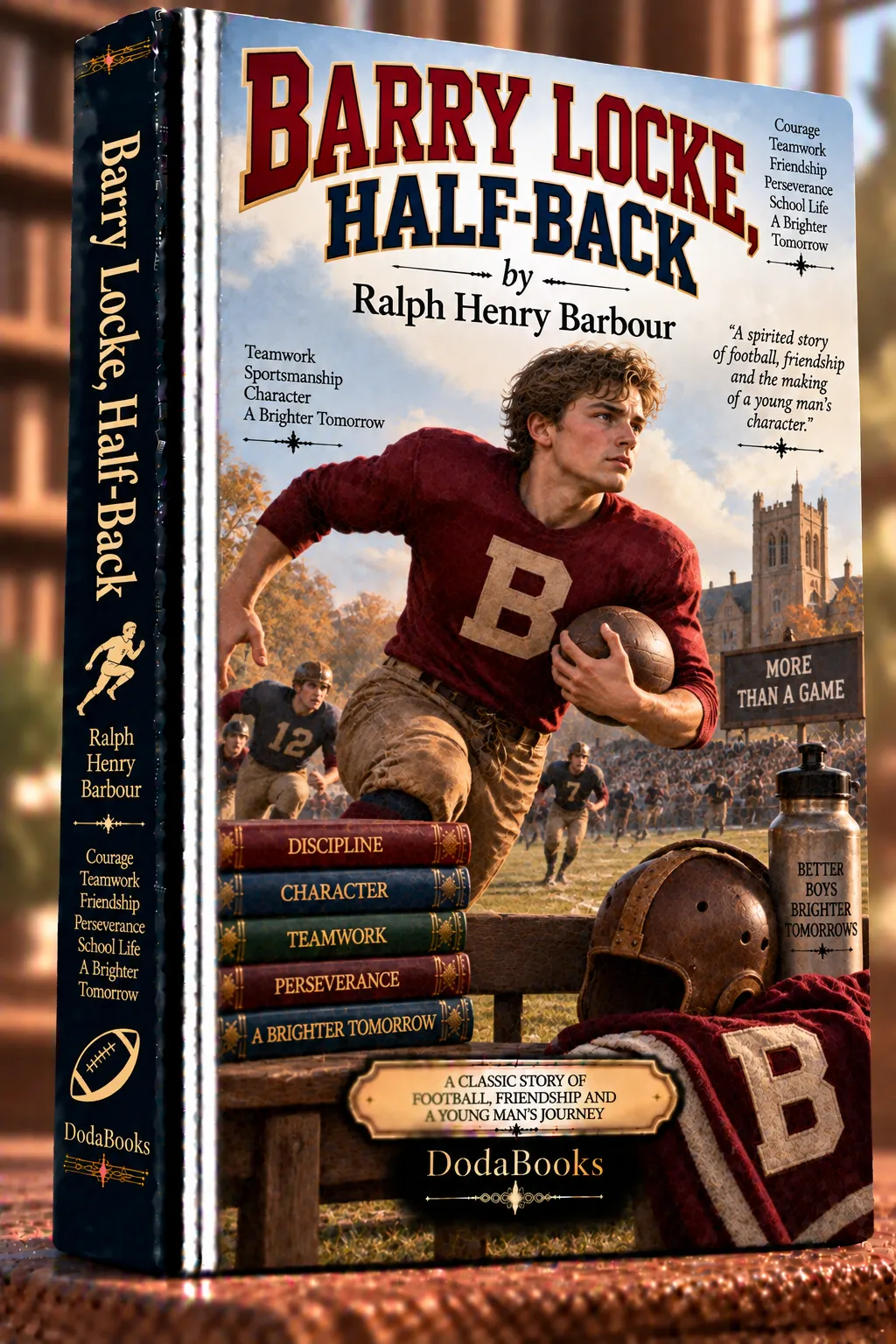
Experience the Roaring Twenties on the Gridiron
Read Ralph Henry Barbour's celebrated novel in a curated edition featuring historical notes on 1920s football rules, the drop kick, leather helmets, and early collegiate rivalries.
Get Barry Locke, Half-BackThis gridiron crucible of character and collegiate ambition is explored through a grittier social lens in Wadsworth Camp’s Princeton novel.
The Freshman Challenge: Barry Locke Arrives on Campus
The story centers on young Barry Locke, a talented but modest freshman entering college with no intention of becoming an athletic star. Endowed with natural speed, an instinctive sense of field vision, and quiet determination, Barry is unexpectedly scouted during freshman scrimmages and invited to try out for the varsity squad as a half-back.
Thrust into the grueling, high-pressure world of collegiate football, Barry must navigate:
- The Rigors of Practice: Surviving bruising tackle drills on muddy November afternoons under the watchful, demanding eye of the varsity coach.
- The Crucible of the Depth Chart: Competing against seasoned upperclassmen who view freshman newcomers with suspicion and rivalry.
- Academic and Financial Strain: Balancing long hours on the practice field with demanding classroom studies and the financial anxieties of putting himself through school.
The broader pedagogical movement toward collegiate athletics was thoroughly charted in Dr. Fred Eugene Leonard’s definitive history.
The Evolution of 1920s Football Tactics
One of the great pleasures of reading Barry Locke, Half-Back today is its vivid, authentic portrayal of football tactics during the transformative 1920s. This was the era when the game was rapidly evolving from the brutal, mass-collision “flying wedge” style of the late nineteenth century into an open, strategic contest of speed and deception:
“The leather ball was snapped; the line surged forward in a wall of muscle and churning turf. Barry took the handoff, sidestepped the crashing tackle, cut back against the grain, and found the open daylight down the sideline as thirty thousand voices roared in the autumn chill.”
Barbour describes tactical plays that are fascinating relics to modern sports fans:
- The Drop Kick: When field goals were frequently scored by dropping the ball to the ground and kicking it on the bounce, an art practiced with surgical precision by early half-backs.
- The Single-Wing Formation: Direct snaps to running backs behind unbalanced lines of pulling guards and bruising blocking backs.
- Leather Helmets and Wool Jerseys: The physical reality of the sport before face masks, plastic composite armor, and modern padding—where grit, stamina, and pain tolerance were paramount.
Golden Age Gridiron Lore
A thrilling inside look at American college football during the 1920s, featuring classic formations, drop kicks, and muddy autumn clashes.
Uncompromising Moral Code
Barbour's trademark ethos of sportsmanship—prioritizing honesty, loyalty, and team welfare over individual egotism and petty vendettas.
Rich Campus Atmosphere
Evocative descriptions of dorm life, campus bonfires, collegiate glee club songs, and the camaraderie of 1920s undergraduate society.
Historical Rules & Terminology Notes
Scholarly annotations explaining 1920s NCAA rules, substitution limitations, scoring rules, and Barbour's pioneering literary career.
Campus Politics, Class Dynamics, and the 1920s Undergraduate
A fascinating subtext in Barry Locke, Half-Back that modern cultural critics find illuminating is Barbour’s depiction of 1920s undergraduate social stratification. During the interwar period, American universities were transitioning from exclusive enclaves for the wealthy Brahmin elite into broader democratic institutions welcoming ambitious middle-class and working-class students.
Barbour reflects this social tension with sharp narrative insight:
- The Self-Made Student vs. Wealthy Legacy Men: Barry Locke is not a wealthy legacy student with an unlimited allowance; he works campus jobs to cover his room and board. Barbour contrasts Barry’s unpretentious work ethic with upperclassmen who treat college as a country-club holiday funded by family trust funds.
- Fraternity Bidding and Exclusivity: The novel subtly dissects the politics of campus secret societies and fraternities. While some teammates attempt to use athletic prowess as social leverage to gain entry into prestigious campus clubs, Barry remains committed to democratic friendship across social boundaries.
- The Ideal of the True Scholar-Athlete: In an era when college administrators were already growing uneasy about the professionalization of university athletics, Barbour emphasizes that athletic excellence must never come at the expense of intellectual development. Barry’s struggle to maintain his academic honors while enduring exhausting physical practices reinforces the classical Renaissance ideal of mens sana in corpore sano—a sound mind in a sound body.
Beyond the Scoreboard: The Ethics of Sportsmanship
What elevates Ralph Henry Barbour above ordinary sports writers is his unwavering focus on moral character. In Barry Locke, Half-Back, the greatest victories do not occur when the clock expires; they occur in moments of moral decision when no referee is looking.
When a bitter misunderstanding threatens to derail Barry’s reputation and bench him for the crucial rivalry match, Barry refuses to resort to underhanded finger-pointing or public excuses. He accepts adversity with dignity, focuses on supporting his teammates, and proves that genuine sportsmanship means putting the honor of the team above personal pride.
Barbour believed passionately that athletics served as a rehearsal for life:
“A boy who learns to take a hard tackle without whining, who plays clean when the referee is looking away, and who rejoices in his rival’s great play will never be a coward or a cheat when life calls upon him to be a man.”
Step Back into the Thrill of 1920s College Life
Read the definitive annotated edition of Barry Locke, Half-Back. Fully formatted for modern e-readers with historical notes and an introductory essay on early football history.
Get Barry Locke, Half-BackRalph Henry Barbour: The Poet Laureate of Prep-School Athletics
Born in Cambridge, Massachusetts, Ralph Henry Barbour was a prolific journalist and author who virtually invented the American sports novel for youth. Beginning with The Half-Back in 1899, Barbour published more than one hundred and fifty novels chronicling baseball, football, track, and rowing across four decades.
His novels influenced generations of American readers, shaping the popular ideal of amateur collegiate athletics. In an era when commercialization was beginning to infiltrate college sports, Barbour stood as a steadfast champion of pure amateur spirit, fair play, and academic balance.
Why Barry Locke Still Inspires Today
In an age of mega-million athletic contracts and hyper-specialized training, Barbour's story returns us to the joyful, pure essence of sport: the crisp autumn air, the loyal camaraderie of teammates, and the thrill of giving everything for school and honor.
Features of the DodaBooks Curated Edition
The DodaBooks edition of Barry Locke, Half-Back provides an enriching reading experience for historical sports enthusiasts and general readers alike:
- Historical Rulebook Glossary: Clear explanations of 1920s football rules, including forward pass penalties, substitution restrictions, and the five-yard scrimmage rules.
- Tactical Play Diagrams: Notes elucidating the single-wing, drop-kicking technique, and defensive alignment of the era.
- Biographical Overview: A detailed profile of Ralph Henry Barbour and his enduring impact on American sports literature.
Own the Definitive Digital Edition
Download Barry Locke, Half-Back today and experience the passion, grit, and romance of 1920s college football at its finest.
Get Barry Locke on DodaBooksFrequently Asked Questions
Who was Ralph Henry Barbour?
Ralph Henry Barbour (1870–1944) was one of the most prolific and popular American authors of youth sports fiction in the early 20th century. Over a career spanning four decades, he wrote more than 150 novels celebrating collegiate and prep-school athletics, sportsmanship, and character development.
What makes Barry Locke, Half-Back unique among sports stories?
Published in 1926 during the golden age of college football, the novel balances authentic, detailed descriptions of 1920s gridiron strategy (including drop kicks and single-wing formations) with deep ethical questions about academic duty, teamwork, and personal integrity.
How did football rules in the 1920s differ from today?
In the 1920s, players wore minimal leather helmets without face masks, substitutions were strictly limited, the drop kick was a standard method for scoring field goals, and passing rules penalized incomplete passes heavily, making running and field position paramount.
What annotations are included in the DodaBooks edition?
The DodaBooks annotated edition includes an explanatory glossary of historic football rules and terminology, diagrams of early offensive formations, and a biographical introduction on Ralph Henry Barbour's literary legacy.
Where can I download the complete ebook?
The complete digital edition is available for immediate download at DodaBooks at https://dodabooks.com/ebook/barry-locke-half-back-by-ralph-henry-barbour/.