Anne of Green Gables Characters Explained: Anne, Marilla, Matthew, Gilbert & Avonlea Society
Lucy Maud Montgomery’s Anne of Green Gables (1908) endures as a masterpiece of domestic realism largely because of its extraordinarily vivid, psychologically nuanced cast of characters. Rather than populating Prince Edward Island with sentimental Victorian caricatures, Montgomery crafted flesh-and-blood human beings marked by deep vulnerabilities, stubborn flaws, dry regional humor, and profound capacities for emotional transformation.
At the center of this tight-knit rural community is Anne Shirley—a skinny, red-haired, traumatized orphan whose volcanic imagination and unyielding emotional honesty challenge the austere, emotionally repressed traditions of rural Presbyterian Canada. This guide provides comprehensive character profiles, psychological explorations, relationship dynamics, and thematic breakdowns of every major figure in Montgomery’s classic novel.
| Character | Role & Archetype | Key Personality Traits | Thematic Significance |
|---|---|---|---|
| Anne Shirley | Protagonist; Imaginative Orphan | Romantic, eloquent, fiery-tempered, fiercely loyal | The triumph of imagination, emotional healing, and female intellectual agency |
| Marilla Cuthbert | Adoptive Mother; Austere Matriarch | Pragmatic, dry-humored, disciplined, deeply affectionate | The thaw of emotional repression through maternal love |
| Matthew Cuthbert | Adoptive Father; Quiet Benefactor | Painfully shy, gentle, intuitive, self-sacrificing | Unconditional paternal acceptance and quiet emotional validation |
| Gilbert Blythe | Academic Rival & Romantic Counterpart | Brilliant, charming, noble, persistent, self-sacrificing | Mutual intellectual respect, masculine maturation, and redemption |
| Diana Barry | “Bosom Friend” & Confidante | Pretty, conventional, devoted, loyal, practical | The comforting warmth of grounded, unconditional female friendship |
| Mrs. Rachel Lynde | Village Gossip & Community Conscience | Outspoken, opinionated, industrious, capable | The conservative social order of rural Prince Edward Island |
| Miss Muriel Stacy | Modern Teacher & Intellectual Mentor | Progressive, encouraging, dynamic, intellectually rigorous | Female education, mentorship, and progressive pedagogy |
👒 Anne Shirley: The Poetic Spirit of Green Gables
Background and Psychological Trauma
When Anne Shirley arrives at Bright River station at age eleven, she carries the heavy scars of systemic neglect and emotional deprivation. Born in Nova Scotia to high school teachers who died of yellow fever in her infancy, Anne spent her childhood being passed from one impoverished household to another as an unpaid babysitter and housemaid before landing in the grim Hopetown orphan asylum.
Despite enduring physical drudgery and emotional coldness, Anne survived by cultivating a vibrant inner world. Her famous penchant for dramatic monologues, her longing for “scope for the imagination,” and her invention of imaginary companions in windowpanes (“Katie Maurice”) and echoing valleys (“Violetta”) were not mere eccentricities; they were sophisticated psychological defense mechanisms developed to preserve her human dignity in an abusive environment.
Personality: The Clash of Romance and Fire
Anne’s personality is characterized by extreme emotional polarity. She plunges into the “depths of despair” with theatrical intensity, yet she is equally capable of soaring into ecstatic raptures over a blossoming cherry tree. Her flaws are deeply human:
- Vanity and Insecurity: Her fiery red hair is her supreme cross, driving her to catastrophic decisions such as buying questionable dye from a traveling peddler that turns her hair grass-green.
- Hot Temper and Fierce Pride: When Mrs. Rachel Lynde insults her appearance, Anne retaliates with blistering verbal fury. When Gilbert Blythe mocks her hair, she breaks a slate over his head and maintains a five-year silence.
- Intellectual Brilliance: Far from being an impractical dreamer, Anne possesses a razor-sharp intellect. Guided by Miss Stacy, she masters Latin, geometry, and literature, eventually winning first place across the entire province on the Queen’s Academy entrance examinations.
The Arc: From Wild Orphan to Poised Scholar
Over the course of the novel’s five-year span, Anne matures from a starved, unguided child into an elegant, poised young woman of sixteen. Importantly, her maturation does not extinguish her romantic soul; instead, it refines and tempers it. Her crowning glory is her capacity for sacrificial love: at the novel’s conclusion, she willingly relinquishes her university scholarship to remain at Green Gables, nursing Marilla and preserving the homestead she loves.
🧣 Marilla Cuthbert: The Iron Armor of Presbyterian Duty
The Disciplined Exterior
Sixty-something Marilla Cuthbert represents the epitome of conservative Prince Edward Island Presbyterianism: industrious, devout, emotionally restrained, and suspicious of frivolity or aesthetic indulgence. For Marilla, duty is the primary organizing principle of life. She believes that laughter should be rationed, that dresses should be plain and dark, and that imaginative musings are dangerously close to outright falsehoods.
The Hidden Well of Tenderness
Beneath Marilla’s rigid corsetry and stern demeanor lies a dry, mordant sense of humor and a profound hunger for love. While she initially insists on returning Anne to the orphanage, her moral conscience refuses to deliver the sensitive girl into the clutches of the cruel Mrs. Peter Blewett.
Marilla’s emotional arc forms the novel’s tender emotional backbone:
- The Suppression of Laughter: In the novel’s early chapters, Marilla repeatedly struggles to repress sudden twitches of amusement at Anne’s poetic outbursts.
- The Discovery of Maternal Devotion: When Anne falls from the ridge-pole of Diana’s roof and breaks her ankle, Marilla experiences an agonizing pang of realization that Anne has become dearer to her than anything else on earth.
- The Final Softening: By Chapter 37, when Matthew dies and Marilla’s vision fails, she openly confesses her profound love to Anne: “I love you as dear as if you were my own flesh and blood and you’ve been my joy and comfort ever since you came to Green Gables.”
🚜 Matthew Cuthbert: The Power of Quiet Acceptance
The Painfully Shy Bachelor
Matthew Cuthbert is an unforgettable portrait of quiet, non-verbal masculine virtue. Sixty years old, stooped from decades of hard physical labor on the Green Gables farm, Matthew is so painfully bashful that the mere sight of a strange woman causes him to retreat into the fields.
Yet, paradoxically, Matthew is the first person in Avonlea to understand and champion Anne. During their initial buggy ride from Bright River, while Anne pours out her heart, Matthew does not shush her; instead, he listens with quiet reverence, captivated by her original, vibrant mind.
The Champion of Belonging
While Marilla undertakes the rigorous work of Anne’s moral discipline, Matthew provides the unconditional affirmation that enables Anne’s spirit to heal. It is Matthew who:
- Insists from the first evening that they must keep the girl because she needs them.
- Sneaks peppermint candies into Anne’s pockets.
- Bravely enters a department store to commission Mrs. Rachel Lynde to sew Anne a fashionable dress with huge puffed sleeves, ensuring she does not feel inferior among her peers.
- Offers the definitive validation of Anne’s worth before his death: “Well now, I’d rather have you than a dozen boys, Anne… Just mind that—rather than a dozen boys.”
Matthew’s sudden passing in Chapter 37 is the novel’s deepest tragedy, yet his legacy of unconditional love permanently shields Anne from the lingering wounds of orphanhood.
📚 Gilbert Blythe: The Worthy Rival and Equal
The Boy Behind the Slate
Gilbert Blythe enters the narrative as the undisputed king of the Avonlea schoolhouse—handsome, charismatic, intelligent, and accustomed to charming every female classmate. His fatal mistake occurs in Chapter 15, when he attempts to tease the proud newcomer by pulling her braid and calling her “Carrots.”
When Anne smashes her slate over his head, Gilbert is shocked not into anger, but into genuine respect. He immediately accepts the blame before Mr. Phillips, attempting to spare Anne punishment, and repeatedly seeks her forgiveness.
Intellectual Rivalry and True Nobility
For the next five years, Gilbert serves as Anne’s intellectual sparring partner. Their rivalry is fiercely competitive yet healthy; each pushes the other to supreme academic heights at the Avonlea school and Queen’s Academy.
Gilbert’s defining character trait is his unselfish nobility:
- When he rescues Anne from the sinking dory on Barry’s Pond, he offers a humble, mature apology, which Anne foolishly rejects.
- After graduation, upon learning that Anne must stay in Avonlea to care for Marilla, Gilbert quietly surrenders his coveted appointment as the master of the Avonlea school, arranging for Anne to take his place while he accepts a teaching position in White Sands.
This act of selfless chivalry dissolves the last remnants of Anne’s pride, establishing an intellectual and emotional partnership that blossoms into the legendary romance of Montgomery’s subsequent novels.
🌸 Supporting Characters: The Avonlea Community
Diana Barry: The Kindred Spirit
Diana Barry is the ideal foil for Anne. Pretty, black-haired, amiable, and thoroughly conventional, Diana lacks Anne’s soaring imagination and intellectual ambition, but she compensates with unwavering loyalty, gentleness, and warmth. Diana admires Anne’s brilliance without a trace of jealousy, providing the steady emotional anchor Anne needs.
Mrs. Rachel Lynde: The Village Voice
Mrs. Rachel Lynde is Montgomery’s brilliant embodiment of rural community surveillance. Capable, industrious, and endlessly opinionated, Mrs. Rachel manages her husband, her church, and her neighbors with tyrannical benevolence. While she begins as Anne’s fiercest critic, her grudging admiration for Anne’s courage and academic brilliance turns her into one of Green Gables’ most staunch defenders.
Miss Muriel Stacy: The Inspiring Mentor
Miss Muriel Stacy represents the arrival of modern progressive education in late 19th-century Prince Edward Island. Rejecting the rote memorization and harsh corporal punishment of her predecessor, Mr. Phillips, Miss Stacy incorporates physical education, nature walks, recitation, and critical thinking. She becomes Anne’s premier intellectual role model, demonstrating that a woman can lead an independent, intellectual, and respected professional life.
⚖️ Character Dynamic & Interaction Matrix
| Dynamic | Core Conflict / Bond | Turning Point | Final Resolution |
|---|---|---|---|
| Anne & Marilla | Spontaneous emotion vs. Calvinist duty | Anne’s broken ankle (Ch. 23) | Unconditional maternal love and mutual interdependence |
| Anne & Matthew | Immediate mutual empathy | The ride from Bright River (Ch. 2) | Eternal paternal validation: “I’d rather have you than a dozen boys” |
| Anne & Gilbert | Wounded pride and bitter silence | The Avonlea school post sacrifice (Ch. 38) | Deep friendship, mutual respect, and nascent romance |
| Anne & Diana | Romantic longing for sisterhood | Minnie May’s croup recovery (Ch. 18) | Lifelong “bosom friendship” and unwavering loyalty |
| Anne & Rachel Lynde | Outspoken insult vs. explosive temper | The theatrical apology (Ch. 10) | Deep mutual affection and fierce community protection |
❓ Frequently Asked Questions
Why did Anne Shirley hold a grudge against Gilbert Blythe for five years?
Anne's red hair was her deepest childhood vulnerability, having been subjected to cruel insults in orphanages and foster homes. When Gilbert pulled her braid and taunted her with "Carrots" in front of the entire school, he publicly humiliated her. Anne's stubborn pride and romantic dramatization transformed the incident into an unyielding feud until Gilbert's noble sacrifice of the Avonlea teaching post softened her heart.
How does Marilla Cuthbert change throughout the novel?
Marilla transitions from an austere, emotionally guarded woman who views child-rearing strictly through the lens of moral discipline to a deeply loving, vulnerable mother. Anne's humor, warmth, and intellectual triumphs teach Marilla how to express affection and openly admit her reliance on another human being.
What makes Matthew Cuthbert such a unique father figure in Victorian literature?
Unlike traditional patriarchal Victorian fathers who demand obedience, stoicism, and conformity, Matthew Cuthbert is extraordinarily shy, quiet, and tender. He never lectures Anne, validates her imaginative speech without judgment, and intuitively understands her emotional needs, demonstrating that quiet empathy is the ultimate form of strength.
What role does Diana Barry play in Anne's development?
Diana represents normal, grounded girlhood. While Anne lives in the clouds of poetic melodrama, Diana provides stable, unconditional friendship. For a detailed breakdown of all their shared childhood escapades, read our complete Anne of Green Gables Summary by Chapter.
Which edition provides the best character and historical commentary?
The best edition of Anne of Green Gables is the DodaBooks Annotated Edition, featuring rich character biographies, historical context on Prince Edward Island schools, and explanations of Victorian social customs.
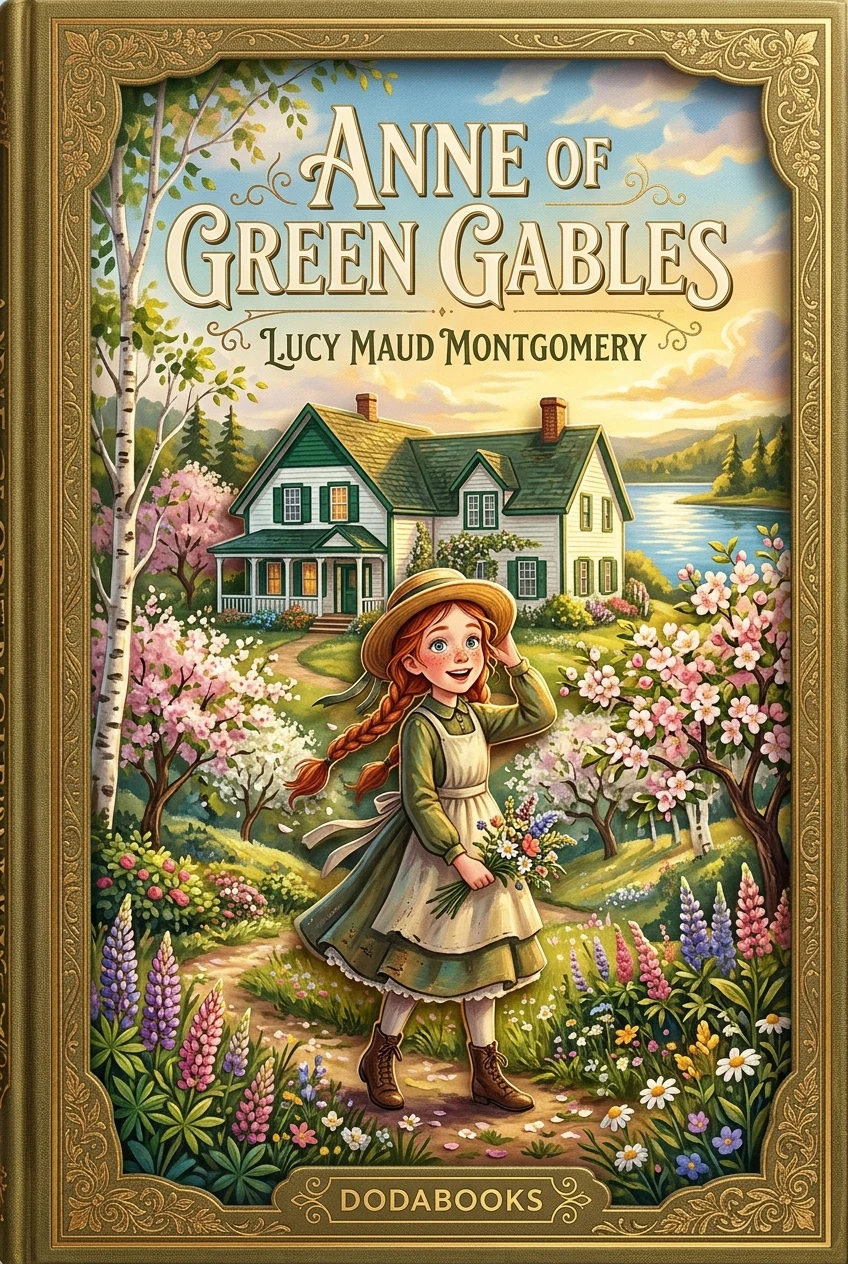
👒 Unravel Every Nuance of Montgomery’s Iconic Characters
Delve deeper into the psychological depth, Victorian social hierarchies, and regional history of Avonlea with the DodaBooks Annotated Edition of Anne of Green Gables.
- 🔍 In-Depth Historical Annotations — Detailed notes on 19th-century Canadian domestic life
- 📖 Complete & Unabridged Text — The authentic 1908 classic preserved in pristine clarity
- 📜 Literary Quotation Key — Context for every poem Anne and her companions quote
- 🔒 100% DRM-Free — Read effortlessly on Kindle, Kobo, iPad, or your favorite e-reader
- ⚡ Instant Delivery — High-resolution EPUB format available immediately
Continue your journey with our full Anne of Green Gables Guide for complete analysis of setting, themes, and Montgomery’s real-life inspirations.