A Young Man’s Story
Sarah Doudney’s Heart-Rending Victorian Chronicle of Ambition, Betrayal, Moral Crisis, and Spiritual Redemption in 19th-Century Britain
In late-nineteenth-century Britain, as young men poured from pastoral villages into bustling commercial cities seeking fortune and status, Victorian society grappled with an urgent spiritual question: Can worldly ambition be reconciled with Christian integrity? Among the most sensitive, psychologically perceptive chroniclers of this generational crisis was Sarah Doudney (1841–1926). Celebrated across the English-speaking world as both a popular domestic novelist and an accomplished poet and hymn writer (author of the famous hymn The Watermill), Doudney published A Young Man’s Story in 1888.
Far from being a simplistic, heavy-handed Sunday school sermon, A Young Man’s Story is a nuanced, deeply emotional drama of adolescent self-delusion, moral vulnerability, and the slow, painful path toward genuine spiritual maturity. Doudney examines the tragic ease with which high-minded youth can compromise their values when dazzled by urban wealth and fashionable society.
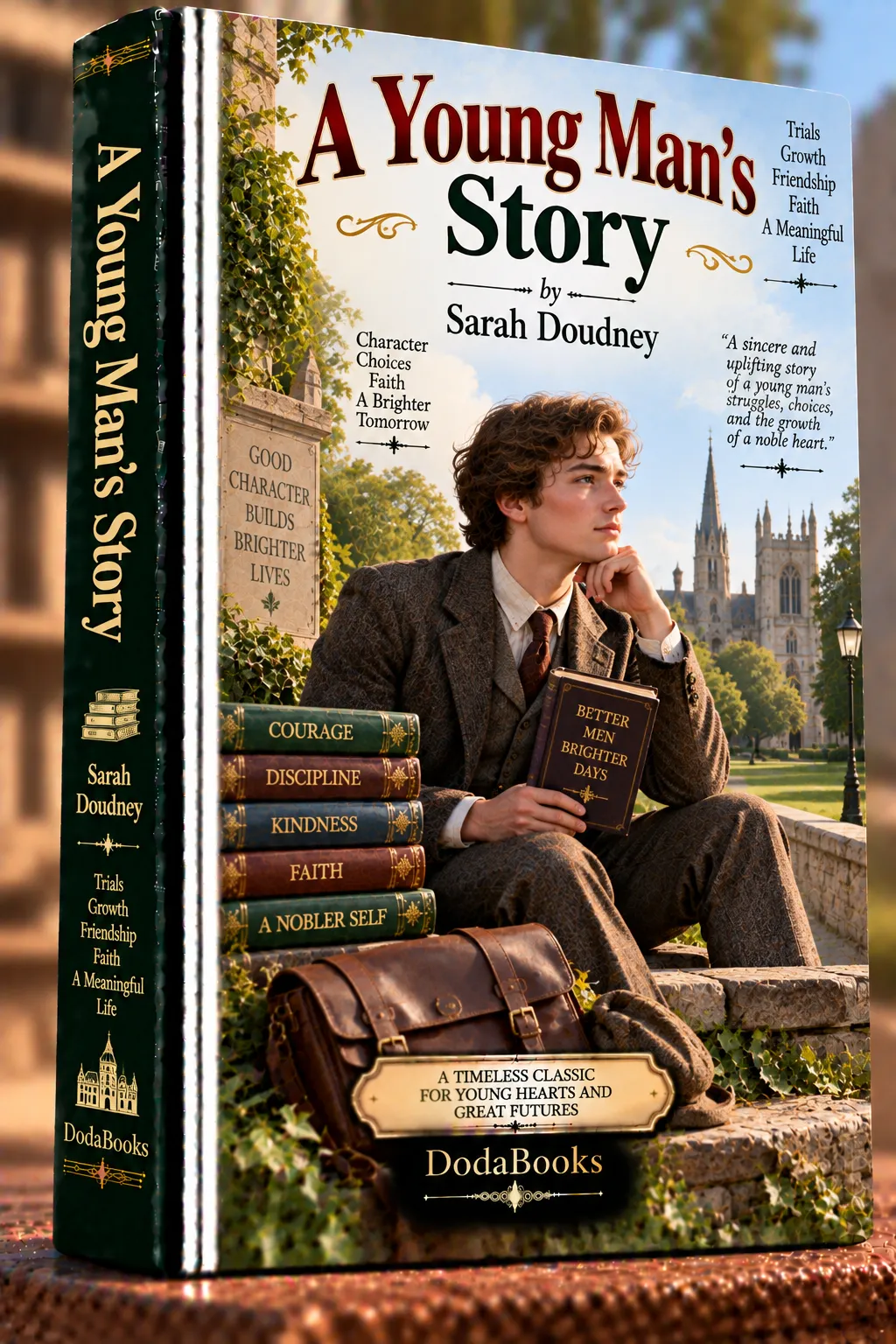
Rediscover Sarah Doudney's Moving Masterpiece
Read the definitive edition of A Young Man's Story, complete with historical annotations explaining late-Victorian commercial clerkships, social class mobility, and Doudney's literary career.
Get A Young Man's StoryThe Descent into Worldliness: The Arc of Godfrey
The novel traces the journey of its young protagonist, Godfrey, a youth of fine moral instincts and artistic sensitivity raised in a devout, peaceful country home. Filled with soaring dreams of worldly success, Godfrey secures a position in the commercial offices of an expanding industrial city.
Doudney masterfully depicts the subtle, seductive process through which Godfrey’s moral compass is eroded:
- The Lure of Fashionable Society: Eager to escape the perceived provincialism of his background, Godfrey falls under the influence of worldly companions who equate cynical detachment and superficial polish with true sophistication.
- Financial Temptation and Debt: Striving to maintain a social lifestyle far beyond his modest clerk’s salary, Godfrey is drawn into debt, reckless spending, and the dangerous moral compromises required to keep up appearances.
- The Betrayal of Sacred Ties: In his pursuit of worldly advancement, Godfrey distances himself from the pure-hearted country maiden who loved him for his true self, chasing instead after superficial romantic attachments based on vanity and wealth.
The Crisis and the Crucible of Atonement
The central dramatic turning point of A Young Man’s Story arrives when Godfrey’s precarious house of cards collapses. Faced with financial dishonor and exposed hypocrisy, his superficial fashionable acquaintances abandon him without a second thought. Stripped of his illusions, Godfrey is forced into a devastating confrontation with his own weakness and vanity.
Doudney’s depiction of spiritual despair is remarkably modern in its psychological depth:
“It is not the outer disgrace that crushes a man’s soul; it is the sudden, terrible glimpse of what he has become. To look into the mirror of one’s own conscience and find that truth, loyalty, and faith have been bartered away for thirty pieces of social applause—that is the beginning of hell.”
Yet where secular tragedy ends in destruction, Doudney’s Christian humanism offers redemption. Through the enduring, unconditional forgiveness of those he had wounded—his family and his true love—Godfrey discovers that genuine repentance requires more than remorse; it requires the humble rebuilding of character from the ground up through selfless service and quiet labor.
Penetrating Psychological Realism
A profound study of adolescent peer pressure, social vanity, and the subtle rationalizations that lead to moral compromise in urban environments.
Sharp Critique of Gilded Age Materialism
Doudney exposes the cold cruelty of Victorian commercial society, where personal worth was routinely judged by bank balances and tailor bills.
Lyrical, Emotionally Poignant Prose
Written with the melodic grace and spiritual warmth that made Doudney one of Britain's most beloved devotional poets and hymn writers.
Explanatory Victorian Annotations
Detailed notes clarifying Victorian currency values, clerical salaries, legal debtor laws, and provincial British religious customs.
Victorian Evangelical Periodicals and the Art of Serialization
To fully appreciate Doudney’s narrative architecture in A Young Man’s Story, one must understand the distinct literary culture of late-Victorian family magazines. Serialized in prestigious monthly journals such as The Sunday Magazine and Good Words—periodicals founded by visionary publishers like Alexander Strahan—stories like Doudney’s were read aloud in family drawing rooms across the British Empire.
These magazines commanded vast circulations, bridging the gap between sacred devotional reading and secular entertainment:
- Cliffhangers of Conscience: Unlike sensational sensation novels that relied on murder, bigamy, or sudden poisonings to maintain suspense from month to month, Doudney structured her serial installments around moral choices. Readers waited eagerly to see whether Godfrey would tell the truth to his employer, resist the lure of a lavish dinner party, or confess his mounting debts to his family.
- Universal Domestic Appeal: The stories were designed to engage multiple generations simultaneously: offering exciting narrative pacing to adolescent clerks and apprentice mechanics, while providing reflective, comforting spiritual wisdom to parents and grandparents.
- The Union of Art and Faith: Strahan’s editorial policy proved that Christian literature did not have to be sanctimonious or artistically inferior. Under this philosophy, Doudney honed a clear, graceful prose style that was praised by contemporary critics for its emotional authenticity and literary polish.
Sarah Doudney: Poet of the Conscience and the Heart
Born near Portsmouth, England, Sarah Doudney was a major literary figure in Victorian Britain. Educated in French and English literature, she began contributing poetry and serialized novels to major periodicals such as Good Words, The Sunday Magazine, and The Quiver in her twenties.
Her most famous poetic line—“The mill cannot grind with the water that is past” from her hymn The Watermill—became a universal proverb across the Victorian world. That same philosophical awareness of the irreversibility of time and the urgent necessity of living with integrity permeates every chapter of A Young Man’s Story.
Unlike didactic religious writers who created two-dimensional cardboard figures, Doudney had a deep understanding of human frailty. Her characters make real, agonizing mistakes; they suffer authentic pain; and their redemption is earned through tears, patience, and humility.
Step into Sarah Doudney's World of Emotional Truth
Read the complete annotated edition of A Young Man's Story, formatted with elegant digital typography and comprehensive scholarly footnotes.
Get A Young Man's Story on DodaBooksThe Victorian Clerk and Urban Alienation
Modern social historians examining A Young Man’s Story find an invaluable case study of the late-Victorian “black-coated clerk.” During the 1880s, the explosion of British finance, insurance, and overseas commerce created a massive new social class of young male clerks. Suspended precariously between the working class and the wealthy gentry, these young men faced unique social stresses:
- They were required to dress like gentlemen in immaculate frock coats and top hats, yet received wages often no higher than skilled factory artisans.
- Living in anonymous suburban boarding houses far from their families, they were detached from traditional village community structures and church oversight.
- The temptation to gamble, speculate on the stock market, or borrow from unscrupulous moneylenders was a constant pitfall.
Doudney’s depiction of this sociological trap provides A Young Man’s Story with an authentic historical texture that grounds its spiritual message in the concrete economic realities of Victorian Britain.
The Timeless Relevance of A Young Man's Story
Though set in Victorian drawing rooms and commercial offices, Godfrey's struggle against lifestyle inflation, peer pressure, and moral drift speaks directly to anyone striving to maintain their soul in a competitive, materialist world.
The Annotations in the DodaBooks Edition
The DodaBooks curated edition of A Young Man’s Story includes:
- Economic & Currency Annotations: Explanations of Victorian salaries, pounds, shillings, pence, and the cost of urban living in the 1880s.
- Biographical Overview: A study of Sarah Doudney’s prolific literary career, her famous hymns, and her place among Victorian women writers.
- Theological & Social Context: Notes explaining the Broad Church and Evangelical movements that shaped late-Victorian domestic literature.
Experience the Classic Tale of Redemption
Download the definitive digital edition of A Young Man's Story and experience Sarah Doudney's moving masterpiece today.
Download the Edition NowFrequently Asked Questions
Who was Sarah Doudney?
Sarah Doudney (1841–1926) was a prominent Victorian English novelist, poet, and hymn writer from Portsmouth. She authored dozens of popular domestic novels and moral tales, and is widely remembered for writing the classic hymn 'The Watermill' containing the famous line 'The mill cannot grind with the water that is past.'
What is the central theme of A Young Man's Story?
The novel explores the moral dangers of worldly ambition, social vanity, and peer pressure facing young men entering commercial life in Victorian cities. It charts the protagonist's fall into debt and compromise, followed by his painful spiritual reckoning and redemption.
How does the novel portray the life of Victorian clerks?
Doudney offers a realistic sociological look at the late-Victorian clerical class, depicting the tension between low salaries and the pressure to maintain an expensive gentlemanly appearance, which frequently led young clerks into debt and temptation.
What makes DodaBooks' edition of this novel essential?
The DodaBooks annotated edition provides historical commentary on late-Victorian economic conditions, explanatory footnotes on 19th-century currency and class etiquette, and an introductory essay on Sarah Doudney's literary contributions.
Where can I purchase the complete annotated ebook?
The complete digital edition is available for immediate download at DodaBooks at https://dodabooks.com/ebook/a-young-mans-story-by-sarah-doudney/.